
About Thomas Horrocks Openshaw
Lived 1856 – 1929 (aged 73). Thomas Horrocks Openshaw was a military physician.
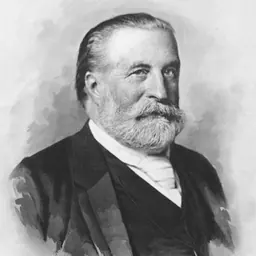
Thomas Horrocks Openshaw (17 March 1856 – 17 November 1929) was an English Victorian and Edwardian era surgeon perhaps best known for his brief involvement in attempting to solve the notorious Jack the Ripper murders of 1888.
Early life and medical career Openshaw was born in Bury in Lancashire, England, and was educated at Bristol Grammar School. On leaving school he originally trained as an engineer, but then entered Durham University to study medicine. In 1877 he entered the London Hospital Medical College, where he was noted as a successful student and a good football player. In 1879 Openshaw won the Outpatient Dresser's Prize of £15, awarded to the best dresser of wounds in the Outpatients Department.
Having successfully completed his medical studies, Openshaw was awarded an MBBS (Durham) and, in 1883, was appointed a Member of the Royal College of Surgeons. Openshaw took the English Conjoint Diploma in 1884, and in 1886 became a Fellow of the Royal College of Surgeons. Among Openshaw's other qualifications at that time were Licentiate of the Society of Apothecaries and Master of Surgery (Durham).
Jack the Ripper
When a kidney, purportedly from Jack the Ripper victim Catherine Eddowes, was posted to George Lusk, Chairman of the Whitechapel Vigilance Committee, together with the From Hell letter, Lusk was persuaded by his fellow Committee members to take them to Dr Frederick Wiles, who had a surgery nearby on the Mile End Road.
Wiles was out, so his assistant, F. S. Reed, examined the contents of the box and took the kidney to Openshaw at the nearby London Hospital. Openshaw believed that the kidney was from the left side of a human body.
As Openshaw was frequently mentioned in press reports at the time in connection with the kidney and From Hell letter, his name became known widely among the general public. On 29 October 1888 he received a letter through the post addressed to 'Dr Openshaw, Pathological curator, London Hospital, Whitechapel' and postmarked 'LONDON E', 'OC29 88'. The text of the letter reads as follows:
Jack the Ripper
with a slide cocked up.
This letter has become known as the "Openshaw Letter". A copy of the letter is on display with other Ripper items in the Royal London Hospital's museum in Whitechapel. She claims that the paper used for the Openshaw Letter came from the same manufacturers as paper used by Sickert. However, it was a brand of stationery that was widely available at the time. Also according to Cornwell, mitochondrial DNA extracted from the stamp on the envelope could not be ruled out as being the same as that found on other Sickert letters. Mitochondrial DNA, however, is not a definitive test of identity and the sequence found by Cornwell's team of experts could be from one of over 400,000 individuals.
Military service As a youth Openshaw became a member of the British Army's volunteer force (the then equivalent of the Territorial Army), eventually being appointed lieutenant colonel in the Lincolnshire Yeomanry. Having been appointed surgeon to the Volunteer Medical Staff Corps in 1888, when the Second Boer War broke out in South Africa in October 1899, Openshaw left his duties at the London Hospital and went there as surgeon to the Imperial Yeomanry Field Hospital. Openshaw was taken prisoner by the Boers, but was released after two weeks of confinement during an exchange of prisoners. He was subsequently appointed Principal Medical Officer at the Number Three Medical School Hospital in Pretoria. For his services during the Second Boer War Openshaw was awarded the Companion of the Most Distinguished Order of St Michael and St George (CMG) by Queen Victoria.
A few months after his wife's death in 1929 Openshaw developed diabetes and died of pneumonia in a nursing home, aged 73.
Don’t just read it —
keep it.
Full-length biographies made to live with: read them, listen on the way to work, watch them tonight.
- E-book
- Audio
- Video
Instant download · yours to keep · every purchase keeps this site free
Important facts
People in Thomas Horrocks Openshaw's life
Named in this biography and alive at the same time


Related people
Same field, nearest in time


Contemporaries
People whose lives overlapped Thomas Horrocks Openshaw's




Frequently asked questions
Who was Thomas Horrocks Openshaw?
British surgeon (1856–1929)
When was Thomas Horrocks Openshaw born?
Thomas Horrocks Openshaw was born on 17 March 1856 in Lancashire.
When did Thomas Horrocks Openshaw die?
Thomas Horrocks Openshaw died on 17 November 1929 in England.
What was Thomas Horrocks Openshaw's occupation?
Thomas Horrocks Openshaw was a military physician.
Sources & further reading
· Wikipedia: Thomas Horrocks Openshaw
· DBpedia: Thomas Horrocks Openshaw
Cite this page
APA: Biography.guide. (2026). Thomas Horrocks Openshaw. https://biography.guide/thomas-horrocks-openshaw/
MLA: "Thomas Horrocks Openshaw." Biography.guide, https://biography.guide/thomas-horrocks-openshaw/.
Chicago: "Thomas Horrocks Openshaw." Biography.guide. https://biography.guide/thomas-horrocks-openshaw/.
Data last updated: 2026-09-25 · Spot an error? Report a correction.
Page generated 2026-09-27 05:10 UTC