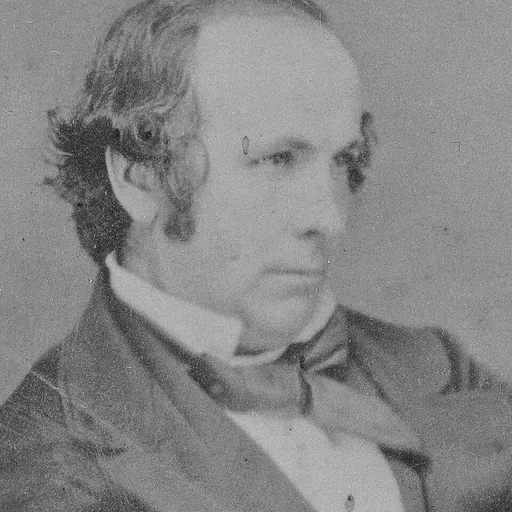
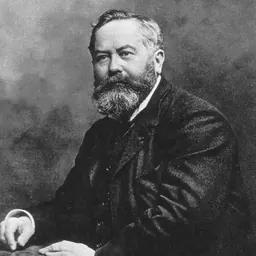
Thomas Henry FitzGerald
Irish politician in New Zealand and Queensland
About Thomas Henry FitzGerald
Lived 1824 – 1888 (aged 63). Thomas Henry FitzGerald was a New Zealand and Irish politician, surveyor, civil service and sugarcane.
Thomas Henry Fitzgerald (1 December 1824 – 10 November 1888) was a British pioneer in sugar cane farming in the early days of the colony of Queensland, Australia. He was a politician, first in New Zealand, then in Queensland. His descendants went on to become notable names in Queensland politics, business and law. He is best remembered for founding the town of Innisfail.
During his life, Fitzgerald was a surveyor, sugar cane farmer, Superintendent, Colonial Treasurer and pioneer.
Early life Thomas Henry Fitzgerald was born in Carrickmacross, Ireland in December 1824. Fitzgerald qualified as an engineer, but like many of his compatriots of the time, he left Ireland to seek fortune elsewhere. There, he trained and worked as a surveyor and achieved additional qualifications as an engineer and architect. In 1844, he purchased in Khandallah. On 2 July 1851, he married Jessie Wilson at Wellington, the oldest daughter of James Wilson of that city.
Fitzgerald designed St Mary's Cathedral, Wellington
In 1853, the Fitzgeralds moved to the Hawke's Bay, where he surveyed the area. He had two general stores, one of them in Napier's Waghorne Street, and he built a steam flour mill in that town. Other business activities were him acting as an agent for a shipping company, for an insurance company, and buying wool. On 19 July, he won in Kennedy.
Fitzgerald was appointed Colonial Treasurer in November 1868 in the government of Charles Lilley, a post he held for three months until he resigned from that role. In June 1869, he resigned from the seat of Kennedy.
Between 1873 and 1875, Fitzgerald represented the seat of Bowen between 1873 and 1875. One of his agendas through his term was to legislate for the introduction of cheap South Sea Islander indentured labour for the cane fields (many of were blackbirded). Fitzgerald had a direct financial interest in this: times were difficult in the industry and cheap labour was seen as an answer to the many problems in founding sugar cane plantations. He and his fellow farmers in the region experienced further difficulties in the following years, mainly from torrential rains that brought about widespread cane rust. Fitzgerald was declared bankrupt in 1876 and had to resign his seat from Parliament, this time for good.
Fitzgerald returned to Brisbane and to surveying, although his dreams of establishing settlements in far north Queensland had not died. With some backing from the Catholic Church (Fitzgerald was a devout Catholic), he established, in 1880, a sugarcane plantation known as Innisfail Estate (now a locality of the same name) and accompanying settlement, which later became the town of Innisfail in far north Queensland. However, despite the eventual success of the town, the early years were very trying for Fitzgerald. Weather conditions (flooding in particular) made farming difficult, sugar prices were not good (competition against bigger milling operations did not make this easier) and ultimately managing the diseases that came with new settlements in sub-tropical regions proved too much for Fitzgerald.
Later life Fitzgerald retired to Teneriffe in Brisbane in poor health and died there on 10 November 1888 at the age of 64. Fitzgerald was buried in Nudgee Cemetery.
Legacy While having varying financial success in his life (more down than up), Fitzgerald could be perceived as notable for his desire to establish something greater than personal fortune despite all the failures and disappointments. For many Irish people deciding upon Australia as their new home in the world the result was often similar. Fitzgerald anticipated rich and fertile far north Queensland that could house many people and feed even more. The areas he surveyed, from the Daintree down to Tully, are now popular tourist destinations and productive farm lands.
He took the first difficult steps in establishing this region's modern agricultural industry. The rush that ensued, particularly encouraged by the successful methods of Fitzgerald's Alexandra mill, established an entire industry and contributed to the growth of a strong economy in North Queensland.
Innisfail was originally the name for Fitzgerald's own property. The Surveyor-General called the town Geraldton, in Fitzgerald's honour, in 1882. However, a Russian ship bound for Geraldton in Western Australia arrived at the port to collect a load of jarrah wood. This would be the equivalent of a ship sailing up the Potomac River to Washington, D.C. to collect trees from the forests of Washington state. A public meeting was held in 1910 and the name of the town was officially changed to Innisfail. A school in North Mackay is also named in his honour.
Other successes that Fitzgerald did not live to see were those of his children and their descendants. In his immediate family of 11, most notable was Charles Borromeo Fitzgerald, who held the seat of Mitchell from 1896 to 1902 and was appointed Attorney-General in the short-lived Labour ministry of Anderson Dawson—the first labour government in the world. Ironically, the Australian Labor Party was one of the primary drivers of the White Australia policy, looking to stop the influx of foreign labour into the Australian economy (in particular the sugar cane farms of North Queensland). In subsequent generations, the scions of the Thomas Henry Fitzgerald family would establish themselves in business, law (the succeeding generations of lawyers named James Francis Fitzgerald), education, the clergy and the military.
Additional legacies of Fitzgerald exist. The place name of Te Kowai in Queensland was named by Fitzgerald after the flower of the same name he first saw in New Zealand as a younger man.
Don’t just read it —
keep it.
Full-length biographies made to live with: read them, listen on the way to work, watch them tonight.
- E-book
- Audio
- Video
Instant download · yours to keep · every purchase keeps this site free
Important facts
People in Thomas Henry FitzGerald's life
Named in this biography and alive at the same time




Related people
Same field, nearest in time



Contemporaries
People whose lives overlapped Thomas Henry FitzGerald's



Frequently asked questions
Who was Thomas Henry FitzGerald?
Irish politician in New Zealand and Queensland (1824–1888)
When was Thomas Henry FitzGerald born?
Thomas Henry FitzGerald was born on 1 December 1824 in Carrickmacross.
When did Thomas Henry FitzGerald die?
Thomas Henry FitzGerald died on 10 November 1888 in Teneriffe.
What was Thomas Henry FitzGerald's occupation?
Thomas Henry FitzGerald was a politician, surveyor, civil service and sugarcane.
What nationality was Thomas Henry FitzGerald?
Thomas Henry FitzGerald was New Zealand and Irish.
Sources & further reading
· Wikipedia: Thomas Henry FitzGerald
· DBpedia: Thomas Henry Fitzgerald
Cite this page
APA: Biography.guide. (2026). Thomas Henry FitzGerald. https://biography.guide/thomas-henry-fitzgerald/
MLA: "Thomas Henry FitzGerald." Biography.guide, https://biography.guide/thomas-henry-fitzgerald/.
Chicago: "Thomas Henry FitzGerald." Biography.guide. https://biography.guide/thomas-henry-fitzgerald/.
Data last updated: 2026-09-23 · Spot an error? Report a correction.
Portrait: Wikimedia Commons · author & licence
Page generated 2026-09-27 05:05 UTC