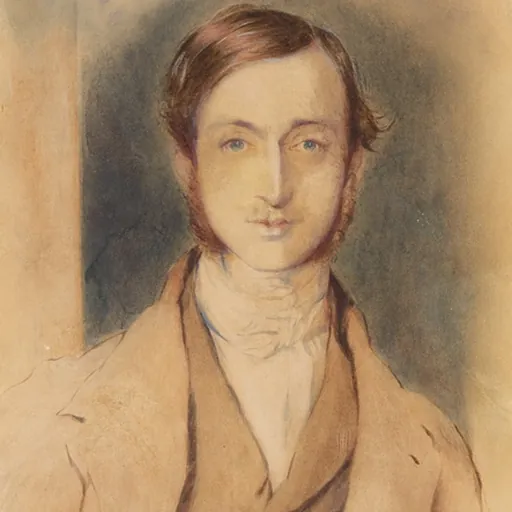
Thomas Griffiths Wainewright
English artist and serial killer
About Thomas Griffiths Wainewright
Lived 1794 – 1847 (aged 52–53). Thomas Griffiths Wainewright was a British journalist, painter, serial killer and art critic.
Thomas Griffiths Wainewright (October 179417 August 1847) was an English artist, author and suspected serial killer. He gained a reputation as a profligate and a dandy, and in 1837, was transported to the penal colony of Van Diemen's Land (now the Australian state of Tasmania) for frauds on the Bank of England. As a convict he became a portraitist for Hobart's elite.
Wainewright's life captured the imagination of renowned 19th-century literary figures such as Charles Dickens, Oscar Wilde and Edward Bulwer-Lytton, some of whom wildly exaggerated his supposed crimes, claiming among other things that he carried strychnine in a special compartment in a ring on his finger.
Early life Thomas Griffiths Wainewright was born into affluence in Richmond, London, England. He was orphaned when he was very young, his mother dying in childbirth and his father soon afterwards. Wainewright's mother Ann was the daughter of Ralph Griffiths (1720–1803), for many years the editor of the literary magazine Monthly Review. The young Wainewright was brought up in style by his elderly maternal grandparents at Linden House, Chiswick High Road, Chiswick, then on London's rural periphery. When Griffiths died, Wainewright came under the care of his maternal uncle, George Griffiths. He was probably educated by the scholar Charles Burney, the headmaster of the Greenwich Academy.
Wainewright subsequently served briefly as an officer in a yeomanry regiment, having bought his commission in 1814, but lasted just over a year, probably because of a severe mental illness.
Literary career In 1819, Wainewright embarked on a literary career, and began to write for The Literary Pocket-Book, Blackwood's Magazine and The Foreign Quarterly Review. He was, however, most closely linked with The London Magazine, to which he contributed articles and art criticism from 1820 to 1823, under the pen names Janus Weathercock, Egomet Bonmot and Cornelius van Vinkbooms. Wainewright's success in publication would have been assisted by his famous grandfather. He was a friend of Charles Lamb, who thought well of his writing and, in a letter to Bernard Barton, styles him "the kind, light-hearted Wainewright." Wainewright also practised as an artist and was trained by John Linnell and Thomas Phillips. He produced a portrait of Lord Byron and made illustrations for the poems of William Chamberlayne, and from 1821 to 1825 exhibited narratives based on literature and music at the Royal Academy, including Romance from Undine, Paris in the Chamber of Helen and the Milkmaid's Song. None of these works have survived.
In the 1960s, the controversial author Donald McCormick claimed that Wainewright was a friend of William Corder, the murderer of Maria Marten in the Red Barn Murder in Polstead, Suffolk in 1827. It was claimed that the two met when Corder visited London and joined some intellectual circles. McCormick was unable to produce any evidence for his claims when asked by the author of a 2018 biography of Wainewright.
Marriage and family life On 13 November 1817, Wainewright married Eliza Frances Ward. He had inherited £5,250 from his grandfather, invested at the Bank of England, but was unable to touch the capital, receiving only the dividends of £200 a year; the capital was in trust for his family, Eliza and their son Griffiths. However, his extravagant lifestyle landed him in colossal debt. On two separate occasions, Wainewright forged signatures of power of attorney and withdrew large sums from the Bank of England, first in 1822 and then in 1823. The second time left the account empty. Wainewright was sent to Hobart, Van Dieman's Land (now Tasmania) on the convict ship Susan, arriving 21 November 1837. The quotation is now thought to have been made up by Oscar Wilde's publisher.
Late life The Cutmear Sisters, Jane and Lucy, c. 1842, National Gallery of Australia During his ten years in the penal colony, Wainewright did eventually enjoy a certain amount of freedom. After initially working on a road gang, he became a hospital orderly and was able to work as an artist, painting portraits in the homes of his subjects. He completed more than 100 portraits on paper using coloured wash, pencil and ink during his years in Hobart. They survive in public museums and private collections throughout Australia, some having remained in the families of his sitters. They depict the officialdom, professionals and members of the elite in early Hobart. A self-portrait was completed in this period. Wainewright had a conditional pardon granted on 14 November 1846; and to Edward Bulwer-Lytton, 1st Baron Lytton his novel Lucretia.
Wainewright's personality, as artist and poisoner, also interested Oscar Wilde in his "Pen, Pencil and Poison" (Fortnightly Review, Jan. 1889), and A. G. Allen, in T. Seccombe's Twelve Bad Men (1894).
Arthur Conan Doyle mentions Wainewright in the Sherlock Holmes story "The Adventure of the Illustrious Client" (1924) as "no mean artist", but spells his name without the middle "e".
His life was dramatised in the 1940 Australian radio play Portrait of a Gentleman where he was played by Peter Finch.
In 1961, Australian writer Hal Porter published an historical novel about Wainewright, entitled The Tilted Cross. Porter also wrote a radio play about him, The Forger.
Wainewright has been the subject of several biographical studies: The Fatal Cup: Thomas Griffiths Wainewright and the strange deaths of his relations by John Price Williams (Markosia, London 2018) which re-examines the poisonings and reaches a different conclusion as to Wainewright's guilt Janus Weathercock, by Jonathan Curling (Thomas Nelson and Sons, London, 1938) Wainewright in Tasmania, by Robert Crossland (OUP, Melbourne, 1954) Wainewright the Poisoner, a creative biography by poet Andrew Motion (2000)
Wainewright was the subject of the seventeenth episode of the television show Thriller, "The Poisoner" (aired 10 January 1961), with Murray Matheson playing the role of the killer (given the fictional name Thomas Edward Griffith) and featuring Sarah Marshall as his wife.
Don’t just read it —
keep it.
Full-length biographies made to live with: read them, listen on the way to work, watch them tonight.
- E-book
- Audio
- Video
Instant download · yours to keep · every purchase keeps this site free
Important facts
People in Thomas Griffiths Wainewright's life
Named in this biography and alive at the same time

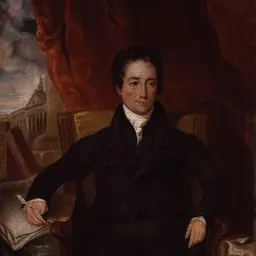

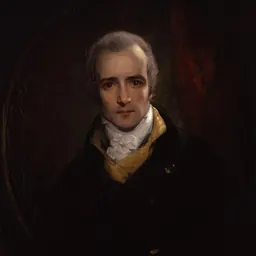
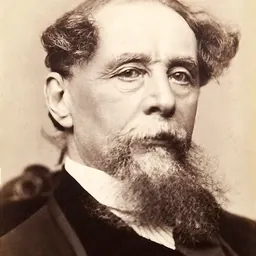
Related people
Same field, nearest in time
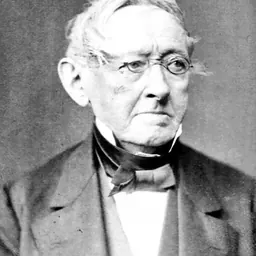


Contemporaries
People whose lives overlapped Thomas Griffiths Wainewright's




Frequently asked questions
Who was Thomas Griffiths Wainewright?
English artist and serial killer (1794-1847)
When was Thomas Griffiths Wainewright born?
Thomas Griffiths Wainewright was born in 1794 in Chiswick.
When did Thomas Griffiths Wainewright die?
Thomas Griffiths Wainewright died on 17 August 1847 in Hobart.
What was Thomas Griffiths Wainewright's occupation?
Thomas Griffiths Wainewright was a journalist, painter, serial killer and art critic.
What nationality was Thomas Griffiths Wainewright?
Thomas Griffiths Wainewright was British.
Sources & further reading
· Wikipedia: Thomas Griffiths Wainewright
· DBpedia: Thomas Griffiths Wainewright
Cite this page
APA: Biography.guide. (2026). Thomas Griffiths Wainewright. https://biography.guide/thomas-griffiths-wainewright/
MLA: "Thomas Griffiths Wainewright." Biography.guide, https://biography.guide/thomas-griffiths-wainewright/.
Chicago: "Thomas Griffiths Wainewright." Biography.guide. https://biography.guide/thomas-griffiths-wainewright/.
Data last updated: 2026-09-23 · Spot an error? Report a correction.
Portrait: Wikimedia Commons · author & licence
Page generated 2026-09-27 05:08 UTC