
About Thomas Goffe
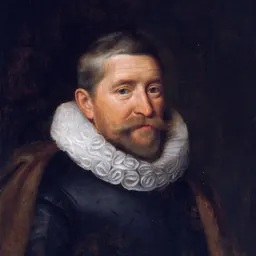
Lived 1591 – 1629 (aged 37–38). Thomas Goffe was an English playwright, cleric and writer.
Thomas Goffe (1591–1629) was a minor Jacobean dramatist.
Life
Thomas Goffe was born in Essex in 1591. He first studied at Westminster School where he had the status of a Queen's Scholar. Goffe received a scholarship on 3 November 1609 to attend Christ Church, Oxford. Here he received his bachelor of arts (B.A.) on 17 June 1613 and continued to get his master of arts (M.A.), on 20 June 1616. While involved with acting and writing plays at Christ Church, Goffe continued school. On 3 July 1623, he acquired his bachelor of divinity and became licensed to preach shortly after on 11 July 1623. Goffe was asked to be a rector of the church in East Clandon, Surrey after receiving his B.D., an offer worth about eight pounds a year.(1) However, Goffe began delivering Latin orations and writing poems in tribute to Sir Thomas Bodley and Queen Anne of Denmark as well as to the dean of Christ Church, William Godwin.
There is no evidence available to verify the dates of these three plays. However, the structure, crude dialogue, and the use of, Richard Knolles's The General Historie of the Turkes as a source of inspiration, suggest that The Raging Turk is Goffe's first play. Furthermore, Goffe's The Courageous Turk, contains a few lines from the prologue that imply this was the third play to be acted in front of Christ Church.
The Raging Turk is a tragedy of Emperor Bajazet II, who is desperately trying to hold onto his power. However, plotting sons, and a usurping brother prevent him from doing so. While trying to prevent his successor, confusion consumes the people, and leads to the death of at least 16 lives. The end of the play resolves with Bajazet being poisoned, and his grandson Solyman is crowned emperor.
The Courageous Turk breaks into two parts. The first part is concerned with Amurath’s passion for his concubine Eumorphe, his officers’ discontent with Amurath’s affair, and death of Eumorphe. The second part contains a series of events consisting of Amurath’s various war exploits in Serbia (Battle of Kosovo), the Christians' martial confusion, the marriage of Amurath's son Bajazet to Hatam, Amurath's conflict with his son-in-law Aladin, the mutual stabbing deaths of Amurath and the Christian Capitan Cobelitz, and the raising of Bajazet to Emperor with the subsequent death of his brother Jacup. In addition, unlike many writers and producers of academic drama in the Jacobean era, Goffe was not contemptuous of popular theatre, and included many scenes and lines that were influenced by Hamlet and Antonio's Revenge in his tragedy, Orestes. Phoenissae has also been attributed to Goffe. It was probably performed at Christ Church in 1619 but is now lost.
Goffe is also believed by some to have authored The Careless Shepherdess, a pastoral that was probably produced at Christ Church between 1618 and 1629, and later revised and produced by Queen Henrietta's Men around 1638. However, the argument against this belief is that Goffe could not have authored the pastoral because of the statement on the title page of The Careless Shepherdess, which states that it was acted at Salisbury Court, a theatre that did not open until after Goffe died.
Writings by Thomas Goffe
The Raging Turk or Bajazet II, Christ Church, Oxford, circa 1613–1618. The Tragedy of Orestes, Christ Church, Oxford, circa 1613–1618. The Courageous Turk, or Amurath the First, Christ Church, Oxford, 21 September 1618. The Careless Shepherdess, attributed with reservations to Goffe, Christ Church, Oxford, circa 1618–1629. Phoenissae, Christ Church, Oxford, 1619. Deliverance from the Grave. A sermon preached at Saint Maries Spittle, in London, on Wednesday 28 March 1627.
Don’t just read it —
keep it.
Full-length biographies made to live with: read them, listen on the way to work, watch them tonight.
- E-book
- Audio
- Video
Instant download · yours to keep · every purchase keeps this site free
Important facts
People in Thomas Goffe's life
Named in this biography and alive at the same time


Related people
Same field, nearest in time


Contemporaries
People whose lives overlapped Thomas Goffe's



Frequently asked questions
Who was Thomas Goffe?
English writer and priest
When was Thomas Goffe born?
Thomas Goffe was born in 1591 in Essex.
When did Thomas Goffe die?
Thomas Goffe died on 27 July 1629.
What was Thomas Goffe's occupation?
Thomas Goffe was a playwright, cleric and writer.
What nationality was Thomas Goffe?
Thomas Goffe was English.
Sources & further reading
Cite this page
APA: Biography.guide. (2026). Thomas Goffe. https://biography.guide/thomas-goffe/
MLA: "Thomas Goffe." Biography.guide, https://biography.guide/thomas-goffe/.
Chicago: "Thomas Goffe." Biography.guide. https://biography.guide/thomas-goffe/.
Data last updated: 2026-09-20 · Spot an error? Report a correction.
Page generated 2026-09-27 05:00 UTC