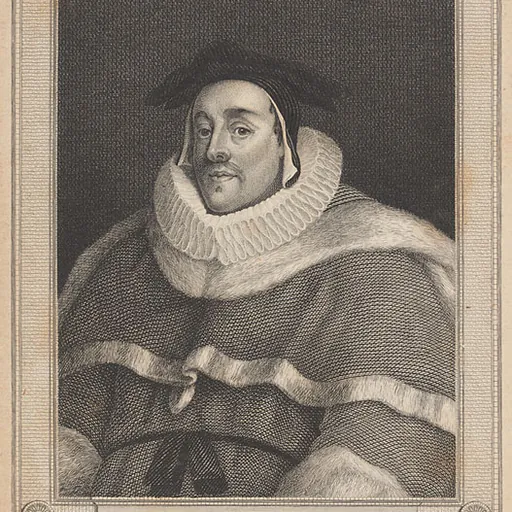
About Thomas de Littleton
Lived 1422 – 1481 (aged 58–59). Thomas de Littleton was a British judge, writer and undersheriff.
Sir Thomas de Littleton (or de Lyttleton; c. 1407–23 August 1481) was an English judge, undersheriff, Lord of Tixall Manor, and legal writer from the Lyttelton family. He was also made a Knight of the Bath by King Edward IV.
Family background Thomas de Littleton was the eldest son of Elizabeth Littleton (sole daughter and heiress of Thomas de Littleton, Lord of Frankley, Worcestershire) and of Thomas Westcote or Heuster, esquire, chief prothonotary of the Court of Common Pleas. The date of Littleton's birth is uncertain; a MS. pedigree gives 1422, but it probably occurred earlier than this. If, as is generally accepted, he was born at Frankley Manor, it could not have been before 1407, in which year Littleton's grandfather recovered the manor from a distant branch of the family.
Elizabeth Littleton and Thomas Westcote had four sons. Thomas, the eldest son and heir, took his mother's surname likely as a condition of her marriage-settlement as heir to the manor of Frankley. Two of his brothers, Nicholas and Guy, retained the surname Westcote. Nicholas Westcote married Agnes Vernon, the daughter and heiress of Edmund Vernon, and was an ancestor of the Westcotes of Staffordshire, while Guy Westcote married the daughter of one Greenevill of Gloucestershire and was an ancestor of the Westcotes of Devon and Somerset.
Career He attended the grammar school attached to the monastery in Worcester. Thus, he is cherished as an alumnus by both descendant educational institutions, today's Royal Grammar School Worcester and The King's School Worcester. He is said by Sir Edward Coke to have "attended one of the universities," but there is no corroboration of this statement.
He was probably a member of the Inner Temple and lectured there on the statute of Westminster, i.e., Donis Conditionalibus. His name appears in the Paston Letters (ed. J. Gairdner, p. 60) about 1445 as that of a well-known counsel, and in 1481/2 he received a grant of the manor of Sheriff Hales, Shropshire, from Sir William Trussell as a reward for his services as counsel.
Sometime before 1468, he purchased Tixall Manor from John Merston, who married an heiress of the De Wasteney family who had previously owned the manor. After Littleton's death, his granddaughter Joan inherited the manor. She married Sir John Aston of Haywood, and the manor would remain in the hands of the Aston family for many generations.
He appears to have been Recorder of Coventry in 1450; he was made Escheator of Worcestershire, and in 1447/8 he was under-sheriff of the same county; he became sergeant-at-law in 1453 and was afterwards a Justice of Assize on the northern circuit. In 1466, he was made a judge of the common pleas and, in 1475, a knight of the Bath.
He died, according to the inscription on his tomb in Worcester Cathedral, on August 23, 1481.
Marriage and issue Littleton married, before Easter term 1447, Joan Burley (died 22 March 1505), widow of Sir Philip Chetwynd (died 10 May 1444) of Ingestre, Staffordshire, and daughter and coheiress of William Burley, esquire, Speaker of the House of Commons, of Broncroft in Corvedale, Shropshire, by his first wife, Ellen Grendon, daughter and co-heiress of John de Grendon of Gayton, by whom he had three sons and two daughters:
Sir William Littleton (1450–1507), knighted after the Battle of Stoke, was a lawyer at the Inner Temple. He married first Ellen Walsh, daughter of William Walsh of Wanlip, and then Mary Byron, daughter and coheir of Richard Byron of Clayton, by whom he had a daughter, Joan Littleton, who married Sir John Aston of Haywood. He married secondly Mary Whittington, the daughter of William Whittington of Pauntley, Gloucestershire, by whom he had his son and heir, John Littleton (c. 1499–17 May 1532), and a daughter, Anne Littleton, who married Thomas Rouse of Ragley in Warwickshire. By an unknown mistress, he had an illegitimate son, William Littleton alias Lodge, who was the father of Sir Thomas Lodge, Lord Mayor of London. Richard Littleton (died 1517) was a lawyer at the Inner Temple. He married Alice Winnesbury. Thomas Littleton (died 1524) was a lawyer at Lincoln's Inn. He married Anne Botreaux. Ellen Littleton died unmarried. Alice Littleton died unmarried.
Through his three sons, he became an ancestor of the families holding the peerages of Cobham (formerly Lyttelton) and Hatherton. His eldest son and heir, Sir William Littleton, became an ancestor of the Lyttelton Baronets, who later acquired the title Baron Lyttelton of Frankley. His second son, Richard Littleton, became the founder of another wealthy dynasty, later to become the Littleton Baronets and later Barons Hatherton, through marriage into the Wynnesbury family of Pillaton Hall, near Penkridge, Staffordshire. His youngest son Thomas's descendants became another line of Littleton baronets, named for Stoke Milburgh, Shropshire.
Treatise on Tenures
Background His Treatise on Tenures was probably written after he had been appointed to the bench. According to tradition it is addressed to his second son, Richard, who went to the bar, and whose name occurs in the year books of the reign of Henry VII; it has however been argued that the words mon filz (my son) were simply a conventional way of addressing law students. The book, both historically and from its intrinsic merit, may be characterised as the first text-book upon the English law of property. The law of property in Littleton's time was mainly concerned with rights over land, and it was the law relating to this class of rights that Littleton set himself to digest and classify. The time was ripe for the task: ever since the Norman conquest, regular courts of justice had been at work administering a law that had grown out of an admixture of Teutonic custom and of Norman feudalism.
Under Henry II, the courts had been organised, and the practice of keeping regular records of the proceedings had been carefully observed. The centralising influence of the royal courts and of the justices of assize, working steadily through three centuries, had made the rules governing the law of property uniform throughout the land; local customs were confined within certain prescribed limits, and were only recognised as giving rise to certain well defined classes of rights, such, for instance, as the security of tenure acquired by villains by virtue of the custom of the manor, and the rights of freeholders, in some towns, to dispose of their land by will. Thus, by the time of Littleton (Henry VI and Edward IV), an immense mass of material had been acquired and preserved in the rolls of the various courts. Reports of important cases were published in the "year books". A glance at Statham's Abridgment, the earliest digest of decided cases, published nearly at the same time as Littleton's Tenures, is sufficient to show the enormous bulk that reported cases had already attained as materials for the knowledge of English law.
Language Littleton's treatise was written in that peculiar dialect compounded of Norman French and English phrases called law French. Although it had been provided by a statute of Edward III that viva voce proceedings in court should no longer be conducted in the French tongue, "which was much unknown in the realm," the practice of reporting proceedings in that language and of using it in legal treatises lingered till a much later period and was, at length, prohibited by a statute passed in the time of the Commonwealth in 1650.
Don’t just read it —
keep it.
Full-length biographies made to live with: read them, listen on the way to work, watch them tonight.
- E-book
- Audio
- Video
Instant download · yours to keep · every purchase keeps this site free
Important facts
Related people
Same field, nearest in time

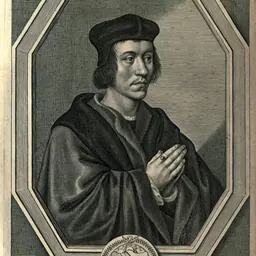

Contemporaries
People whose lives overlapped Thomas de Littleton's
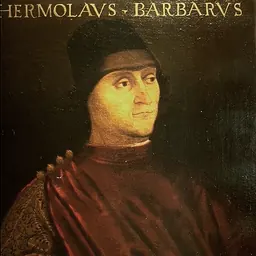
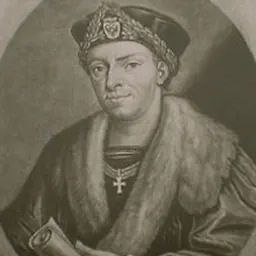



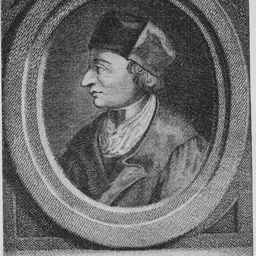
Frequently asked questions
Who was Thomas de Littleton?
English judge
When was Thomas de Littleton born?
Thomas de Littleton was born in 1422.
When did Thomas de Littleton die?
Thomas de Littleton died on 23 August 1481.
What was Thomas de Littleton's occupation?
Thomas de Littleton was a judge, writer and undersheriff.
What nationality was Thomas de Littleton?
Thomas de Littleton was British.
Sources & further reading
· Wikipedia: Thomas de Littleton
· DBpedia: Thomas de Littleton
Cite this page
APA: Biography.guide. (2026). Thomas de Littleton. https://biography.guide/thomas-de-littleton/
MLA: "Thomas de Littleton." Biography.guide, https://biography.guide/thomas-de-littleton/.
Chicago: "Thomas de Littleton." Biography.guide. https://biography.guide/thomas-de-littleton/.
Data last updated: 2026-09-22 · Spot an error? Report a correction.
Portrait: Wikimedia Commons · author & licence
Page generated 2026-09-27 05:03 UTC