
Thomas Cusack
Anglo-Irish Master of the Rolls, Lord Chancellor, and Chancellor of the Exchequer of Ireland
About Thomas Cusack
Lived 1490 – 1571 (aged 80–81). Thomas Cusack was a judge and politician.
Sir Thomas Cusack (also spelt Cusacke or Cusake) (1490–1571) was an Anglo-Irish judge and statesman of the sixteenth century, who held the offices of Master of the Rolls in Ireland, Lord Chancellor of Ireland, and Chancellor of the Exchequer of Ireland, and sat in the Irish House of Commons. He was one of the most trusted and dependable Crown servants of his time, although he led a somewhat turbulent private life.
He was an ancestor of the Duke of Wellington. He is also memorable as the fourth of the six husbands of Jenet Sarsfield, who was his third wife.
Background – the Cusack family He was the eldest son of John Cusack of Cussington, County Meath, and his first wife Alison de Wellesley, youngest daughter of Sir William de Wellesley of Dangan Castle and his wife Ismay Plunket of Killeen Castle, daughter of Sir Thomas Fitz-Christopher Plunket and his second wife Marian Cruise, or Cruys. Both his parents came from long-established families of the Pale; John was a cousin of an earlier Thomas Cusacke of Gerrardstown who was Attorney General for Ireland in 1480 and Lord Chief Justice of Ireland from 1490 to 1494. It is less clear if Thomas Cusack, Recorder of Dublin in 1487/8, belonged to the same family: Cusack was also a common enough name in Dublin. After Alison's death, John remarried Elinor Delahide of Moyglare Hall, County Kildare.
The Cusack family of Cushinstown were descended from Walter de Cusack, son of Sir Andrew Cusack of Gerrardstown, a leading judge and soldier in the early fourteenth century. An earlier John Cusack is recorded at Cushinstown in the 1380s: his daughter married Peter Hussey, Baron Galtrim. Nicholas Cusack, Bishop of Kildare 1279–99, was another member of the family.
Thomas had four younger brothers and seven sisters, including:
Mary (Maria), a nun who became the last Abbess of Lismullen Anne, who married Thomas Finglas, son of Patrick Finglas, Lord Chief Justice of Ireland and had issue Johanna, who married Sir Garret Fleming, a close relative of Christopher Fleming, 8th Baron Slane Catherine, who married Nicholas Wafer, a retainer of Silken Thomas, who later became notorious as one of the assassins of Archbishop John Alen Thomasine, who married Christopher Dowdall of County Louth, and was the mother of James Dowdall. James, a future Lord Chief Justice of Ireland was a favourite of his uncle Thomas, who encouraged him to pursue a legal career.
Early career Little is known of his life until he entered the Inner Temple in 1522: he became Master of the Revels there in 1524. He married his first wife Joan Hussey in about 1515.
The Rebellion of Silken Thomas does not seem to have hindered his career, even though his brother-in-law Nicholas Wafer was deeply implicated in the Rebellion, becoming infamous as the killer of Archbishop Alen. His stepmother's family, the Delahides of Moyglare, were also heavily involved in the Rebellion, and were regarded as its "prime instigators".
Like most ambitious Irishmen of the time, he relied on the patronage of Thomas Cromwell, who was then the most powerful minister at the English Court, to further his own career; he lobbied Cromwell for the Irish Chancellorship of the Exchequer, and on payment of £10 (a large sum at the time), he received the office in 1533. In 1534 when a vacancy opened on the Court of Common Pleas, he again lobbied for the office, with the assistance of his wealthy cousin Lady Neville, who spent £100 in bribes (then a considerable amount) to obtain the office for him. praises his practical common sense, his ability to discern the truth of any case and his minute attention to detail. He showed no prejudice against Irish-speaking plaintiffs, and gained a reputation on the Bench for integrity and moderation.
Politician His first term as a judge lasted for less than a year: he was summarily dismissed from the Bench, apparently following a quarrel with Cromwell. There were rumours that he had embezzled Exchequer funds, although he was generally considered an honest man by the standards of the age. His disgrace was short-lived, and he was soon reconciled with Cromwell. Mary was required to go through the humiliation of making a supposedly "voluntary" surrender of the Abbey into her brother's hands. Lismullen became one of the principal family residences, along with Cussington, but a bitter controversy over the rightful ownership of Lismullen led to years of litigation after Thomas' death. It remained in Cusack hands into the next century, when it passed by marriage to the Dillon family. His father died, aged about eighty-two, in 1537, and Thomas duly inherited Cussington. The Crown confirmed the grant of Lismullen and the lands adjoining it to Thomas in 1547.
He entered the Irish House of Commons in 1536 and was elected its Speaker in 1541, having been knighted the previous year. As Speaker he played a major role in securing the passage of the Crown of Ireland Act 1542, acknowledging Henry VIII as King of Ireland. His opening speech to the Commons as Speaker was an eloquent defence of royal policy, and in particular of the breach with the Papacy and the suppression of the monasteries. The Lord Justice of Ireland praised him as one who had done faithful and diligent service and cared for nothing but the King's honour.
Master and Chancellor In 1542 Cusack became Master of the Rolls in Ireland. This was still a relatively junior office, and at that time it was mainly administrative rather than judicial in nature. He had custody of all records of the Court of Chancery and power to hear lawsuits. He seems to have held the office for only a year, and was replaced by Nicholas Wycombe. He was appointed High Sheriff of Meath in 1543 and raised troops in that county for service abroad; he also assisted in the defence of the Pale in 1548.
Having already been appointed Lord Keeper of the Great Seal of Ireland in 1546, he was in 1551 made Lord Chancellor of Ireland by Edward VI on account of his "wisdom, learning, great experience and grave behaviour", and received an increase in salary.
Although he complained of constant illness, Cusack, like his father, lived to be over eighty. He died in 1571 and is buried at Trevet, County Meath. A memorial to Cusack and his second wife Maud Darcy was raised in Trevet Church (now a ruin) by his son John, who reputedly carved it, and it still exists in a fragmentary form. Cusack praises his wife generously but his own good qualities even more:
"Virtue begat me. Piety cherished me. Honour increased me. Skill set me high. Let long lived renown hand down my days. As Lord Chancellor I administered the laws.....".
Marriages O'Flanagan's claim that Cusack led a simple domestic life hardly gives a full or accurate picture of his decidedly troubled marital career. His first wife was a distant cousin, Joan Hussey, with whom he had at least three children. In 1537 the marriage was annulled on the grounds of consanguinity, but it is likely that unhappy personal differences were the real reason for the end of the marriage. In later years Cusack was accused of inciting his servants to adultery with Joan to give him grounds for divorce, although this is probably untrue. It was noteworthy that he always refused to admit that there had ever been a valid marriage between Joan and himself, and always referred to Maud Darcy as his first wife. Joan remarried into the prominent Bathe family of Drumcondra, Dublin and was still living in 1581; Thomas, perhaps in a belated acknowledgement of her rights, left her a small legacy.
His second marriage was far more controversial since Maud Darcy was rumoured to have had her first husband, James Marward, titular Baron Skryne, murdered by Richard Fitzgerald, a younger son of Gerald FitzGerald, 8th Earl of Kildare. She then married Fitzgerald, who was later executed for treason for his part in the Silken Thomas rebellion, whereupon Maud having obtained a pardon for her complicity in her husband's treason, quickly married Cusack. John Catherine (died 1598), who married firstly Sir Henry Colley and secondly William Eustace of Castlemartin Mary, who married Theobald Butler, 1st Baron Cahir and had seven children Alice, who married Sir Christopher Bellew of Bellewstown Margaret, who married Murrough McDermot O'Brien, 3rd Baron Inchiquin and had seven children Alison, who married Thomas Aylmer.
From Catherine Cusack and her first husband, Henry Colley descended the Colley family who acquired the title Earl of Mornington. They changed their name to Wellesley (they had Wellesley blood through Thomas Cusack's mother Alison de Wellesley, and there were several later Cusack-Wellesley marriages, including Ann Cusack's marriage to Valerian Wellesley) and produced, among numerous other descendants, the 1st Duke of Wellington.
The Cusack-Smith baronets of Tuam were also descended in the female line from Sir Thomas.
Character Despite his somewhat troubled private life, his willingness to acquire monastic lands, his use of bribery to gain office, and one allegation early in his career of embezzlement of Crown funds, Thomas Cusack is generally judged to have been one of the finest public servants of his time. A modern writer calls him "one of the most loyal and respected political figures in Ireland" in his time.
Don’t just read it —
keep it.
Full-length biographies made to live with: read them, listen on the way to work, watch them tonight.
- E-book
- Audio
- Video
Instant download · yours to keep · every purchase keeps this site free
Important facts
People in Thomas Cusack's life
Named in this biography and alive at the same time


Related people
Same field, nearest in time
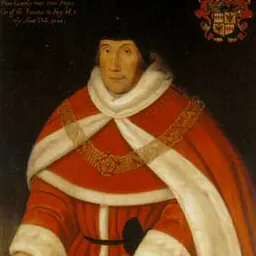
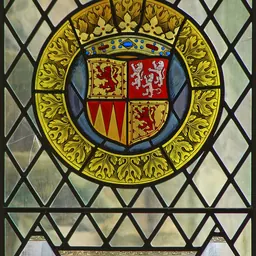

Contemporaries
People whose lives overlapped Thomas Cusack's
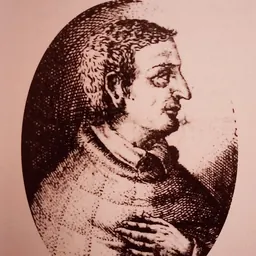
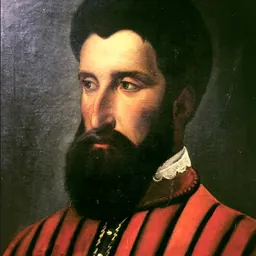

Frequently asked questions
Who was Thomas Cusack?
Anglo-Irish Master of the Rolls, Lord Chancellor, and Chancellor of the Exchequer of Ireland
When was Thomas Cusack born?
Thomas Cusack was born in 1490.
When did Thomas Cusack die?
Thomas Cusack died in 1571.
What was Thomas Cusack's occupation?
Thomas Cusack was a judge and politician.
Sources & further reading
· DBpedia: Thomas Cusack (Irish judge)
Cite this page
APA: Biography.guide. (2026). Thomas Cusack. https://biography.guide/thomas-cusack/
MLA: "Thomas Cusack." Biography.guide, https://biography.guide/thomas-cusack/.
Chicago: "Thomas Cusack." Biography.guide. https://biography.guide/thomas-cusack/.
Data last updated: 2026-09-20 · Spot an error? Report a correction.
Page generated 2026-09-27 05:04 UTC