
About Thomas Brigham Bishop
Lived 1835 – 1905 (aged 69). Thomas Brigham Bishop was an American songwriter.
Thomas Brigham Bishop (June 29, 1835 - May 15, 1905) (usually referred to as T. Brigham Bishop) is best known as an American composer of popular music. Various disputed claims have been made by Bishop and others that he authored, or at least contributed to the authorship of, a number of popular 19th-century songs, including John Brown's Body, When Johnny Comes Marching Home, and Shoo Fly, Don't Bother Me. Bishop later had an infamous career as a bucket shop proprietor, among other schemes.
Background
Bishop was born in Wayne, Maine in 1835, and began studying music in Providence, Rhode Island when he was 16. In 1864, he founded a minstrel show in Chattanooga, which lasted until Lincoln's assassination.
Songs
While Bishop did publish a number of songs beginning in the 1850s, disputes have arisen over his authorship claims as to some of the most famous of those compositions. In some cases, it is fairly clear that Bishop was not the original author of the works in dispute. In other cases the facts are not clear.
"John Brown's Body" Bishop has often been attributed with authorship of the popular Civil War marching song "John Brown's Body", though that claim is widely disputed. The melody of the song was famously also used for The Battle Hymn of the Republic. In 1916, Bishop's friend John J. MacIntyre published a short book promoting Bishop's authorship of John Brown's Body and other songs, boldly called The Composer of the Battle Hymn of the Republic. MacIntyre also promoted Bishop's authorship claims in 1935, for the 100th anniversary of Bishop's birth, which was featured in an article in Time magazine.
Bishop's story of the genesis of the song is that it grew out of a conversation with his brother-in-law around 1858, who "took me to task, remarking that my songs were all written for the devil. Then he said 'I am bound to be a soldier in the army of the Lord.' Glory, Glory, Hallelujah!'" This, according to Bishop, inspired him to the melody and lyrics, and he later modified the lyrics after John Brown's death at Harper's Ferry in 1859. Bishop claimed he first published the song with John Church of Cincinnati in 1861. According to Bishop, he wrote the melody for the song in 1850, as "Johnny, Fill Up the Bowl," Gilmore wrote new lyrics for it in 1863, and both brought the song to their publisher, who reportedly suggested that the Lambert pseudonym be used on the sheet music. Bishop did publish a sheet music version of the song in 1869, which includes the caption, "Original Copy and Only Authorized Edition." Other sources, however, have credited Billy Reeves (lyrics) and Frank Campbell, or Rollin Howard, with the song. The first group to popularize the song was Bryant's Minstrels in 1869–70.
MacIntyre's reporting Cover to sheet music for "Six new songs" by Bishop, published by H. Pilcher and Sons, St. Louis, 1857. Writer John J. MacIntyre's 1916 short book, The Composer of the Battle Hymn of the Republic, about Bishop's songs, appears to be written largely based on Bishop's self-reporting to MacIntyre many years after the fact. MacIntrye reports therein that he first met Bishop in 1897 in New York.
Perhaps the most amazing of the claims in the book is that Bishop had a small part in the writing of one of the Stephen Foster's best known songs, Old Folks at Home ("Swanee River"). Bishop claims that he ran into Foster in a music publishing house, where Foster had already composed the lyrics and basic melody, and whistled it to Bishop, who "put it down" on paper for him, and arranged it for piano by adding basic chords. Then, according to Bishop, famed blackface performer E.P. Christy walked in, heard the song, and paid Foster $30 for it on the spot. Thus, the song was attributed to E.P. Christy when it was published (which, at the very least, is true; the original sheet music, dated 1851, attributes authorship to Christy). If any of this story was true, Bishop would have been only about 16 years old at the time of this event, and it contradicts other sources which make no mention of Bishop.
Bishop was arrested in mid-1890 for charges arising out of legal proceedings brought against him for taking $2,000 from a Julie E. Hetsch in 1885, but was able to skip town once bond was posted. He was again arrested in Jersey City, New Jersey in November 1891 and placed in Ludlow Street Jail, where the New York Times critique of Bishop's financial career was withering: "Bishop has had a long career as a confidence man, bunko steerer, and general crook. He has made Massachusetts, Ohio, and Florida too hot to hold him."
In 1881, Bishop built a 200-room hotel near Silver Springs, Florida. After fires in 1894/95, he rebuilt on the site as the "Brown House." Also in Florida, he helped found the Palatka National Bank, which failed after a few years.
In 1901, Bishop was embroiled in yet another scheme, this time promoting the "New England Wireless Telephone Company", which was one of a number of companies formed as a supposed competitor to Marconi, which were later exposed as a fraud. From 1886 to 1894, they had a house in Dundee Park, New Jersey.
Bishop died in Philadelphia on May 15, 1905, suffering from locomotor ataxia. As one Florida obituary of Bishop noted (while detailing Bishop's various exploits), "by the death in Philadelphia last week of Thomas Brigham Bishop, a curiously picturesque and extraordinary career extending more than half a century was closed." "Kittie Wells" (1861) - Has been credited to Bishop, but it was published twice previously, by Charles E. Atherton in 1858, and Thomas Sloan Jr. in 1860. "Sweet Evelina" (1863). Has been attributed to Bishop as composer, the song was first published in 1863 as "words by M." and "melody by T." "Leaf by Leaf the Roses Fall" (1865). The lyrics to this song were penned by Caroline Dana Howe in 1856. It appears Bishop originally claimed complete authorship of the song, but when confronted with proof that the lyrics were from a poem by Howe, he gave full credit for the lyrics to her and made sure credit was given to her in future publications of the song. "Pretty as a Picture" (1872) (lyrics by George Cooper) "On the Down Hill of Life"
Don’t just read it —
keep it.
Full-length biographies made to live with: read them, listen on the way to work, watch them tonight.
- E-book
- Audio
- Video
Instant download · yours to keep · every purchase keeps this site free
Important facts
People in Thomas Brigham Bishop's life
Named in this biography and alive at the same time

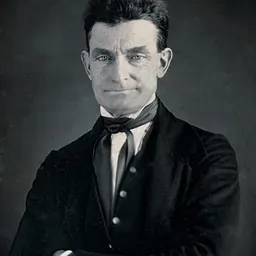
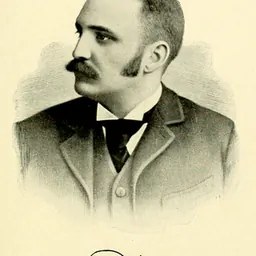
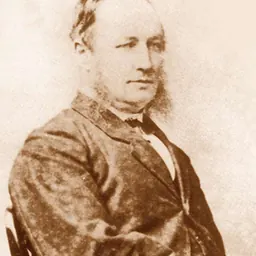
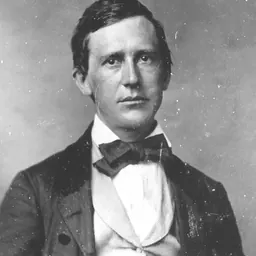

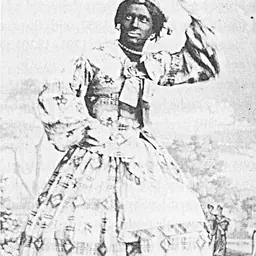

Related people
Same field, nearest in time


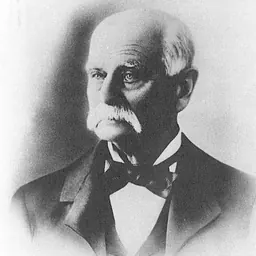
Contemporaries
People whose lives overlapped Thomas Brigham Bishop's



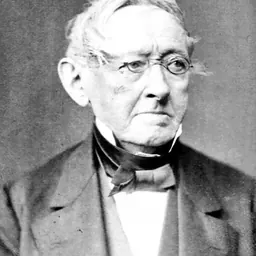

Frequently asked questions
Who was Thomas Brigham Bishop?
American musician (1835–1905)
When was Thomas Brigham Bishop born?
Thomas Brigham Bishop was born on 29 June 1835 in Wayne.
When did Thomas Brigham Bishop die?
Thomas Brigham Bishop died on 15 May 1905 in Philadelphia.
What was Thomas Brigham Bishop's occupation?
Thomas Brigham Bishop was a songwriter.
What nationality was Thomas Brigham Bishop?
Thomas Brigham Bishop was American.
Sources & further reading
· Wikipedia: Thomas Brigham Bishop
· DBpedia: Thomas Brigham Bishop
Cite this page
APA: Biography.guide. (2026). Thomas Brigham Bishop. https://biography.guide/thomas-brigham-bishop/
MLA: "Thomas Brigham Bishop." Biography.guide, https://biography.guide/thomas-brigham-bishop/.
Chicago: "Thomas Brigham Bishop." Biography.guide. https://biography.guide/thomas-brigham-bishop/.
Data last updated: 2026-09-22 · Spot an error? Report a correction.
Page generated 2026-09-27 05:27 UTC