
About Thomas Ashburton Picken
Lived 1818 – 1891 (aged 72–73). Thomas Ashburton Picken was a British engraver, lithographer, printmaker and painter.
Thomas Ashburton Picken (c. 1818 – 23 January 1891), known professionally as T. Picken, was a Scottish-born watercolourist, engraver and lithographer working in England between around 1834 and 1875. He worked for the printing firm Day and Haghe (later Day & Son) for many years, and first came to notice for his lithograph of The Destruction of Both Houses of Parliament when he was only about 16 years old. Although there is no evidence that he travelled abroad, he produced many lithographs of foreign parts after paintings by other artists. He specialised in detailed images of landscape, architecture, events of war, and ships. He produced lithographs of SS Great Eastern and the laying of the Atlantic cable, and he illustrated books.
Picken's father was the Scots novelist Andrew Picken, and his brother Andrew was a lithographer who also trained with Day and Haghe. Picken ended his days as a Poor Brother at The London Charterhouse, alongside his brother, James Canning (or Channing) Picken. His lithographs are now in many collections, including the Royal Collection Trust, the Library of Congress collection and the Royal Academy collection.
Picken exhibited his own paintings from 1846 to 1875.
Arts background Picken's father was Scots writer Andrew Picken (Paisley 1788 – London 23 November 1833), Thomas' mother was Janet E. Coxon (or Coxson) (1793 – South Stoneham 1871). Thomas Picken was one of four sons, three of whom were lithographers. Two of his elder brothers were the lithographer Andrew (1815 – London 24 June 1845) and lithographic artist (later wine merchant) James Canning (or Channing) (Dublin ca.1817 – Brentford 1899). and Eleanor Emma (Glasgow ca.1822 – Portsea 21 July 1898) In 1851 the census finds him living at 13 Murray Street, Camden, with his brother James and his sister Sophia. By 1861 he was lodging at 27 Rutland Street, St Pancras, London, with the family of sculptor Thomas Woolner (1825–1892). In 1871 he was living as a lodger at 11 Rutland Street, describing himself as a lithographic artist.
Picken and his brother James Canning (or Channing) Picken were accepted as Poor Brothers or male pensioners at the Charterhouse, London. Thomas was described there as a former lithographer and James as a former wine merchant, and Thomas was registered in 1879. On 23 January 1891 he died at the Charterhouse. He was buried on 24 January 1891 with his brother Andrew on the west side of Highgate Cemetery.
Career
Probably one of Picken's earliest publications was his lithograph of The Destruction of Both Houses of Parliament, 1834, and the laying of the Atlantic cable.
Selected works Palace of Westminster: Destruction of both Houses of Parliament, as seen from the Surrey side (1834), by Thomas Ashburton Picken. Palace of Westminster: Destruction of both Houses of Parliament as seen from Abingdon Street on the Night of October 16th 1834 (1834), by Thomas Ashburton Picken. King's College Hospital. North or entrance front (ca.1842), after architect Thomas Bellamy (1798–1876). View of Quebec City, Canada (1845), after the artist and topographical engineer Benjamin Beaufoy (1814–1879). Horse Guards Parade: General view (1851), after George Sidney Shepherd. Wellington Arch, Hyde Park Corner (1852), after Louis Haghe (1806–1885). The Great Eastern under weigh July 23rd (circa 1860). Native Village and Palaver House near Cavalla (1868) after George Townshend Fox (1810–1886).
Some lithographs
Works published as sets
The eight engravings were lithograph copies by Thomas Ashburton Picken of Frances Emilia Crofton's original paintings. . (This is a bound set of lithographs after Edmund Walker, rather than an illustrated book: Westminster Abbey; General Post Office; Greenwich Hospital; The Treasury Whitehall; The Quadrant Regent Street; St Paul's Cathedral, St Martin's Church; Trafalgar Square; Royal Exchange; Buckingham Palace; London Bridge; British Museum).
Book illustration (In date order)
(Lithographs after David Roberts). (Thomas Picken is credited for some of the lithographs). (At least one lithograph in this book is by Picken after Pyne. Pyne is sometimes listed as "Payne".) .(Lithographs after William Simpson, Sir William Allan, Clarkson Frederick Stanfield, George Cattermole, William Leighton Leitch, Thomas Creswick, David Roberts, James Duffield Harding, Joseph Nash, Horatio McCulloch, J. M. W. Turner, David Octavius Hill). Society of Artists of Great Britain (1846–75): ten watercolours. Victoria and Albert Museum, Government Art Collection, Library of Congress Collection, Museum of London, National Army Museum, National Library of Poland, National Maritime Museum, London, National Railway Museum, People's Collection, Wales, Royal Academy collection, Royal Museums Greenwich, University of British Columbia, University of Edinburgh collection, Villanova University, Yale Center for British Art, and the British Museum.
Royal Collection Trust: Five of the prints from the Eight Views set (1854), including Killarney, Dunbroody Abbey, Lough Rynn, Muckruss Abbey and Castle Otway after Frances Emilia Crofton, and Launch of the Trafalgar (1842) by T.A. Picken after William Ranwell. Guildhall Library print room, Wakefield Collection: St Paul's Cathedral (1851). London Metropolitan Archives and Guildhall Art Gallery: Palace of Westminster: Destruction of both Houses of Parliament, as seen from the Surrey side (1834), National Library of Wales, Welsh Landscape Collection: Various lithographs including Conwy Tubular Bridge (1849) after S. Crowther.
Reviews
Messrs Ackerman of the Strand have just brought out a beautiful lithograph representation of the Launch of the Trafalgar drawn by Mr Ranwell and lithographed by Mr T. Picken. So far as our acquaintance with art goes, this is the first attempt that has been made to do full justice, by pictorial representation, to that soul-stirring scene to every Englishman - a ship launch. The artist could not have made a better selection of subject than the one he has chosen. The launch of the Trafalgar presented, perhaps, the most animating scene of joyousness that ever occurred in this country. More brilliant assemblages take place at Coronations and other great state ceremonies; but the glitter of a pageant has always a certain coldness associated with its formalities. Here, however, was a kind of undress scene of royalty - a monarch brought into immediate contact with her people, and sharing with them in feelings which form their mutual security. Those who were present can never forget the scene - a scene from which, with its multitudinous objects, we should have considered beyond the reach of pictorial art, if we had not seen Mr Ranwell's admirable delineation of the subject. The moment which the artist has perpetuated in the beautiful lithograph before us, is that in which the noble vessel descended majestically into the water, amid the heartwarming huzzas of countless thousands. The situation of the spectator is on the river below the slip - a line of yachts, barges and other craft, with their crowded docks forming the immediate foreground. The figures are admirably disposed and brought up with all the sharpness of a line engraving. - Intermediately is a patch of water with a few light row-boats, and then a line of steamers with their thronged and brilliant assemblages. Next, occupying the centre of the picture, is the noble vessel herself, just settling into the water, a sufficient space being left between her bow and entrance of the dock to discover the Royal party. To describe the various accessory aids which the artist has judiciously drawn into his subject would occupy a page; whilst we only have space left to observe generally that this splendid specimen of lithography is a perfect novelty in art. We had no conception so large a drawing crowded with thousands of figures could be attempted by this process with any chance of success - whilst in distinctness of outline, in sharpness and clearness of body, in delicacy of lights and in fulness of tone his magnificent picture has, as we previously observed, all the power of a line engraving; and as a specimen of lithography stands without a rival. ("Launch of the Trafalgar", Kentish Mercury, 12 March 1842).
Bath from Sham Castle drawn on stone by T. Picken, from a painting by J. Syer. A very beautiful lithograph engraving of the city of Bath has recently been published by Mr Everitt, of the Repository of Arts in that town. The view is taken from Sham Castle, and the town appears unfolded as a map, all the streets and principal buildings being represented with the strictest regard to topographical accuracy. The surrounding country is also seen for many miles, and independently of the value of the engraving in an historical point of view, and as a work of reference, it is commendable for its general fidelity to nature and artistic treatment. ("Bath from Sham Castle", Morning Post, 28 September 1850).
Further research
Don’t just read it —
keep it.
Full-length biographies made to live with: read them, listen on the way to work, watch them tonight.
- E-book
- Audio
- Video
Instant download · yours to keep · every purchase keeps this site free
Important facts
People in Thomas Ashburton Picken's life
Named in this biography and alive at the same time





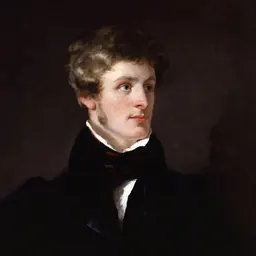
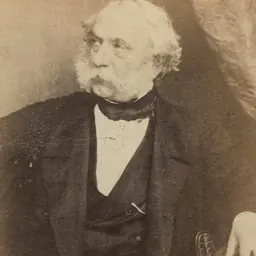
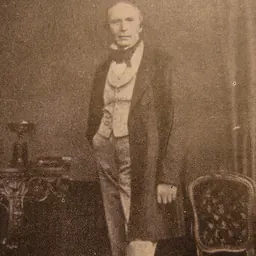
Related people
Same field, nearest in time
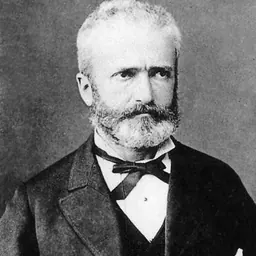
Contemporaries
People whose lives overlapped Thomas Ashburton Picken's



Frequently asked questions
Who was Thomas Ashburton Picken?
engraver; 1818-1891 (1818–1891)
When was Thomas Ashburton Picken born?
Thomas Ashburton Picken was born in 1818 in Govan.
When did Thomas Ashburton Picken die?
Thomas Ashburton Picken died on 23 January 1891 in London.
What was Thomas Ashburton Picken's occupation?
Thomas Ashburton Picken was an engraver, lithographer, printmaker and painter.
What nationality was Thomas Ashburton Picken?
Thomas Ashburton Picken was British.
Sources & further reading
· Wikipedia: Thomas Ashburton Picken
· DBpedia: Thomas Ashburton Picken
Cite this page
APA: Biography.guide. (2026). Thomas Ashburton Picken. https://biography.guide/thomas-ashburton-picken/
MLA: "Thomas Ashburton Picken." Biography.guide, https://biography.guide/thomas-ashburton-picken/.
Chicago: "Thomas Ashburton Picken." Biography.guide. https://biography.guide/thomas-ashburton-picken/.
Data last updated: 2026-09-20 · Spot an error? Report a correction.
Page generated 2026-09-27 05:12 UTC