
About Theos Casimir Bernard
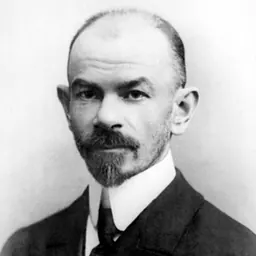
Lived 1908 – 1947 (aged 38). Theos Casimir Bernard was an American explorer, writer, traveler and yogi, known for Hatha yoga and Tibetan Buddhism.
Theos Casimir Hamati Bernard (10 December 1908 – 1947) was an American explorer and author known for his work on yoga and religious studies (particularly in Tibetan Buddhism). He was the nephew of Pierre Bernard, "Oom the Omnipotent",
His account of old-style hatha yoga as a spiritual path, Hatha Yoga: The Report of A Personal Experience, is a rare insight into the way these practices, known from medieval documents like the Hatha Yoga Pradipika, actually worked.
His biographer, Paul Hackett, states that many of the travel experiences Bernard relates in his books are exaggerated or fabricated. There is no doubt, however, that Bernard became fluent in the Tibetan language, travelled in Tibet, met senior figures, and gathered an extensive collection of photographs, field notes, manuscripts, and ritual objects.
Biography Early life Theos Casimir Bernard was born on 10 December 1908 in Pasadena, the son of Glen Agassiz Bernard and Aura Georgina Crable. The name Theos is Greek for God. His father's interest in the spiritual philosophy of the East and subsequent travel to India soon caused the marriage to fail. Aura and Theos, still a baby, went to live in her home town of Tombstone, Arizona.
As a student of liberal arts at the new University of Arizona from 1926, Bernard became seriously ill with rheumatic pneumonia after being thrown into a fountain during a hazing ritual on a cold day early in 1927, and was taken home to recuperate. He travelled all over India, from Ceylon to Kashmir, meeting religious and yoga gurus. In Calcutta he arranged a meeting with Lama Tharchin of Kalimpong, and studied the Tibetan language. After nearly a year, he obtained permission in Sikkim from the British political officer to visit Tibet. He met several high officials of the government of Tibet, studied Tantric Yoga and collected many books on Tibetan Buddhism. during his three months in Tibet in a "near obsessive documentation"
However, he had indeed learnt fluent Tibetan, travelled in Tibet, met senior lamas and government officials, and returned with an unmatched collection of photographs, film, field notes, and manuscripts, from essentially the only moment when Tibet had allowed foreigners in, and from its final years as an independent country with a vibrant spiritual culture. His Tibetan collection included 22 bronze statues of Buddhist gods, 40 thangka paintings, 23 rugs, 25 mandalas, over 100 cloth wood-block prints, 79 books, and many textiles, robes, hats, ritual implements, and household objects. The collection is stored at the University of California, Berkeley.
From a different point of view, Bernard certainly pioneered the spiritual approach of a generation of Westerners interested in Buddhism, Yoga, and other religious traditions of India. His seeking adventure and a lost or hidden spiritual tradition, too, could be seen as perpetuating the Western myth of the East exemplified by James Hilton's popular 1933 novel Lost Horizon and the 1937 film based on it; these portray a hidden kingdom of happy immortals at Shangri-la, high in Tibet's mountains.
In 1939, Bernard opened the American Institute of Yoga and Pierre Health Studios.
Hatha yoga
During the 1940s, Bernard completed his PhD in religion at Columbia University under the supervision of Herbert Schneider. It describes his experiences as a scholar-practitioner with asanas and the reason he was "prescribed" them, purifications (shatkarmas), pranayama, and mudras, and gives a more theoretical account of samadhi. He had learnt these around 1932-1933, while studying at the University of Arizona. He published his dissertation in 1943 as the book Hatha Yoga: The Report of A Personal Experience. It was illustrated with high-quality studio photographs of Bernard in the yoga practices he had mastered. It was one of the earliest references in the West, possibly the first in English, (It was preceded by Sport és Jóga in Spanish in 1941.) It represents, in the yoga scholar-practitioner Norman Sjoman's words "virtually the only documentation of a [hatha yoga] practice tradition", the actual use of hatha yoga to achieve successive stages on a spiritual path towards moksha, liberation, whatever may be thought of the genuineness of his accounts and experiences. He was declared dead several months later, though his body was never found.
Works
Penthouse of the Gods : a pilgrimage into the heart of Tibet and the sacred city of Lhasa (1939a) Heaven Lies Within Us: Yoga Gave Me Superior Health (1939b) Hatha Yoga: The Report of A Personal Experience (1943) illustrated with 37 black-and-white photographs of Bernard in different asanas The Philosophical Foundations of India (1945)
Don’t just read it —
keep it.
Full-length biographies made to live with: read them, listen on the way to work, watch them tonight.
- E-book
- Audio
- Video
Instant download · yours to keep · every purchase keeps this site free
Important facts
Family & relationships
People in Theos Casimir Bernard's life
Named in this biography and alive at the same time




Related people
Same field, nearest in time

Contemporaries
People whose lives overlapped Theos Casimir Bernard's



Frequently asked questions
Who was Theos Casimir Bernard?
scholar in philosophy, practitioner of Yoga and Tibetan Buddhism (1908-1947)
When was Theos Casimir Bernard born?
Theos Casimir Bernard was born on 10 December 1908 in Los Angeles.
When did Theos Casimir Bernard die?
Theos Casimir Bernard died on 1 September 1947 in Punjab.
What was Theos Casimir Bernard's occupation?
Theos Casimir Bernard was an explorer, writer, traveler and yogi.
What was Theos Casimir Bernard known for?
Theos Casimir Bernard was known for Hatha yoga and Tibetan Buddhism.
What nationality was Theos Casimir Bernard?
Theos Casimir Bernard was American.
Sources & further reading
· Wikipedia: Theos Casimir Bernard
· DBpedia: Theos Casimir Bernard
Cite this page
APA: Biography.guide. (2026). Theos Casimir Bernard. https://biography.guide/theos-casimir-bernard/
MLA: "Theos Casimir Bernard." Biography.guide, https://biography.guide/theos-casimir-bernard/.
Chicago: "Theos Casimir Bernard." Biography.guide. https://biography.guide/theos-casimir-bernard/.
Data last updated: 2026-09-20 · Spot an error? Report a correction.
Page generated 2026-09-27 05:10 UTC