
About Theodore Roosevelt Schellenberg
Lived 1903 – 1970 (aged 66). Theodore Roosevelt Schellenberg was an American archivist.
Theodore Roosevelt Schellenberg (24 February 1903 – 14 January 1970) was an American archivist and archival theorist. Schellenberg's publications and ideas are part of the foundation for archival theory and practice in the United States. In particular, Schellenberg is known for pioneering American archival ideas about appraisal.
Early life Theodore Roosevelt Schellenberg was born on February 24, 1903, to Abraham Lawrence and Sarah Schroeder Schellenberg in Garden Township, Harvey County, Kansas. Prior to Theodore's birth, his parents had decided to emigrate to the United States in 1879 to avoid the introduction of Russification in their native country, Russia. There was a large immigration population of Mennonites in Kansas during this time, which allowed Abraham Schellenberg to continue working as a leader for the Mennonite Brethren.
Education In his youth, T. R. Schellenberg attended McPherson Elementary School (1908–1912) and Hillsboro Middle School (1912–1915). He went on to attend Hillsboro High School (1916–1918), but he later finished his high school career at Tabor Academy (1919–1922). His dissertation topic was "The European Background of the Monroe Doctrine, 1818 to 1923."
Career Upon completing his doctorate, Schellenberg secured a position with the Joint Committee on Materials for Research as Executive Secretary, part of the American Council of Learned Societies and the Social Science Research Council.
Schellenberg briefly left NARA for three years at the close of WWII in 1945, when he took a job as a Records Officer in the Office of Price Administration. His work there illustrated the many difficulties found in managing vast amounts of government records, which only increased his commitment to finding solutions. In 1948, he returned to NARA as Program Adviser to the Archivist and published his first major work in 1949 called Disposition of Federal Records: How to Develop an Effective Program for the Preservation and Disposal of Federal Records. This differentiation was key for Schellenberg as he argued for a greater distinction between records and archives. In his definition, records only have current, primary value to their creators, but archives are records deemed to have significant secondary value by an archivist (i.e. meriting permanent preservation) outside of their original value to the record's creators. Consequently, records were under the purview of records managers, and only those records holding value for future users (particularly for future historical inquiry) would become a part of the archives.
Modern Archives: Principles and Techniques In 1954, Schellenberg was given the opportunity to travel to Australia through the Fulbright Program to assist Australians in creating an archival system suited to their archival issues. He spent months helping address records management concerns through a lecture and seminar series that allowed him to travel throughout the continent and even to Tasmania and New Zealand. During this time, his lecture and seminar notes began to take the shape of a textbook on archival work and management practices.
Schellenberg's textbook was largely well received in the archival field, both in America and internationally, and quickly became a central text for students in archival training programs. After the publication, historian and archivist Waldo Gifford Leland positively reviewed the text in the October 1956 issue of the American Archivist, stating: "This compact and well written book is, at least in the opinion of the reviewer, the most significant and useful statement yet produced on the administration of modern records and archives." In the following year, Schellenberg won a meritorious service award to honor the contributions made to the archival profession through the textbook.
Principal publications 1996 reprint online. 1988 reprint online.
Don’t just read it —
keep it.
Full-length biographies made to live with: read them, listen on the way to work, watch them tonight.
- E-book
- Audio
- Video
Instant download · yours to keep · every purchase keeps this site free
Important facts
People in Theodore Roosevelt Schellenberg's life
Named in this biography and alive at the same time

Related people
Same field, nearest in time


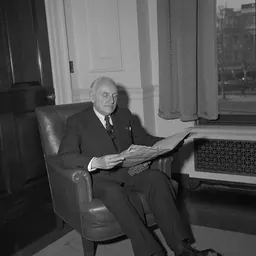
Contemporaries
People whose lives overlapped Theodore Roosevelt Schellenberg's

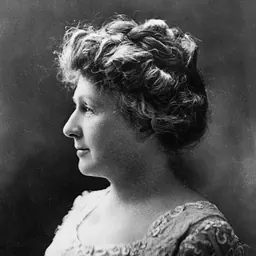
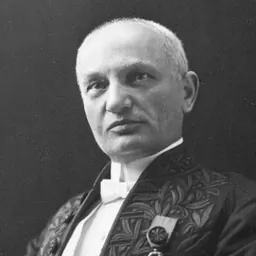
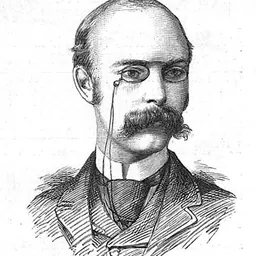
Frequently asked questions
Who was Theodore Roosevelt Schellenberg?
American archivist (1903–1970)
When was Theodore Roosevelt Schellenberg born?
Theodore Roosevelt Schellenberg was born on 24 February 1903 in Garden Township.
When did Theodore Roosevelt Schellenberg die?
Theodore Roosevelt Schellenberg died on 14 January 1970 in Fauquier County.
What was Theodore Roosevelt Schellenberg's occupation?
Theodore Roosevelt Schellenberg was an archivist.
What nationality was Theodore Roosevelt Schellenberg?
Theodore Roosevelt Schellenberg was American.
Sources & further reading
· Wikipedia: Theodore Roosevelt Schellenberg
Cite this page
APA: Biography.guide. (2026). Theodore Roosevelt Schellenberg. https://biography.guide/theodore-roosevelt-schellenberg/
MLA: "Theodore Roosevelt Schellenberg." Biography.guide, https://biography.guide/theodore-roosevelt-schellenberg/.
Chicago: "Theodore Roosevelt Schellenberg." Biography.guide. https://biography.guide/theodore-roosevelt-schellenberg/.
Data last updated: 2026-09-22 · Spot an error? Report a correction.
Page generated 2026-09-27 05:20 UTC