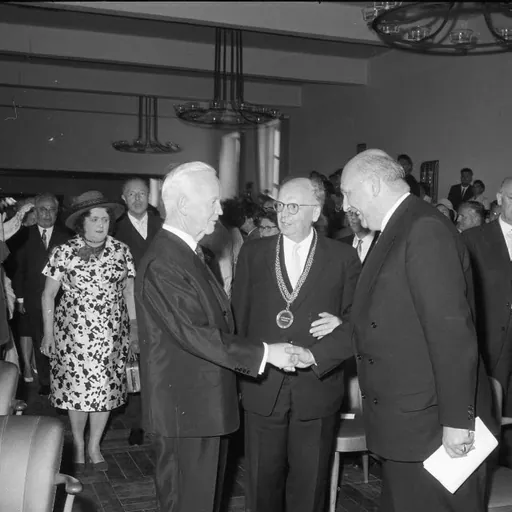
About Theodor Schieder
Lived 1908 – 1984 (aged 76). Theodor Schieder was a German historian and university teacher.
Theodor Schieder (11 April 1908 – 8 October 1984) was a German historian. Born in Oettingen, Western Bavaria, he relocated to Königsberg in East Prussia in 1934 at the age of 26. [p. 56] He joined the Nazi Party in 1937. He pursued a racially-oriented social history (Volksgeschichte), and warned about the supposed dangers of Germans mixing with other nations. He was the author of the "Memorandum of 7 October 1939", calling for Germanization of the captured Polish territories after the Invasion of Poland. His suggestions were later incorporated in the German Generalplan Ost.
Support for Nazi expansion Schieder also enthusiastically supported the German invasion of Poland and wrote academic papers on Germany's role as a "force of order" and a "bearer of a unique cultural mission" in Eastern Europe.
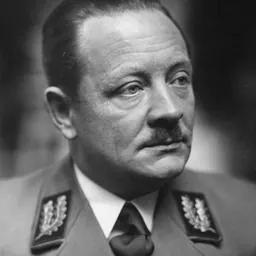
Cooperation with Gauleiter Erich Koch regarding ethnic policy in conquered territories In March 1940, Schieder, who was director in charge of the Regional Office for Postwar History (Landesstelle fur Nachkriegsgeschichte) presented the local Gauleiter Erich Koch with a detailed plan regarding studies of territories annexed to East Prussia; Koch himself wanted to know political, social, and ethnic conditions in those areas. Schieder in return sent two reports to Koch, including a population inventory conducted at the end of the 19th century of the area in question, which was most relevant to Nazi policies of extermination and settlement, and provided a basis for segregation of Jewish and "Slavic" spouses from ethnic Germans in the German Volksliste.
Post-war After the war, Schieder settled in West Germany, where he held a position at University of Cologne and worked as a respected historian for the West German government. In 1952 he headed the government commission for researching the expulsion of Germans. From 1962 to 1964 he was the rector of the University of Cologne and from 1965 headed the Research Department of the History Department. He was also the president of the Historical Commission of the Bavarian Academy of Sciences and the president of the Academy of Sciences of Rhine-Westphalia. From 1967 to 1972 Schieder chaired the German Historians' Association. "Schieder’s work – wrote Dr. Deborah Barton from University of Toronto – referred to the Poles and Soviets as "frenzied," "sadistic," and "driven by national hatred," whereas the language applied to Nazi crimes was more benign and conceptual ... The volumes, published between 1956 and 1963 amounted to a "scholarly seal of approval" for Germany's victimization narrative" of the following decades. The testimonies presented in the [Schieder] documentation – wrote Professor Robert G. Moeller – depicted Germans not as perpetrators but as victims of "a crime against humanity." Schieder died in Cologne, Germany.
Leading postwar publications Schieder, Theodor (ed.) Dokumentation der Vertreibung der Deutschen aus Ost-Mitteleuropa, Bonn 1953 (Documents on the Expulsion of the Germans from Eastern & Central Europe), Bonn: Federal Ministry for Expellees, Refugees, & War Victims, (following dates may indicate year of English translations rather than original publication): vol. 1: Die vertreibung der deutschen Bevölkerung aus den Gebieten östlich der Oder-Neisse (The Expulsion of the German Population from the Territories East of the Oder-Neisse Line, 1959) vol. 2 and 3: Bd. 2. Das Schicksal der Deutschen in Ungarn, Bd. 3. Das Schicksal der Deutschen in Rumanien (The Expulsion of the German Population from Hungary and Rumania, 1961) vol. 4: Die Vertreibung der deutschen Bevölkerung aus der Tschechoslowakei (The Expulsion of the German Population from Czechoslovakia, 1960) Friedrich der Grosse. Ein Königtum der Widersprüche, Ullstein 1983 (engl: Frederick the Great, Longman publ. 1999)
Don’t just read it —
keep it.
Full-length biographies made to live with: read them, listen on the way to work, watch them tonight.
- E-book
- Audio
- Video
Instant download · yours to keep · every purchase keeps this site free
Important facts
People in Theodor Schieder's life
Named in this biography and alive at the same time
Related people
Same field, nearest in time


Contemporaries
People whose lives overlapped Theodor Schieder's



Frequently asked questions
Who was Theodor Schieder?
German historian (1908–1984)
When was Theodor Schieder born?
Theodor Schieder was born on 11 April 1908 in Oettingen in Bayern.
When did Theodor Schieder die?
Theodor Schieder died on 8 October 1984 in Cologne.
What was Theodor Schieder's occupation?
Theodor Schieder was a historian and university teacher.
What nationality was Theodor Schieder?
Theodor Schieder was German.
Sources & further reading
Cite this page
APA: Biography.guide. (2026). Theodor Schieder. https://biography.guide/theodor-schieder/
MLA: "Theodor Schieder." Biography.guide, https://biography.guide/theodor-schieder/.
Chicago: "Theodor Schieder." Biography.guide. https://biography.guide/theodor-schieder/.
Data last updated: 2026-09-22 · Spot an error? Report a correction.
Portrait: Wikimedia Commons · author & licence
Page generated 2026-09-27 05:04 UTC