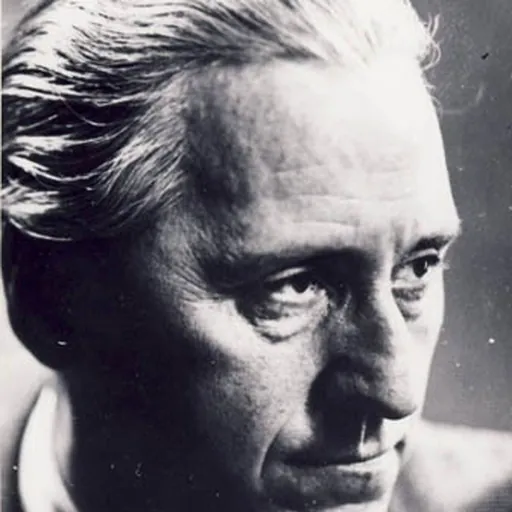
About Theodor Rogalski
Lived 1901 – 1954 (aged 52). Theodor Rogalski was a Romanian composer, conductor, orchestrator, pianist and conductor (music).
Theodor Rogalski (April 11, 1901 - February 2, 1954) was a Romanian composer, conductor and pianist of Polish origin. He played an important role in the development of Romanian musical culture in the first half of the twentieth century.
Life and career After studying in Bucharest with Alfonso Castaldi and Dimitrie Cuclin, he studied at the Leipzig Conservatory (1920 - 1923) and then at the Schola Cantorum in Paris (1923-1926), where he was a disciple of Vincent d'Indy (composition, conducting) and of Maurice Ravel (orchestration). In 1926, he won First Prize at the "George Enescu" National Composition Competition (established in 1913) with the work String Quartet in F major. He also entered the concert programs of the Philharmonic with Two Romanian Dances for Winds, Piano and Drums (1927) and Two Symphonic Sketches (1929), whose value has determined George Enescu to select it for the concert held at the International Exhibition in New York in 1939.
While continuing to explore the line opened by Burial at the outskirts and Dances for rain-Paparudele-, see Rainmaking (ritual) (both from the Two symphonic sketches) through the new technical approach of capitalizing the folk vein, with emphasis on rhythmic diversity, poly-tonal overlaps and a unique harmonic color, Theodor Rogalski composes, two decades later, in 1950, the symphonic suite Three Romanian Dances, which is a landmark of the Romanian music school of the time.
The two decades, 1930-1950, in which composing remained in the background, were dedicated by the musician to conducting and building an ensemble, from its establishment to the level of a prestigious orchestra, today bearing the name of National Radio Orchestra of Romania. As such, he was the first conductor of the orchestra starting from 1930.
The baton of first conductor was also offered to him at the "George Enescu" Philharmonic (1950-1954). In these last years of his life he also held the position of orchestration teacher at the Bucharest Conservatory.
List of compositions
1918 - Sonata for piano (1921 - first mention of the "George Enescu" Composition Prize)
1919 - Piano Suite - (1919 - 2nd mention of the "George Enescu" Composition Prize)
1920 - - Paysage for piano - Pastoral for piano - Berceuse for cello and piano - Piece for cello and piano - Historiette for cello and piano - Minuetto for cello and piano - Parfum exotique for cello and piano - "Pavanne" for cello and piano - Idylle and Tambourin (For the motif "O du lieber Augustin") for string quartet - The song "Le Silence", on lyrics by CH. Batillot - Orchesterstuck (1923 - 2nd prize of the "George Enescu" Composition Prize) - Operetta Nina
1921 - Rondo - Sonet for piano - Aubade for piano 1922 - Winter for piano - Romanzetta for piano - Suite for violin and piano: Aubade, Interlude, Sonet (1922 - mention of the "George Enescu" Composition Prize) - Andante from a projected Sonata for cello and piano - Vieille Chanson for two violins and viola - Fruhlingsnacht for 2 violins and cello - Andantino for string quartet - Dance for string quartet - 2 lieds for voice and piano on lyrics by R. Dehmel: Erlengang , Einst im Herbst - 2 lieds for voice and orchestra: lied on lyrics by Heine, untitled, Helle Nacht on lyrics by R. Dehmel
1924 - Idylle for piano
- Retrospective Serenade for piano
1925 - Ballad on Romanian themes for violin and piano - Bourree for cello and piano - Canon , for violin, cello and piano - String Quartet (1925 - 1st prize of the "George Enescu" Composition Prize) - Four Evocations for the soprano: The Song of the Wise, The Song of the Lover, The Song of the Rain, The Song of the Swing - Two Romanian Dances for winds, piano and percussion (1927 - mention in Venice) - Fresque Antique, ballet music
1928 - La Chef (on romanian themes), for string quartet
1929 - Two Symphonic Sketches: Burial at the outskirts, Dances for rain-Paparudele- (Rainmaking ritual)
- Stage music for the "Don Juan" play by Victor Eftimiu
1930 - Three pieces for cello
1931 - Suite for oboe and piano
1932 - Two Capriccios for Orchestra
1933 - Three songs on folk lyrics for soprano and orchestra: Hora Ciciului, Willow, The Lazar
1940 - Three Romanian Ballads for tenor and orchestra: Iancu Jianu, Mihu the Child, Toma Alimoș
1941 - Festive March for Orchestra
1949 - 3 Pieces of Mechanical Music for Orchestra
1950 - Symphonic suite Three Romanian dances
1951 - Soundtrack for the film Life Triumphs
Don’t just read it —
keep it.
Full-length biographies made to live with: read them, listen on the way to work, watch them tonight.
- E-book
- Audio
- Video
Instant download · yours to keep · every purchase keeps this site free
Important facts
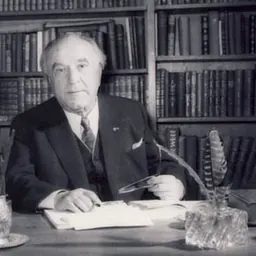
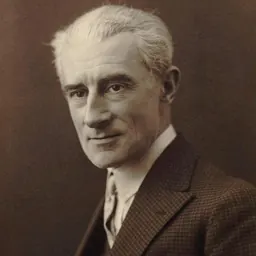
People in Theodor Rogalski's life
Named in this biography and alive at the same time

Related people
Same field, nearest in time




Contemporaries
People whose lives overlapped Theodor Rogalski's



Frequently asked questions
Who was Theodor Rogalski?
Romanian composer (1901–1954)
When was Theodor Rogalski born?
Theodor Rogalski was born on 11 April 1901 in Bucharest.
When did Theodor Rogalski die?
Theodor Rogalski died on 2 February 1954 in Zurich.
What was Theodor Rogalski's occupation?
Theodor Rogalski was a composer, conductor, orchestrator, pianist and conductor (music).
What nationality was Theodor Rogalski?
Theodor Rogalski was Romanian.
Sources & further reading
Cite this page
APA: Biography.guide. (2026). Theodor Rogalski. https://biography.guide/theodor-rogalski/
MLA: "Theodor Rogalski." Biography.guide, https://biography.guide/theodor-rogalski/.
Chicago: "Theodor Rogalski." Biography.guide. https://biography.guide/theodor-rogalski/.
Data last updated: 2026-09-23 · Spot an error? Report a correction.
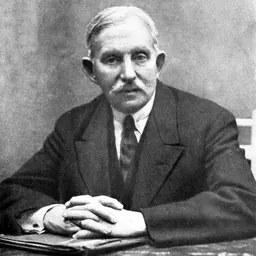
Portrait: Wikimedia Commons · author & licence
Page generated 2026-09-27 05:07 UTC