
About Terence McKenna
Lived 1946 – 2000 (aged 53). Terence McKenna was an American writer, philosopher, anthropologist, ethnobotanist, ethnologist and linguist.
Terence Kemp McKenna (November 16, 1946 – April 3, 2000) was an American ethnobotanist, lecturer, and author who advocated for the responsible use of naturally occurring psychedelic plants and mushrooms. He spoke and wrote about a variety of subjects, including psychedelic drugs, plant-based entheogens, shamanism, metaphysics, alchemy, language, philosophy, culture, technology, ethnomycology, environmentalism, and the theoretical origins of human consciousness. He was called the "Timothy Leary of the '90s", "one of the leading authorities on the ontological foundations of shamanism", and the "intellectual voice of rave culture". Critical reception of McKenna's work was deeply polarized, with critics accusing him of promoting dangerous ideas and questioning his sanity, while others praised his writing as groundbreaking, humorous, and intellectually provocative.
Born in Colorado, he developed a fascination with nature, psychology, and visionary experiences at a young age. His travels through Asia and South America in the 1960s and '70s shaped his theories on plant-based psychedelics, particularly psilocybin mushrooms, which he helped popularize through cultivation methods and writings. McKenna became a countercultural icon in the 1980s and '90s, delivering lectures on psychedelics, language, and metaphysics while publishing influential books and co-founding Botanical Dimensions in Hawaii. He died in 2000 from brain cancer.
McKenna was a prominent advocate for the responsible use of natural psychedelics—particularly psilocybin mushrooms, ayahuasca, and DMT—which he believed enabled access to profound visionary experiences, alternate dimensions, and communication with intelligent entities. He opposed synthetic drugs and organized religion, favoring shamanic traditions and direct, plant-based spiritual experiences. He speculated that psilocybin mushrooms might be intelligent extraterrestrial life and proposed the controversial "stoned ape" theory, arguing that psychedelics catalyzed human evolution, language, and culture. His broader philosophy envisioned an "archaic revival" as a healing response to the ills of modern civilization.
McKenna formulated a concept about the nature of time based on fractal patterns he claimed to have discovered in the I Ching, which he called novelty theory, with Irish ancestry on his father's side of the family.
As a youth, McKenna had a hobby of fossil-hunting from which he acquired a deep scientific appreciation of nature. At the age of 14, he became interested in psychology after reading Carl Jung's book Psychology and Alchemy. He began smoking cannabis as a teenager.
Studying and traveling In 1965, McKenna enrolled in the University of California, Berkeley and was accepted into the Tussman Experimental College. In the autumn of 1975, after parting with his girlfriend Ev earlier in the year, McKenna began a relationship with his future wife and the mother of his two children, Kathleen Harrison. When the 1986 revised edition was published, the Magic Mushroom Grower's Guide had sold over 100,000 copies. His main focus was on the naturally occurring psychedelics such as psilocybin mushrooms (which were the catalyst for his career), Though associated with the New Age and Human Potential Movements, McKenna himself had little patience for New Age sensibilities. He repeatedly stressed the importance and primacy of the "felt presence of direct experience", as opposed to dogma.
In addition to psychedelic drugs, McKenna spoke on a wide array of subjects,
McKenna soon became a fixture of popular counterculture and with comedian Bill Hicks' referencing him in his stand-up act and building an entire routine around his ideas.
McKenna published several books in the early-to-mid-1990s including: The Archaic Revival; Food of the Gods; and True Hallucinations. These debates were known as trialogues and some of the discussions were later published in the books: Trialogues at the Edge of the West and The Evolutionary Mind. The botanical garden McKenna was involved until 1992, when he retired from the project, following his and Kathleen's divorce earlier in the year. Kathleen still manages Botanical Dimensions as its president and projects director. Then his blood pressure dropped and he collapsed.
McKenna died at a friend's home in San Rafael, California, on April 3, 2000, at the age of 53.
McKenna studied Lepidoptera and entomology in the 1960s, and his studies included hunting for butterflies, primarily in Colombia and Indonesia, creating a large collection of insect specimens. McKenna's insect collection was consistent with his interest in Victorian-era explorers and naturalists, and his worldview based on close observation of nature. In the 1970s, when he was still collecting, he became quite squeamish and guilt-ridden about the necessity of killing butterflies in order to collect and classify them, according to McKenna's daughter; this led him to cease his entomological studies. and DMT.
McKenna often described his practice of taking what he called "heroic doses" of psilocybin mushrooms: five dried grams, taken alone, on an empty stomach, in silent darkness, and with eyes closed. suggesting that "the planet has a kind of intelligence, it can actually open a channel of communication with an individual human being" and that the psychedelic plants were the facilitators of this communication.
Machine elves
McKenna spoke of hallucinations while on DMT in which he met intelligent entities he described as "self-transforming machine elves".
Psilocybin panspermia speculation
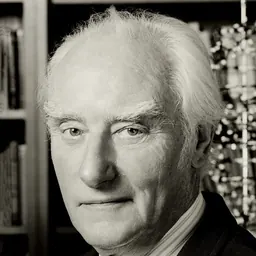
In a more radical version of biophysicist Francis Crick's hypothesis of directed panspermia, McKenna speculated on the idea that psilocybin mushrooms may be a species of high intelligence, and most forms of organized religion or guru-based forms of spiritual awakening, favouring shamanism, which he believed was the broadest spiritual paradigm available, stating that: What I think happened is that in the world of prehistory all religion was experiential, and it was based on the pursuit of ecstasy through plants. And at some time, very early, a group interposed itself between people and direct experience of the 'Other.' This created hierarchies, priesthoods, theological systems, castes, ritual, taboos. Shamanism, on the other hand, is an experiential science that deals with an area where we know nothing. It is important to remember that our epistemological tools have developed very unevenly in the West. We know a tremendous amount about what is going on in the heart of the atom, but we know absolutely nothing about the nature of the mind.
Technological singularity During the final years of his life and career, McKenna became very engaged in the theoretical realm of technology. He was an early proponent of the technological singularity He also became enamored with the Internet, calling it "the birth of [the] global mind",
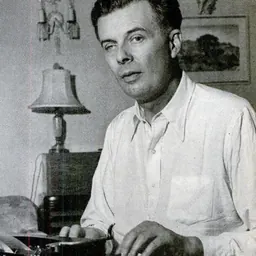
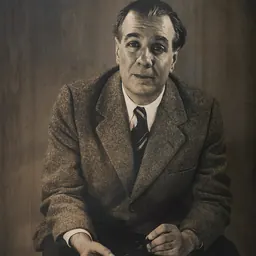
McKenna also expressed admiration for the works of writers Aldous Huxley, science fiction writer Philip K. Dick, whom he described as an "incredible genius", fabulist Jorge Luis Borges, with whom McKenna shared the belief that "scattered through the ordinary world there are books and artifacts and perhaps people who are like doorways into impossible realms, of impossible and contradictory truth" McKenna based his theory on the effects, or alleged effects, produced by the mushroom
McKenna stated that, due to the desertification of the African continent at that time, human forerunners were forced from the shrinking tropical canopy into search of new food sources.
His hypothesis was that Western society has become "sick" and is undergoing a "healing process": In the same way that the human body begins to produce antibodies when it feels itself to be sick, humanity as a collective whole (in the Jungian sense) was creating "strategies for overcoming the condition of disease" and trying to cure itself, by what he termed as "a reversion to archaic values". McKenna pointed to phenomena including surrealism, abstract expressionism, body piercing and tattooing, psychedelic drug use, sexual permissiveness, jazz, experimental dance, rave culture, rock and roll and catastrophe theory, amongst others, as his evidence that this process was underway. This idea is linked to McKenna's "stoned ape" theory of human evolution, with him viewing the "archaic revival" as an impulse to return to the symbiotic and blissful relationship he believed humanity once had with the psilocybin mushroom. enabling them to graph and explore its dynamics on a computer. This adjusted his graph to reach zero in mid-November 2012. When he later discovered that the end of the 13th baktun in the Maya calendar had been correlated by Western Maya scholars as December 21, 2012, he adopted their end date instead. Therefore, according to McKenna's final interpretation of the data and positioning of the graph, on December 21, 2012, we would have been in the unique position in time where maximum novelty would be experienced.
In 1994, Tom Hodgkinson wrote for The New Statesman and Society, that "to write him off as a crazy hippie is a rather lazy approach to a man not only full of fascinating ideas but also blessed with a sense of humor and self-parody".
Filmography
Experiment at Petaluma (1990) Prague Gnosis: Terence McKenna Dialogues (1992) The Hemp Revolution (1995) Terence McKenna: The Last Word (1999) Shamans of the Amazon (2001) Alien Dreamtime (2003) 2012: The Odyssey (2007) The Alchemical Dream: Rebirth of the Great Work (2008) Manifesting the Mind (2009) Cognition Factor (2009) DMT: The Spirit Molecule (2010) 2012: Time for Change (2010) The Terence McKenna OmniBus (2012) The Transcendental Object at the End of Time (2014) Terence McKenna's True Hallucinations (2016)
Don’t just read it —
keep it.
Full-length biographies made to live with: read them, listen on the way to work, watch them tonight.
- E-book
- Audio
- Video
Instant download · yours to keep · every purchase keeps this site free
Important facts
People in Terence McKenna's life
Named in this biography and alive at the same time



Related people
Same field, nearest in time


Contemporaries
People whose lives overlapped Terence McKenna's


Frequently asked questions
Who was Terence McKenna?
American ethnobotanist and mystic (1946–2000)
When was Terence McKenna born?
Terence McKenna was born on 16 November 1946 in Paonia.
When did Terence McKenna die?
Terence McKenna died on 3 April 2000 in San Rafael.
What was Terence McKenna's occupation?
Terence McKenna was a writer, philosopher, anthropologist, ethnobotanist, ethnologist and linguist.
What nationality was Terence McKenna?
Terence McKenna was American.
Sources & further reading
Cite this page
APA: Biography.guide. (2026). Terence McKenna. https://biography.guide/terence-mckenna-writer/
MLA: "Terence McKenna." Biography.guide, https://biography.guide/terence-mckenna-writer/.
Chicago: "Terence McKenna." Biography.guide. https://biography.guide/terence-mckenna-writer/.
Data last updated: 2026-09-26 · Spot an error? Report a correction.
Page generated 2026-09-27 05:13 UTC