
Teraupo'o
Tahitian resistance leader
About Teraupo'o
Lived 1855 – 1918 (aged 62–63).
Teraupo'o ( – 23 December 1918) was a Tahitian (Maohi) resistance leader of the islands of Raiatea and Tahaa who fought off French rule from 1887 to 1897 during the decade-long Leeward Islands War.
Born during the decades following the Franco-Tahitian War (1844–1847), Teraupo'o was a lesser chief from the village of Avera, on the east coast of Raiatea. He grew to resent the French after being mistreated by an officer. After King Tamatoa VI of Raiatea submitted to French annexation, Teraupo'o refused to surrender and led the native resistance against the French and installed a resistance government under Tuarii as queen at Avera. He and his followers, dubbed the Teraupiste, included a majority of the natives of Raiatea and Tahaa. They fought off French colonial rule from 1887 until 1897 while attempting to convince the British to support their cause to remain independent.
The French under Governor Gustave Gallet sent for reinforcement to quell the native resistance and defeated the native forces of Raiatea in battle and the subsequent guerrilla campaign that followed. Teraupo'o was captured on the night of 15–16 February 1897. After he was defeated and captured, he was exiled to New Caledonia until 1905 when he was allowed to return to Raiatea. He lived out the rest of his life as a recluse and died in 1918 of the Spanish flu epidemic.
Early life He was born in with the name Hapaitahaa a Etau, at Avera, a village on the east coast of the island of Raiatea in the Leeward Islands, a part of the larger Society Islands group. He also initially bore the name Taraiupo'o, meaning "Headhunter", while his later adopted name Teraupo'o, meaning "This Head" in the Tahitian language. The conflict leading to the annexation of the Leeward Islands became known as the Leewards War, the Raiatean rebellion or the Teraupo’o War.
Bearing his rifle, the "'oporo 'ute'ute" or "red pepper", Teraupo'o was able to muster a force of 800 men or nearly one third of the population of the island although Newbury noted that "hardly more than 359 Ra'iateans [were] under arms". The followers of the rebel chief were referred to as the Teraupiste. Teraupo'o's brother Hupe served as his généralissime or general-in-chief. The courageous chiefess Mai of Tevaitoa and her husband Moti Roi and the chief Faterehau of Opoa and his wife, a half-white woman, named Taupe allied themselves with the Teraupiste. Foreign residents were also attracted to his cause. Jose Jordan, son of American settler and blacksmith Joseph Jordan, was a partisan of Teraupo'o, and was later exiled for his involvement. The German G. Neuffer became an adopted son of Teraupo'o and supplied him with arms and funds.
From the few surviving letters of Teraupo'o, he was known to have been resolute in the belief that Great Britain would intervene on the behalf of their cause and rescue the natives from the French. The Raiateans unsuccessfully appealed to Robert Teesdale Simons, the British Consul in Tahiti, for assistance and offered their country to the "Great White Queen". In 1895, Queen Tuarii travelled to the British protectorate Rarontonga to seek help from the British Resident Frederick Moss who refused to meet with her.
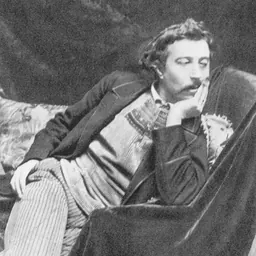
Attempts were made to mediate the conflict by Consul Simons and Tati Salmon, an Anglo-Tahitian businessman of royal descent. The French Protestant missionary Jean-Frédéric Vernier, former chaplain of Tahiti's Queen Pōmare IV, also unsuccessfully attempted to sway the natives. Teraupo'o also controlled the Raiatean pastors. French Protestant missionary Pastor Gaston Brunel, who took charge of the Protestant schools on the island in 1894, was largely sympathetic to the natives. Brunel visited the camp of the resistance leader often and gained valuable insight into the rebellion. French artist Paul Gauguin, who witnessed the final phase of the rebellion, noted that diplomacy failed to persuade the natives of Raiatea to surrender. Gauguin also witnessed the 1896 expedition to Raiatea.
The French appointed Governor Gustave Gallet to suppress the entrenched rebellion. Gallet had previous experience with suppressing the 1878 Kanak rebellion in New Caledonia. In 1896, two French warships, the Duguay Trouin and L'Aube arrived from New Caledonia with two hundred French soldiers to quell the native resistance. The invasion force was further reinforced with a company of Tahitian volunteers. On 27 December 1896, Governor Gallet attempted to parley with the rebels to avoid bloodshed. He set an ultimatum for the rebels to surrender by 1 January 1897. The rebel government at Avera under Queen Tuarii and 1700 rebels reluctantly surrendered. Teraupo'o and the rebels of Tahaa and the district of Tevaitoa refused the call, prompting the French to land and engage the remaining armed natives. The French routed the underequipped and disorganized native forces and many fled into the mountains to escape capture.
The armed native resistance ended with the capture of Teraupo'o. He and his wife and daughter fled into the mountains of Vaiaau. They evaded the French expeditionary force by hiding in the cave in the Faneuhi mountain (located at ) and rolling a boulder in front of the entrance during the day. The hiding place was discovered on the night of 15 February and 16 February 1897 when light from a fire within the cave gave the location away. On orders to capture him alive, Teraupo'o was led out of the cave by gunpoint while his family remained defiant. French historian Bruno Saura credited the discovery to "two Polynesians in the service of the French" while American historian Edward Dodd credited to an "astute French lieutenant".
Teraupo'o was allowed to return to Raiatea in 1905 and lived out the rest of his life as a "silent, unreconstructed recluse". He died at Vaiaau on 23 December 1918, at the height of the Spanish flu epidemic. His grave is currently located at Pamatai point (located at ) under a road. The next indigenous leader to advocate French resistance and Tahitian separatism was Pouvanaa a Oopa in 1958.
Don’t just read it —
keep it.
Full-length biographies made to live with: read them, listen on the way to work, watch them tonight.
- E-book
- Audio
- Video
Instant download · yours to keep · every purchase keeps this site free
Important facts
People in Teraupo'o's life
Named in this biography and alive at the same time

Contemporaries
People whose lives overlapped Teraupo'o's




Frequently asked questions
Who was Teraupo'o?
Tahitian resistance leader
When was Teraupo'o born?
Teraupo'o was born in 1855 in Avera.
When did Teraupo'o die?
Teraupo'o died on 23 December 1918 in Raiatea, Vaiaau.
Sources & further reading
Cite this page
APA: Biography.guide. (2026). Teraupo'o. https://biography.guide/teraupo-o/
MLA: "Teraupo'o." Biography.guide, https://biography.guide/teraupo-o/.
Chicago: "Teraupo'o." Biography.guide. https://biography.guide/teraupo-o/.
Data last updated: 2026-09-20 · Spot an error? Report a correction.
Page generated 2026-09-27 05:18 UTC