
About Teófilo Herrera Suárez
Lived 1924 – 2020 (aged 96). Teófilo Herrera Suárez was a Mexican mycologist, known for Mycobiota.
Teófilo Herrera Suárez (24 February 1924 – 23 April 2020) was a Mexican mycologist who was known for his contributions to the Mexican mycological flora. He was also an emeritus professor at the National Autonomous University of Mexico (UNAM), where he worked for over 50 years.
Professional training Herrera is originally from Mexico City. In 1940 he enrolled in the UNAM National High School. In 1942 he decided to study Biology instead of Medicine thanks to the positive influence of his teacher Francisco Villagran. He began as an undergraduate student in the Faculty of Sciences at UNAM and got his degree in 1945. Later on, he moved to the US to pursue a master's degree in Microbiology and Biochemistry of Fermentation, which he obtained in 1953 from the University of Wisconsin in Madison. He expanded his knowledge getting a second bachelor's degree in 1954, this time in Chemical Biology and Parasitology at the School of Biological Sciences from the National Polytechnic Institute (IPN). Further on, he began his Doctorate's degree at UNAM; he focused his research in "gasteroid fungi" and got his degree with honors in 1964 with his thesis: "Gasteromycetes of the Valley of Mexico".
Scientific career Early career He began his teaching career in 1946, right after getting his bachelor's degree, as a lab assistant at the UNAM National High School. Further, he taught in different public and private schools, diverse courses such as Biology, Anthropology and Zootechny. He started as an instructor in 1952 in the Faculty of Sciences teaching for undergraduate students at UNAM, where he eventually taught for over 50 years lectures in Botany, Microbiology, Mycology, and History of Science.
1940s–1950s He started as an assistant researcher for Manuel Ruíz Oronoz, his mentor, in 1945. Ruíz Oronoz's research was focused on studying fermenting microorganisms from "pulque". Throughout his scientific career, Herrera has remained interested in fermenting microorganisms behind traditional Mexican alcoholic beverages. Herrera participated in the isolation and identification of pulque fungi, commonly called "pulqueros", such as: Saccharomyces cerevisiae, Pichia membranaefaciens, Candida boidini, C. incospicua, and numerous species of the genera Kloeckera, Rhodotorula and Torulopsis. In 2003 he published a book entitled: "Más allá del pulque y el tepache" ("Beyond pulque and tepache"), in which he writes about these two beverages as well as other traditional Mexican alcoholic beverages such as "pozol", "tesgüino" and "colonche". In this book, as well as in the rest of his research, he always provides information of the social impact and history behind it. in collaboration with Gastón Guzmán they became pioneers in this research area. At the same time he continued to describe the Mexican fungal flora from the Valley of Mexico. In 1965 he published a detailed study of the systematic, histology and ecology of the genus Helvella in the Valley of Mexico.
1990s–present In the early 1990s he characterized the macromycetes of the Yucatan Peninsula. At the same time he characterized the gasteroid fungal diversity of the state of Sonora and studied the ecological distribution and etnomycological importance of the genus Schizophyllum in Mexico.
During late 90s he published the book: Hongos medicinales y sagrados de México ("Medicinal and sacred mushrooms of Mexico") and collaborated in the characterization of microscopic fungal diversity and abundance from several beaches in Mexico from the states of Veracruz, Quintana Roo and Colima, covering the Pacific Ocean, the Gulf of Mexico and the Caribbean Sea; they reported a total of 52 species.
In 2002 he published a study about the distribution in Mexico of Batarrea phalloides.
During 2003 he studied the distribution of Geastrum species in the state of Sonora. and characterized the diversity of macromycetes of the "Pinacate and great Altar desert reserve".
In 2008, Herrera collaborated in a research project aiming to identify the yeasts associated with the production of Mexican alcoholic non distilled and distilled agave beverages; this research was published in FEMS Yeast Research. During the same time he collaborated in a research related to toxic macromycetes from the state of Sonora.
Further on, in 2009, he collaborated in the characterization of the macromycetes in the ecological reserve of "Pedregal San Angel" in Mexico City.
In 2010 he collaborated in a research regarding radioactive accumulation in fungi and their relation to rodents in forests of the nuclear center in Mexico.
In 2011, he published a short communication about the first records of fungi collected in 1793-1794 during the first expedition of Sessé and Mociño to Mexico (called "Nueva España" at the time)(Pérez-Silva et al.. 2011, b). This same year he published new records of macromycetes for Temascaltepec in the State of Mexico (Pérez-Silva et al.. 2011, a).
Academic merits Herrera's knowledge has been embodied in more than 140 scientific papers, published both in national as well as international journals, all of them peer reviewed. He has written more than 9 text books for middle school and high school as well as books for public in general, interested in botany and mycology.
Herrera has belonged to the Mexican National Scientists System (SNI) since 1983 and he was named Emeritus Professor by UNAM in 1990.
Several new fungal species have been named after him: Psilocybe herrerrae, P. teofilae, P. novozoncuantlensis, Bovista herrerae, Gerronema theophili, Crinipellis herrerae, Hemimycena herrerae, Amanita herrerae, Opuntia tomentosa var. herrerae and Polyprectopus herrerai.
Selected publications Guzmán G, Herrera T. Macromicetos de las zonas áridas de México. II. Gasteromycetos, 1969. Anales del Instituto de Biología UNAM Serie Botánica 40(1):1–92. Pérez-Silva E, Herrera T, Ocampo-Lopez A, Nuevos registros de macromicetos para el municipio de Temascaltepec, Estado de Mexico, 2011. Revista mexicana de micología 34:23–30. Perez-Silva E, Herrera T, Ocampo Lopez A, Registro de hongos recolectados por Sessé y Mociño durante la primera real expedición botánica a la Nueva España, México, 2011. Revista mexicana de micología 33:63–65. Pérez-Silva E, Esqueda M, Herrera T, Coronado M, Nuevos registros de Agaricales de Sonora, México, 2006. Revista mexicana de biodiversidad, 77(1) Pérez–Silva, E, Herrera T, Iconografía de macromicetos de México I. Amanita, 1991. Instituto de Biología, Publicaciones Especiales 6. Universidad Nacional Autónoma de México, México. Pérez–Silva E, Aguirre CE, Herrera T, Descripción y nuevos registros de hongos micoparásitos de México, 1983. Boletín de la Sociedad Mexicana de Micología 18: 71–84. Pérez–Silva E, Herrera T, Macromicetos tóxicos: Chlorophyllum molybdites causante de micetismo gastrointestinal en México, 1986. Boletín de la Sociedad Mexicana de Historia Natural 38:27–36.
Authority name
Don’t just read it —
keep it.
Full-length biographies made to live with: read them, listen on the way to work, watch them tonight.
- E-book
- Audio
- Video
Instant download · yours to keep · every purchase keeps this site free
Important facts
People in Teófilo Herrera Suárez's life
Named in this biography and alive at the same time

Related people
Same field, nearest in time
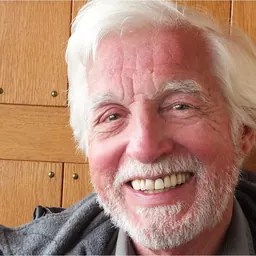

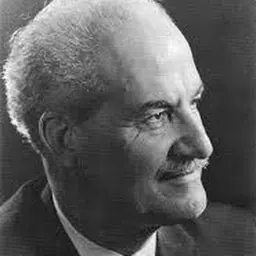

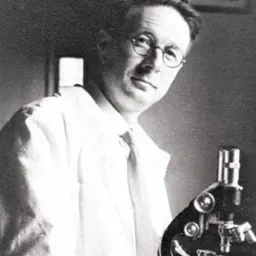
Contemporaries
People whose lives overlapped Teófilo Herrera Suárez's


Frequently asked questions
Who was Teófilo Herrera Suárez?
mycologist
When was Teófilo Herrera Suárez born?
Teófilo Herrera Suárez was born on 24 February 1924 in Mexico City.
When did Teófilo Herrera Suárez die?
Teófilo Herrera Suárez died on 23 April 2020.
What was Teófilo Herrera Suárez's occupation?
Teófilo Herrera Suárez was a mycologist.
What was Teófilo Herrera Suárez known for?
Teófilo Herrera Suárez was known for Mycobiota.
What nationality was Teófilo Herrera Suárez?
Teófilo Herrera Suárez was Mexican.
Sources & further reading
· Wikipedia: Teófilo Herrera Suárez
· DBpedia: Teófilo Herrera Suárez
Cite this page
APA: Biography.guide. (2026). Teófilo Herrera Suárez. https://biography.guide/teofilo-herrera-suarez/
MLA: "Teófilo Herrera Suárez." Biography.guide, https://biography.guide/teofilo-herrera-suarez/.
Chicago: "Teófilo Herrera Suárez." Biography.guide. https://biography.guide/teofilo-herrera-suarez/.
Data last updated: 2026-09-20 · Spot an error? Report a correction.
Page generated 2026-09-27 05:06 UTC