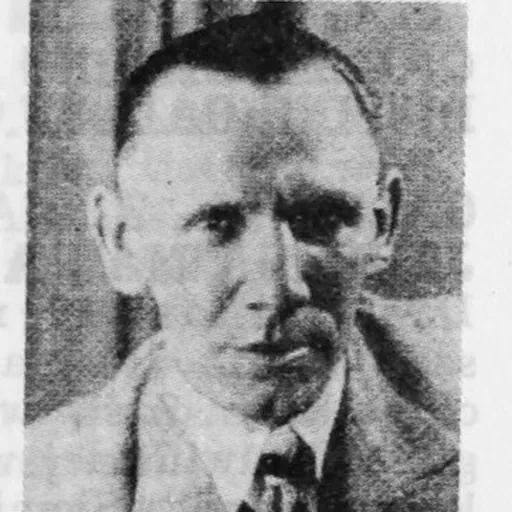
About Teodor Gajewski
Lived 1902 – 1948 (aged 45–46). Teodor Gajewski was a Polish sculptor.
Brothers Teodor and Franciszek Gajewski were sculptors and painters, who lived in Bydgoszcz, Poland in the 20th century.
Lifes Childhood Both brothers were born in Bydgoszcz: Franciszek on January 30, 1897, and Teodor on May 30, 1902. Their father Teofil was a shoemaker, their mother was Antonina née Relka.
Franciszek attended elementary school in Bydgoszcz. He was drafted in the Imperial German Army; in 1916, he fought on the western front and fell into captivity in Belgium.
Teodor attended primary school in Bydgoszcz. Having joined the scouts movement at 15, he actively participated in 1917 in the local recruitment and training campaigns.
Second Polish Republic Released in 1918, Franciszek volunteered in Józef Haller's Polish Army in France: Furthermore, he depicted many city architectures, from Pomerania but essentially from Bydgoszcz. In this vein, Franciszek left many paintings and drawings of the city, portraying particularly the Bydgoszcz Venice near Mill Island. He painted Bydgoszcz nooks and crannies at different times of the day and night.
He first exhibited his works in 1926 at the City Museum. In 1937 and 1938, he received the Bydgoszcz City Prize and several of his works were purchased by the City Hall. He was a member of the Association of Polish Artists and Designers and the Artistic and Cultural Council of Bydgoszcz . In 1931, the Gajewskis and Piotr Triebler took part in a competition for the design of the Monument to the Fallen Poles (soldiers of the 1st Polish Division) who died in July 1918 in the fields of Champagne, France. Franciszek received the second prize for this project to be erected in Saint-Hilaire-le-Grand's cemetery, for which he designed the gate and fences.
After WWII, Franciszek re-joined the Bydgoszcz Branch of the ZPAP. He participated in regional and national exhibitions.
In 1950, he won the first prize of the city of Bydgoszcz (painting department) in a competition dedicated to "The beauty of Bydgoszcz in picture and graphics". In 1958, he was awarded the Bydgoszcz art award for lifetime achievement.
Teodor In 1920-1923, he followed the path of his brother at the State School of Artistic Industry, but in the sculpture department. His professors were sculptors Jan Wysocki and Feliks Giecewicz.
After his military service, he returned in 1925 to Bydgoszcz. Together with his friend Piotr Triebler, also a graduate of the State School of Artistic Industry, he ran a sculpture and stonemason's workshop, located at 13 Królowej Jadwigi Street. Later they moved to 94 Dworcowa street in Bydgoszcz. It was the only atelier of this kind in Poznań and Pomerania. There, they realized sculptures, tombstones in bronze, wood or marble.
He was a multi-talented activist and organizer of the art movement in Bydgoszcz. In 1932, he co-founded of the Pomeranian Artists Group. Like Franciszek, he was a member of the Artistic and Cultural Council of Bydgoszcz. In 1931, Teodor won the first prize in the competition for the design of the Monument to the Fallen Poles in Aubérive's cemetery.
Notable works Franciszek A large collection of his works (drawings, watercolors, oil works) is in the Leon Wyczółkowski Regional Museum in Bydgoszcz.
Among his many city views, one can cite: Targ na Starym Rynku (Market in the Old Town Square); Wenecja Bydgoska (Bydgoszcz Venice); Zamek w Gniewie (Gniew Castle ); Ratusz w Chełmnie (Town Hall in Chełmno); Spichrze w Grudziądzu (Granaries in Grudziądz).
Teodor Small works: Głowa Chrystusa (Christ's Head); Bust of Józef Piłsudski, placed in Bydgoszcz City Hall, destroyed by the Nazis; Judasz (Judas); Faun.
Teodor was the creator of larger monuments: Dobry Pasterz (The Good Shepherd), set up Gniezno;
Serca Jezusa (Heart of Jesus) (1932). The figure was high and stood on a pedestal. The cornerstone was laid on March 30, 1930 and the consecration took place on October 2, 1932. On the pedestal was the following inscription: "To the Sacred Heart of Jesus - Bydgoszcz Liberated". tombstone monument to Idzi Świtała (1877-1928), a member of the Chamber of Deputies of the Prussian Sejm at the Nowofarny Cemetery in Bydgoszcz; Queen of the Polish crown in Łabiszyn, consecrated in November 1932; Sacred Heart of Jesus (1933) in Barcin; Monument to the fallen of the Greater Poland uprising (1918–1919) in Inowrocław (non-existent) and in Gniezno.
Gallery
Don’t just read it —
keep it.
Full-length biographies made to live with: read them, listen on the way to work, watch them tonight.
- E-book
- Audio
- Video
Instant download · yours to keep · every purchase keeps this site free
Important facts
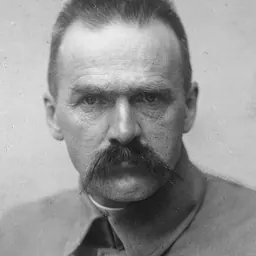
People in Teodor Gajewski's life
Named in this biography and alive at the same time

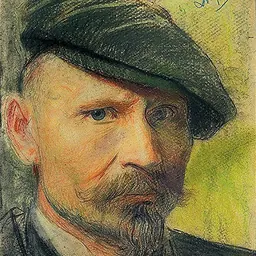
Related people
Same field, nearest in time




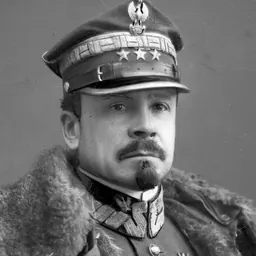
Contemporaries
People whose lives overlapped Teodor Gajewski's


Frequently asked questions
Who was Teodor Gajewski?
Polish sculptor
When was Teodor Gajewski born?
Teodor Gajewski was born in 1902 in Bydgoszcz.
When did Teodor Gajewski die?
Teodor Gajewski died in 1948 in Bydgoszcz.
What was Teodor Gajewski's occupation?
Teodor Gajewski was a sculptor.
What nationality was Teodor Gajewski?
Teodor Gajewski was Polish.
Sources & further reading
· DBpedia: Teodor and Franciszek Gajewski
Cite this page
APA: Biography.guide. (2026). Teodor Gajewski. https://biography.guide/teodor-gajewski/
MLA: "Teodor Gajewski." Biography.guide, https://biography.guide/teodor-gajewski/.
Chicago: "Teodor Gajewski." Biography.guide. https://biography.guide/teodor-gajewski/.
Data last updated: 2026-09-22 · Spot an error? Report a correction.
Portrait: Wikimedia Commons · author & licence
Page generated 2026-09-27 05:02 UTC