
About Ted Morton
Born 1949. Ted Morton is an American and Canadian politician, political scientist and university teacher.
Frederick Lee Morton (born 1949), known commonly as Ted Morton, is an American-Canadian politician and former cabinet minister in the Alberta government. As a member of the Legislative Assembly of Alberta, he represented the constituency of Foothills-Rocky View as a Progressive Conservative from 2004 to 2012 (in the 26th and 27th Alberta Legislative Assemblies). He did not win reelection in the 2012 Alberta general election. Morton was a candidate for the leadership of the Progressive Conservative Association in its 2006 and 2011 leadership elections. Morton is currently Professor Emeritus of Political Science at the University of Calgary.
Personal life Morton was born in Los Angeles on March 28, 1949. In 1952, Morton moved with his parents to Casper, Wyoming. Morton moved to Canada in 1981 and became a Canadian citizen in 1991. He received dual citizenship in 1993. Morton and his wife Patricia have three children.
Political views In 2001 Ted Morton (who at the time was considered by some to be an "Alberta Senator-elect" despite that status not being legally recognized), Stephen Harper (then-President of the National Citizens’ Coalition), Tom Flanagan, and Ken Boessenkool, (Chief of Staff to Premier Christy Clark's) sent a letter to Alberta's former Premier Ralph Klein, now known as the "Firewall Letter", in which they called for Alberta to exercise its constitutional provincial powers including: "withdrawal from the Canada Pension Plan, ending the provincial contract with the RCMP, a provincial take-over of health care decision-making, and collecting revenue for the province from income tax" in order to "limit the extent to which an aggressive and hostile federal government can encroach on legitimate provincial jurisdiction."
Academic career Morton obtained his Bachelor of Arts degree from Colorado College and earned his Master of Arts and Doctor of Philosophy degrees in political economy from the University of Toronto. Morgentaler v. Borowski: Abortion, the Charter and the Courts (1992, winner of the 1993 Writer Guild of Alberta's Wilfred Eggleston Award for Non-Fiction, and Law, politics, and the Judicial Process in Canada (1984). Morton has published more than fifty scholarly articles and his columns have appeared in the National Post, the Calgary Herald, The Globe and Mail and the Calgary Sun.
According to Morton and Knopff, the Canadian Charter of Rights and Freedoms allows interest groups to use litigation and mass media to avoid the democratic process and achieve their own ends. In The Charter Revolution, Morton embraced the practice of judicial restraint, claiming that the Charter has become a political instrument and that the locus of policy should move away from activist courts back to elected officials. Morton is "pro-life, anti-gay-marriage, anti-deficit at all costs and open to more private health care." in a 1998 The Center for Strategic and International Studies (CSIS) paper. At that time Western Canada was of heightened importance to Americans, not only for its increasing political weight but also because of its population and economic growth. The Washington, DC–based (CSIS) was investigating Western Canada's increasing weight in forming Canadian national public policy. This Bill was criticized by some public figures as legalizing discrimination against gays and lesbians, and failed to come to a vote due to procedural tactics employed by opposition members.
PC leadership candidate, 2006 As a candidate in the 2006 PC leadership election to replace Ralph Klein, Morton placed second to front runner Jim Dinning on the first ballot, and third behind Dinning and winner Ed Stelmach on the second ballot. His platform included implementing the components of the Firewall Letter, opposing judicial activism, implementing the provision of Bill 208, introducing fixed election dates, lowering taxes and capping public spending growth, and introducing private health insurance and clinics.
Minister of Sustainable Resource Development On December 15, 2006, Morton was named Minister of Sustainable Resource Development (SRD).
Métis Harvesting in Alberta policy, 2007
In 2007 the Government of Alberta unilaterally cancelled the Interim Métis Harvesting Agreement. The SRD adopted a replacement policy which Morton contended complied with Métis hunting rights as set out in the Supreme Court of Canada's R v Powley decision.
In September 2011, CBC revealed that Norton had been using a "nom de plume" – his first and middle names – Frederick Lee – as "covert email" while serving as minister of Sustainable Resource Development (SRD).
According to a former ministry staff member who spoke with the CBC, the SRD's communications director explained at a July 2007 meeting, to SRD staff that Morton used the email address "when he didn't want people to know it was him doing the writing."
Alberta Land Stewardship Act, 2009
In this position, Morton developed a land use framework in 2008
According to the CBC 2011 investigation of Morton "covert" email, he used his "nom de plume" when he was working with SRD staff on "new land-use legislation that subsequently caused many rural Albertans to question whether their private land rights had been undermined". and expanded youth hunting opportunities by allowing Sunday hunting and introducing an official Provincial Hunting Day and Waterfowler Heritage Days. He also oversaw the opening of the Bow Habitat Station, an aquatic ecosystem interpretive centre that promotes the education of stewardship to youth.
Minister of Finance On January 15, 2010, Morton was sworn in as minister of finance and enterprise by Premier Ed Stelmach in a major cabinet shuffle. In this position, Morton discussed plans for dealing with Alberta's large deficit, criticized the Canada Health Transfer, and released a joint statement with Quebec Minister of Finances and Revenue Raymond Bachand opposing the creation of a federal securities regulator.
PC leadership candidate, 2011 On January 27, 2011 he resigned his cabinet post as minister of finance to seek the leadership of the Alberta Progressive Conservative Party. His renewed leadership bid coupled with his 2006 support for bringing private health care into Alberta's public health care system has raised concerns by Friends of Medicare, and others about the negative consequences of American-style health care being brought to Alberta. He finished fourth out of six candidates on the ballot with 11.7% of the vote and was eliminated from the second round ballot.
Energy Minister On October 12, 2011, he was sworn in as Energy Minister and served in that role until the provincial election that was called for April 23, 2012. He lost his seat in that election to Bruce McAllister of the Wildrose Party.
After politics
Morton is currently an Executive-in-Residence at the School of Public Policy at the University of Calgary and Senior Fellow, Energy and Environment, at the Manning Foundation. He also serves on the Board of the Alberta Land Institute and was a member of the Board of Governors of the Council of Canadian Academies from 2013 to 2016. In 2017, he received a Lifetime Achievement Award from the Institute for American Universities in Aix-en-Provence, France, where he was student in 1969-70.
In 2018, the Canadian Taxpayers Federation gave its annual TaxFighter Award to "the Calgary School", Barry Cooper, Tom Flanagan, Rainer Knopff and Ted Morton at the Calgary Petroleum Club.
Alberta separatism, 2018
In 2018, Ted Morton said that while he did not support Alberta leaving Canada, "the status quo is just as unacceptable...And if the powers-that-be refuse to address the status quo then the case for separation, of course, becomes stronger. The failure of Ottawa and other provinces to address this issue is going to push more and more Albertans to the separation option, which would be unfortunate because there are solutions in between....If you just isolate the economics, a separate Alberta would be financially better off." In 2020, Morton co-edited a volume of essays laying out a plan for greater self-determination for Alberta, with separation as a "viable last resort."
Election results
Candidate Votes %
Don’t just read it —
keep it.
Full-length biographies made to live with: read them, listen on the way to work, watch them tonight.
- E-book
- Audio
- Video
Instant download · yours to keep · every purchase keeps this site free
Important facts
Family & relationships
People in Ted Morton's life
Named in this biography and alive at the same time


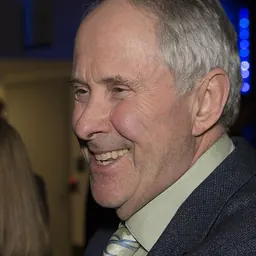


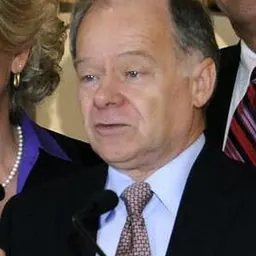
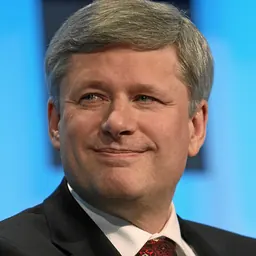

Related people
Same field, nearest in time
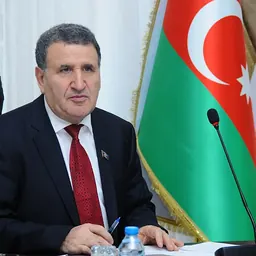



Contemporaries
People whose lives overlapped Ted Morton's

Frequently asked questions
Who is Ted Morton?
Canadian politician
When was Ted Morton born?
Ted Morton was born on 28 March 1949 in Los Angeles.
What is Ted Morton's occupation?
Ted Morton is a politician, political scientist and university teacher.
What nationality is Ted Morton?
Ted Morton is American and Canadian.
Sources & further reading
Cite this page
APA: Biography.guide. (2026). Ted Morton. https://biography.guide/ted-morton/
MLA: "Ted Morton." Biography.guide, https://biography.guide/ted-morton/.
Chicago: "Ted Morton." Biography.guide. https://biography.guide/ted-morton/.
Data last updated: 2026-09-25 · Spot an error? Report a correction.
Page generated 2026-09-27 05:12 UTC