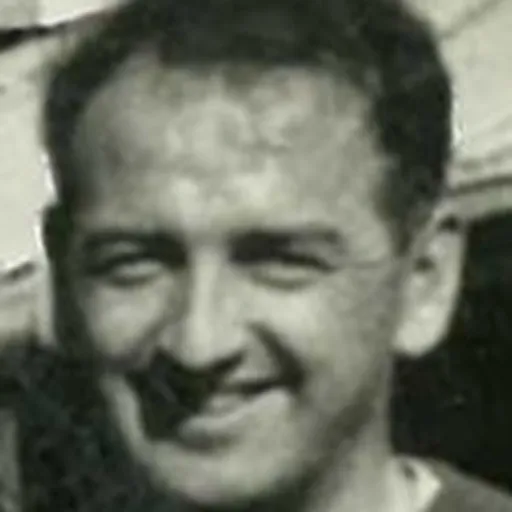
About Ted Kennedy
Lived 1931 – 2005 (aged 74). Ted Kennedy was an Australian writer and catholic priest.
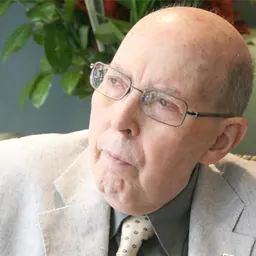
Edward Phillip "Ted" Kennedy (27 January 1931 – 17 May 2005) was an Australian priest and activist. He was best known as the parish priest of St Vincent's Roman Catholic church in the Sydney inner-city suburb of Redfern, where he commenced his ministry in 1971. The Redfern Catholic presbytery under Kennedy was an open house for the many Indigenous members of his parish and beyond.
Early life, education, and ordination
Edward Phillip Kennedy was born on 27 January 1931, the son of Jack and Peg Kennedy. His father was a general practitioner in Marrickville, where Kennedy grew up and gained a Catholic education. Though a cleric himself, he professed to be strongly anticlerical - an attitude he attributed to his mother, who disdained many clerics because of their pomposity and self-importance. He was a harsh critic of the Tridentine seminary system and its objectives, to which he had been subjected, and lamented the lifelong bad effects it had on so many of his brother priests. From 1957 to 1962, with Roger Pryke and others, he was a participant in a series of lectures for nuns at Sancta Sophia College within Sydney University. The lecture team included Bede Heather, Grove Johnson, Brian and Paul Crittenden, Terry Johns, Ron Hine, David Coffey, Mary Lewis, and Mary Shanahan. These lectures introduced the sisters to the coming reforms of the Second Vatican Council.
Catholic hymnody
On 5 March 1967 the second Vatican Council had promulgated the Schema on Sacred Music, advocating that music be restored as an essential component of the Catholic liturgy. Partly through Kennedy's introduction and encouragement, composer Richard Connolly and poet and academic James McAuley became involved in creating suitable and appealing Australian Catholic hymns, especially for various sections of the Mass.
Thus began one of the most successful hymn-making teams of the 20th century in Australia. Their work would result in the Living Parish hymnbook, published by a group around Fr Roger Pryke and Fr Tony Newman, which sold around one million copies over the next decade, enabling congregations to sing hymns during the liturgy in an Australian voice. but over time he identified with the many social problems and challenges the Aboriginal community faced, and worked to bring justice to them. His presbytery and church community became a place of refuge for Indigenous Australians travelling from all parts of the nation. He befriended Aboriginal activist Mum Shirl and worked closely with her until she died in 1998.
Author and former Jesuit Peter Norden recalls that on wet nights up to one hundred people slept at the St Vincent de Paul catholic presbytery. It became known as the "people's home".
Kennedy promoted reparation and reconciliation with Indigenous Australians.
Kennedy was a controversial figure and not all Catholics or all Australians supported his radical views. He was often in conflict with the church hierarchy for his activism. He once described himself as "a sample of that endangered species – an Australian Catholic priest".
In 2000 Kennedy published a book, Who is Worthy: The role of conscience in restoring hope to the Church, in response to controversy in the Archdiocese of Sydney over the proper role of individual conscience. This was a public debate triggered by comments from Cardinal George Pell, who had argued that the "doctrine of the primacy of conscience should be quietly ditched, at least in our schools, or comprehensively restated" largely because of his concerns that too many liberties were being taken in a society that overemphasised the philosophy of individualism. But Kennedy was focused on what he considered was the chief problem of clericalism. In the book he argued that the Australian church has corrupted the basic teachings of Christ and has become a church of exclusion rather than inclusion, so that a process of reformation was required.
Recognition and honours In the 2001 Australia Day Honours, Kennedy was award a Medal of the Order of Australia,
Later life and death After two major strokes, Kennedy retired in 2002. After retirement, despite his illness, he kept in close contact with the people of Redfern. He died at Concord Hospital, Sydney, on 17 May 2005. Approximately 1,500 people, including "seventy priests, three bishops and one cardinal", attended his funeral on 24 May.
Footnotes
Don’t just read it —
keep it.
Full-length biographies made to live with: read them, listen on the way to work, watch them tonight.
- E-book
- Audio
- Video
Instant download · yours to keep · every purchase keeps this site free
Important facts
People in Ted Kennedy's life
Named in this biography and alive at the same time





Related people
Same field, nearest in time


Contemporaries
People whose lives overlapped Ted Kennedy's
Frequently asked questions
Who was Ted Kennedy?
Australian priest (1931–2005)
When was Ted Kennedy born?
Ted Kennedy was born on 27 January 1931 in Marrickville.
When did Ted Kennedy die?
Ted Kennedy died on 27 May 2005 in Redfern, New South Wales.
What was Ted Kennedy's occupation?
Ted Kennedy was a writer and catholic priest.
What nationality was Ted Kennedy?
Ted Kennedy was Australian.
Sources & further reading
· DBpedia: Ted Kennedy (priest)
Cite this page
APA: Biography.guide. (2026). Ted Kennedy. https://biography.guide/ted-kennedy-writer/
MLA: "Ted Kennedy." Biography.guide, https://biography.guide/ted-kennedy-writer/.
Chicago: "Ted Kennedy." Biography.guide. https://biography.guide/ted-kennedy-writer/.
Data last updated: 2026-09-22 · Spot an error? Report a correction.
Portrait: Wikimedia Commons · author & licence
Page generated 2026-09-27 04:58 UTC