
About Te Ua Haumene
Lived 1820 – 1866 (aged 45–46). Te Ua Haumene was a military leader.
Te Ua Haumēne was a New Zealand Māori religious leader during the 1860s. He founded the Pai Mārire movement, which became hostile and engaged in military conflict against the New Zealand government during the Second Taranaki War and the East Cape War.
Early life Born at Waiaua, South Taranaki, in the early 1820s, Te Ua was of the Taranaki iwi (tribe). His father Tūtawake died soon after his son's birth and Te Ua was captured, along with his mother Paihaka, during a 1826 raid mounted by the Waikato iwi. Enslaved, their captors took them to Kāwhia. There was a Christian presence in the area, and Te Ua was taught to read and write and also studied the New Testament. Soon after John Whiteley, a Wesleyan missionary, established a mission station in Kāwhia, Te Ua was baptised as Horopāpera, a transliteration of the name Zerubbabel. He was also known as Horopāpera Tūwhakaroro at this time.
Te Ua returned to the Taranaki in 1840, joining the Wesleyan mission at Waimate. By the 1850s he was a supporter of the Kīngitanga (Māori King Movement) and also engaged in the anti-land-selling movement, protesting the acquisition by settlers of Māori land in the Taranaki. He fought against the government in the First Taranaki War, serving as a chaplain to the Māori warriors. He himself assumed the name Haumēne (Windman).
At the end of the year, a key leader of the Hauhau, Kereopa Te Rau was sent to the East Cape to gain support for the Pai Mārire among the Ngāti Porou iwi of Tūranga. However, disobeying his instructions to proceed peacefully, Kereopa instead agitated for action to be taken against the missionaries as he travelled across the North Island. This culminated in the murder of Reverend Carl Völkner, a supporter of the government, at Ōpōtiki on 2 March 1865. This created considerable anger among the colonists and following this event, Hauhau became a term used to describe any anti-government Māori. Ngāti Porou, aligned with the government, sent forces to fight against the militant Hauhau followers in the area. This resulted in conflict which continued, on and off, until 1872.
Te Ua recognised that the conflict with the government could not continue and commenced discussions with officials to end it. These were unsuccessful in face of likely retribution in the form of land confiscation, which only hardened the resolve to resist the government. There was also the threat of the introduction of government troops into the Taranaki. In the interim, Te Ua continued to preach, advocating for Māori rights for land not yet sold. His religion continued to expand, gaining followers and new prophets were consecrated at the end of 1865.
Later life In February 1866, Te Ua surrendered to Major General Trevor Chute, leading a government expedition to the Taranaki for the purpose of suppressing the Māori dissidents in the area. He was placed under house arrest at Kawau Island, where the Governor of New Zealand, Sir George Grey, had his residence. His confinement ended in June and he was permitted to return to Taranaki, where he encouraged the local Māori to cease their hostile actions against the government. He died in October 1866 at Ōeo. The cause of death may have been tuberculosis.
Legacy Pai Mārire continued to influence the Kīngitana movement and Tāwhiao, who had been baptised by Te Ua in 1864, ensured its teachings were spread throughout the King Country. Tītokowaru, a war leader in Taranaki, was another influenced by the teachings of Te Ua, and combined elements of Pai Mārire into his own religion.
Don’t just read it —
keep it.
Full-length biographies made to live with: read them, listen on the way to work, watch them tonight.
- E-book
- Audio
- Video
Instant download · yours to keep · every purchase keeps this site free
Important facts
People in Te Ua Haumene's life
Named in this biography and alive at the same time

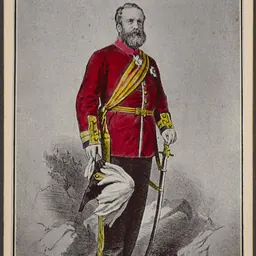

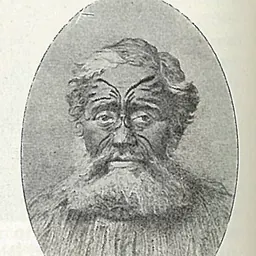
Related people
Same field, nearest in time
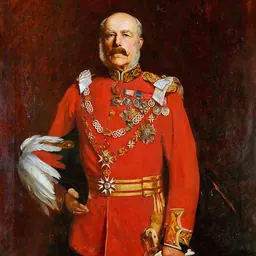


Contemporaries
People whose lives overlapped Te Ua Haumene's




Frequently asked questions
Who was Te Ua Haumene?
?–1866 Taranaki leader, prophet, religious...
When was Te Ua Haumene born?
Te Ua Haumene was born in 1820.
When did Te Ua Haumene die?
Te Ua Haumene died in 1866.
What was Te Ua Haumene's occupation?
Te Ua Haumene was a military leader.
What nationality was Te Ua Haumene?
Te Ua Haumene's recorded nationality: Māori people.
Sources & further reading
Cite this page
APA: Biography.guide. (2026). Te Ua Haumene. https://biography.guide/te-ua-haumene/
MLA: "Te Ua Haumene." Biography.guide, https://biography.guide/te-ua-haumene/.
Chicago: "Te Ua Haumene." Biography.guide. https://biography.guide/te-ua-haumene/.
Data last updated: 2026-09-20 · Spot an error? Report a correction.
Page generated 2026-09-27 05:13 UTC