
About Tata Güines
Lived 1930 – 2008 (aged 77). Tata Güines was a Cuban jazz musician, percussionist and composer.
Federico Arístides Soto Alejo (June 30, 1930 – February 4, 2008), better known as Tata Güines, was a Cuban percussionist, bandleader and arranger. He was widely regarded as a master of the conga drum, and alongside Carlos "Patato" Valdés, influential in the development of contemporary Afro-Cuban music, including Afro-Cuban jazz. He specialized in a form of improvisation known as descarga, a format in which he recorded numerous albums throughout the years with Cachao, Frank Emilio Flynn, Estrellas de Areito, Alfredo Rodríguez and Jane Bunnett, among others. In the 1990s he released two critically acclaimed albums as a leader: Pasaporte and Aniversario. His composition "Pa' gozar" has become a standard of the descarga genre.
Life and career Early years Arístides Soto was born in Güines, a town east of Havana in the former province of Havana in Cuba, on June 30, 1930. He grew up with his parents and his seven siblings, leaving school after year 4 to work as a shoeshiner and paperboy. His mother, María de los Ángeles Soto, took care of the house, while his father José Alejo Vasallo "Joseíto" was a cane worker. He was exposed to music from a young age; Joseíto played the tres in the Sexteto Partagás and used to jam with Arsenio Rodríguez, who lived nearby. Tata made his first bongó-like drums out of a sausage jar and a carton of milk in order to join them on percussion. The next year he took part in the recording of Cachao's Cuban Jam Sessions in Miniature; he even doubled on bass on one track with Cachao on piano. He then moved to New York City for two years, performing at the Waldorf Astoria and various nightclubs including Birdland, He then joined the Quinteto Instrumental de Música Moderna, a pioneering jazz combo founded by drummer Guillermo Barreto and pianist Frank Emilio Flynn. and Tata Güines y sus Ases del Ritmo. His first hit with the Tatagüinitos was "Perico, no llores más". In 2003 he played on the Latin Grammy-winning Lágrimas negras with pianist Bebo Valdés and Spanish flamenco singer Diego El Cigala.
In 2007, he recorded Piano y ritmo with Cuban Jazz Legends; the album was released posthumously in 2010. Tata Güines died in Havana on February 4, 2008. He claimed that his biggest influence was Chano Pozo.
Discography 1981: Descarga (Discos Fuentes) 1994: Pasaporte (EGREM) – with Angá Díaz 1995: Aniversario (EGREM)
Don’t just read it —
keep it.
Full-length biographies made to live with: read them, listen on the way to work, watch them tonight.
- E-book
- Audio
- Video
Instant download · yours to keep · every purchase keeps this site free
Important facts
People in Tata Güines's life
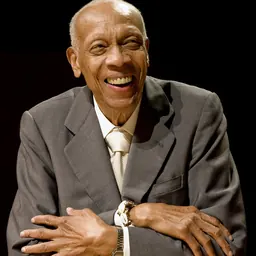
Named in this biography and alive at the same time






Related people
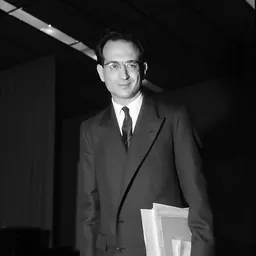
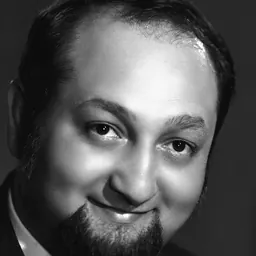
Same field, nearest in time


Contemporaries
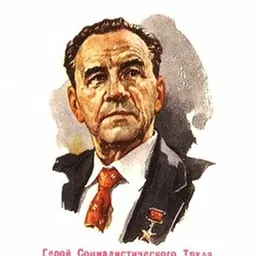
People whose lives overlapped Tata Güines's

Frequently asked questions
Who was Tata Güines?
Cuban musician (1930–2008)
When was Tata Güines born?
Tata Güines was born on 30 June 1930 in Güines.
When did Tata Güines die?
Tata Güines died on 4 February 2008 in Havana.
What was Tata Güines's occupation?
Tata Güines was a jazz musician, percussionist and composer.
What nationality was Tata Güines?
Tata Güines was Cuban.
Sources & further reading
Cite this page
APA: Biography.guide. (2026). Tata Güines. https://biography.guide/tata-guines/
MLA: "Tata Güines." Biography.guide, https://biography.guide/tata-guines/.
Chicago: "Tata Güines." Biography.guide. https://biography.guide/tata-guines/.
Data last updated: 2026-09-20 · Spot an error? Report a correction.
Page generated 2026-09-27 05:22 UTC