
Tasuku Honjo
Japanese professor of immunology and genomic medicine
About Tasuku Honjo
Born 1942. Tasuku Honjo is a Japanese immunologist, biochemist, university teacher and physician.
is a Japanese physician-scientist and immunologist. He won the 2018 Nobel Prize in Physiology or Medicine and is best known for his identification of programmed cell death protein 1 (PD-1). He is also known for his molecular identification of cytokines IL-4 and IL-5, as well as the discovery of activation-induced cytidine deaminase (AID) that is essential for class switch recombination and somatic hypermutation.
He was elected as an international member of the National Academy of Sciences of the United States in 2001, a member of the German National Academy of Sciences Leopoldina in 2003, and as a member of the Japan Academy in 2005. In 2018, he was awarded a Nobel Prize with James P. Allison. He and Allison together had won the 2014 Tang Prize in Biopharmaceutical Science for the same achievement.
Life and career
Honjo was born in Kyoto in 1942. He completed his M.D. degree in 1966 from the Faculty of Medicine, Kyoto University, where in 1975 he received his Ph.D. degree in medical chemistry under the supervision of Yasutomi Nishizuka and Osamu Hayaishi.
Honjo was a visiting fellow at the Department of Embryology at Carnegie Institution of Washington, from 1971 to 1973. He then moved to the U.S. National Institutes of Health (NIH) in Bethesda, Maryland, where he studied the genetic basis for the immune response at the National Institute of Child Health and Human Development as a fellow between 1973 and 1977, followed by many years as an NIH Fogarty Scholar in Residence starting in 1992. During part of this time, Honjo also was an assistant professor at the Faculty of Medicine, University of Tokyo, between 1974 and 1979; a professor in the Department of Genetics, Osaka University School of Medicine, between 1979 and 1984; and professor in the Department of Medical Chemistry, Kyoto University Faculty of Medicine, from 1984 to 2005. Since 2005 Honjo has been a professor in Department of Immunology and Genomic Medicine, Kyoto University Faculty of Medicine. In 2017 he became Deputy Director-General and Distinguished Professor of Kyoto University Institute for Advanced Study (KUIAS). COVID-19 pandemic During the COVID-19 pandemic, a disputed claim that Honjo believed that the novel coronavirus had been "manufactured" by a laboratory in the Chinese city of Wuhan was widely disseminated on the internet in many languages. The BBC Reality Check team reported that, "In a statement published on the website of Kyoto University, he said he was 'greatly saddened' that his name had been used to spread 'false accusations and misinformation'. He succeeded in cDNA clonings of IL-4 and IL-5 cytokines involved in class switching and IL-2 receptor alpha chain in 1986, and went on further to discover AID in 2000, demonstrating its importance in class switch recombination and somatic hypermutation.
In 1992, Honjo first identified PD-1 as an inducible gene on activated T-lymphocytes, and this discovery significantly contributed to the establishment of cancer immunotherapy principle by PD-1 blockade.
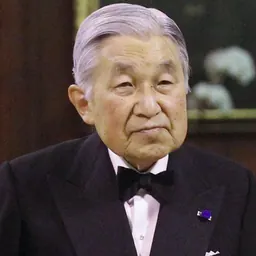
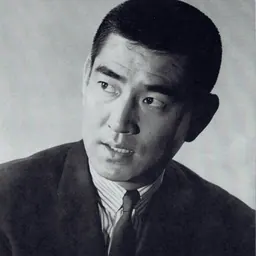
Recognition Shun'ichi Iwasaki, Ken Takakura, Seikaku Takagi, Susumu Nakanishi and Honjo received the Order of Culture from Emperor Akihito on November 3, 2013. After that they posed for photo with Shinzō Abe at the East Garden of the Imperial Palace.
Honjo has received several awards and honors in his life. In 2016, he won the Kyoto Prize in Basic Sciences for "Discovery of the Mechanism Responsible for the Functional Diversification of Antibodies, Immunoregulatory Molecules and Clinical Applications of PD-1". In 2018, he shared the Nobel Prize in Physiology or Medicine with American immunologist James P. Allison. They previously also shared the Tang Prize in Biopharmaceutical Science in 2014.
Awards The major awards and honors received by Honjo are: 1981 – Noguchi Hideyo-Memorial Award for Medicine 1984 – Kihara Prize, Genetics Society of Japan 1985 – Erwin von Baelz Prize 2000 – Person of Cultural Merit 2001 – Foreign Associate (now titled International Member ) of the U.S. National Academy of Sciences 2012 – Robert Koch Prize 2016 – Keio Medical Science Prize 2016 – Fudan-Zhongzhi Science Award 2016 – Thomson Reuters Citation Laureates 2016, 2017, 2019 – Asian Scientist 100, Asian Scientist 2017 – Warren Alpert Foundation Prize 2018 – Nobel Prize in Physiology or Medicine
Honorary doctorates 2020 – Macau University of Science and Technology, China 2021 – University of British Columbia, Canada 2024 – National Taiwan University, Taiwan (The first Japanese to receive an honorary doctorate from NTU)
Don’t just read it —
keep it.
Full-length biographies made to live with: read them, listen on the way to work, watch them tonight.
- E-book
- Audio
- Video
Instant download · yours to keep · every purchase keeps this site free
Important facts
People in Tasuku Honjo's life
Named in this biography and alive at the same time




Related people
Same field, nearest in time



Contemporaries
People whose lives overlapped Tasuku Honjo's


Frequently asked questions
Who is Tasuku Honjo?
Japanese professor of immunology and genomic medicine (1942–)
When was Tasuku Honjo born?
Tasuku Honjo was born on 27 January 1942 in Kyoto.
What is Tasuku Honjo's occupation?
Tasuku Honjo is an immunologist, biochemist, university teacher and physician.
What nationality is Tasuku Honjo?
Tasuku Honjo is Japanese.
Sources & further reading
Cite this page
APA: Biography.guide. (2026). Tasuku Honjo. https://biography.guide/tasuku-honjo/
MLA: "Tasuku Honjo." Biography.guide, https://biography.guide/tasuku-honjo/.
Chicago: "Tasuku Honjo." Biography.guide. https://biography.guide/tasuku-honjo/.
Data last updated: 2026-09-20 · Spot an error? Report a correction.
Page generated 2026-09-27 05:20 UTC