
About Tara Singh Hayer
Lived 1936 – 1998 (aged 62). Tara Singh Hayer was a Canadian journalist, known for Indo-Canadian Times.
Tara Singh Hayer (November 15, 1936 – November 18, 1998) was an Indian-Canadian newspaper publisher and editor who was murdered after his outspoken criticism of fundamentalist violence and terrorism. In particular, he was a key witness in the trial of the Air India Flight 182 bombing.
Hayer was the founder of the Indo-Canadian Times, the largest and oldest Punjabi-language weekly newspaper in Canada and the leading Punjabi-language newspaper in North America. The paper—distributed in Canada, the United States, and England—was regularly used by Hayer to speak out against violent extremist groups.
He is the first, and one of the few journalists in Canada, to have been killed specifically for his work.
History
Personal life Hayer was born in Paddi Jagir, a small village in Punjab, India. He emigrated to Canada in 1970, where he worked as a miner, teacher, truck driver, manager of a trucking firm, and journalist before establishing a community newspaper, the Indo-Canadian Times, in 1978.
In 1988, Hayer wrote various editorials in his newspaper about how, while visiting a friend in 1985 in London, England, months after the Air India bombing, he overheard a conversation taking place in the offices of the Punjabi-language newspaper Des Pardes in which accused bomber Ajaib Singh Bagri described to Tarsem Singh Purewal, the editor of Des Pardes, how the bomb was smuggled onto Flight 182. Hayer began reporting this in April 1988, when he first named Bagri in his publication: "If you remember the Air India flight that blew up in midair, the police connected to this could be keeping an eye on Bagri." Subsequently, in July, he referred to "Talwinder Singh [Parmar] and Bagri having a hand in this." He followed up with more specificity in the August edition: "In 1985 in England, Bagri was talking noisily about his involvement in the blowing up of the Air India airplane." He was shot in his newspaper office by Harkirat Singh Bagga, a youth who later pleaded guilty to attempted murder. Bagga turned out to be one of the suspects behind the Air India bombing: the .357 Magnum that he used was provided by a California man who was also the owner of a gun found in the residence of Inderjit Singh Reyat, the only person convicted in the Air India bombing. Hayer's account was consistent with other evidence about the placing of the bomb. He repeated his account on videotape and indicated he was willing to testify.
Despite the tragedy, Hayer's wife, Baldev, told their children that they must carry on with the newspaper; they went back to the Indo-Canadian Times office that very night to remake the front page with news of Hayer's murder.
Similarly, following the Air India inquiry, Justice John C. Major's 2010 report described the police's efforts to protect their witness as feeble: "nowhere are the RCMP's failures to protect its potential witnesses more dramatic than in relation to Tara Singh Hayer." The CJFE also has the "Tara Singh Hayer Award for Bravery in Journalism," which is typically awarded posthumously to murdered journalists, but not always.
In 2000, journalist Gordon Donaldson added Hayer to the Canadian News Hall of Fame, making him the first Canadian of non-English, non-French origin to be added to the Hall. In May that year, Hayer was also selected as one of the International Press Institute World Press Freedom Heroes of the past 50 years. One of the presenters of this award was American senator Ted Kennedy, and it was accepted by Dave Hayer and Isabelle Martinez Hayer on behalf of the Hayer family.
In 2010, former Supreme Court Justice John C. Major described Hayer as a "courageous opponent of terrorism."
Don’t just read it —
keep it.
Full-length biographies made to live with: read them, listen on the way to work, watch them tonight.
- E-book
- Audio
- Video
Instant download · yours to keep · every purchase keeps this site free
Important facts
Family & relationships
People in Tara Singh Hayer's life
Named in this biography and alive at the same time




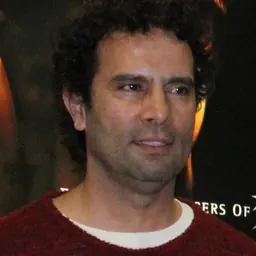


Related people
Same field, nearest in time

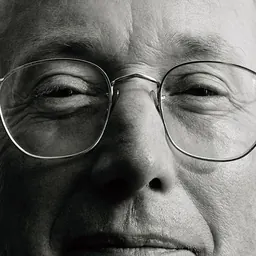

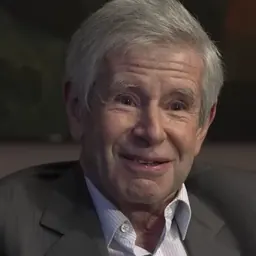
Contemporaries
People whose lives overlapped Tara Singh Hayer's




Frequently asked questions
Who was Tara Singh Hayer?
Canadian journalist
When was Tara Singh Hayer born?
Tara Singh Hayer was born on 15 November 1936 in Paddi Jagir, Punjab.
When did Tara Singh Hayer die?
Tara Singh Hayer died on 18 November 1998 in Surrey.
What was Tara Singh Hayer's occupation?
Tara Singh Hayer was a journalist.
What was Tara Singh Hayer known for?
Tara Singh Hayer was known for Indo-Canadian Times.
What nationality was Tara Singh Hayer?
Tara Singh Hayer was Canadian.
Sources & further reading
Cite this page
APA: Biography.guide. (2026). Tara Singh Hayer. https://biography.guide/tara-singh-hayer/
MLA: "Tara Singh Hayer." Biography.guide, https://biography.guide/tara-singh-hayer/.
Chicago: "Tara Singh Hayer." Biography.guide. https://biography.guide/tara-singh-hayer/.
Data last updated: 2026-09-22 · Spot an error? Report a correction.
Page generated 2026-09-27 05:17 UTC