
Tang Yuanbing
Chinese industrialist and political figure
About Tang Yuanbing
Lived 1909 – 1995 (aged 85–86). Tang Yuanbing was a Chinese.
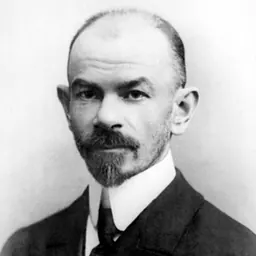
Tang Yuanbing (; March 22, 1909 – April 5, 1995) was a Chinese political figure, industrialist, and a prominent leader of the China Democratic National Construction Association (CDNCA). He served as vice chairperson of the Central Committee of the CDNCA and deputy director of its Central Advisory Committee, and played a significant role in Zhejiang's political consultation system and the development of industry, commerce, and education in eastern China.
Biography
Tang was born on March 22, 1909, in Nantong, Jiangsu. He received his early education at Nantong Yinghua Vocational School and later studied at Pudong Middle School in Shanghai and Tongde Medical College. During the May Thirtieth Movement in 1925, he became actively involved in anti-imperialist and anti-feudal movements. He joined the Kuomintang later that year but left the party after the April 12 Incident in 1927. In August 1927, he joined the Chinese Communist Party, but was arrested in Hangzhou in January 1928 while engaged in underground activities, losing contact with the party during his imprisonment.
In 1934, Tang traveled to Japan, where he studied economics at Hosei University and earned a bachelor's degree in commerce. While in Japan, he supported progressive publishing activities by assisting Xinzhi Bookstore in Tokyo, which was operated by Chinese communists. After the Marco Polo Bridge Incident in 1937, he returned to China and devoted himself to industrial and commercial work, holding senior managerial positions in major cotton and textile enterprises, including the China Cotton Company and the China Textile Industrial Company.
Following the establishment of the People's Republic of China in 1949, Tang refused pressure from the Kuomintang to relocate to Taiwan and encouraged industrial and commercial leaders in Jiangsu, Zhejiang, and Shanghai to remain on the mainland. In June 1949, he moved from Shanghai to Hangzhou at the invitation of the Zhejiang Military Control Commission, where he participated in post-liberation economic reconstruction. He subsequently served as manager of Hangjiang Spinning Mill and held several senior positions in Zhejiang provincial industrial and commercial administration.
Tang was one of the founders of the All-China Federation of Industry and Commerce organizations in Hangzhou and Zhejiang. From the early 1950s onward, he held leading positions in both municipal and provincial federations. Within the CDNCA, he served as vice chairperson of the Zhejiang Provincial Committee and later as its honorary chairperson. At the national level, he was elected to the first and second Central Committees of the CDNCA, and from 1979 onward served as vice chairperson of the third through fifth Central Committees. In November 1992, he became deputy director of the Sixth Central Advisory Committee of the association.
In public office, Tang served as vice chairperson of the Zhejiang Provincial Committee of the Chinese People's Political Consultative Conference (CPPCC) from its first through seventh terms, and as a member of the National Committee of the CPPCC from the second through fifth terms, later serving as a standing member during the sixth and seventh terms. He was also a deputy governor of Zhejiang Province beginning in 1979 and a delegate to the first three sessions of the Zhejiang Provincial People's Congress.
Tang was deeply committed to education and social development. In the 1950s, he helped establish Qianjiang Middle School with support from the business community. After the start of China's reform and opening-up, he promoted the founding of vocational and technical schools in Hangzhou and supported educational initiatives sponsored by democratic parties. He also played a key role in establishing Zhejiang International Trust and Investment Corporation, serving as its chairman from 1982.
In January 1995, shortly before his death, Tang was approved for membership in the Chinese Communist Party in recognition of his long-standing contributions. He died in Hangzhou on April 5, 1995, at the age of 86.
Don’t just read it —
keep it.
Full-length biographies made to live with: read them, listen on the way to work, watch them tonight.
- E-book
- Audio
- Video
Instant download · yours to keep · every purchase keeps this site free
Important facts
People in Tang Yuanbing's life
Named in this biography and alive at the same time

Contemporaries
People whose lives overlapped Tang Yuanbing's




Frequently asked questions
Who was Tang Yuanbing?
Chinese industrialist and political figure (1909–1995)
When was Tang Yuanbing born?
Tang Yuanbing was born in 1909.
When did Tang Yuanbing die?
Tang Yuanbing died in 1995.
What nationality was Tang Yuanbing?
Tang Yuanbing was Chinese.
Sources & further reading
Cite this page
APA: Biography.guide. (2026). Tang Yuanbing. https://biography.guide/tang-yuanbing/
MLA: "Tang Yuanbing." Biography.guide, https://biography.guide/tang-yuanbing/.
Chicago: "Tang Yuanbing." Biography.guide. https://biography.guide/tang-yuanbing/.
Data last updated: 2026-09-20 · Spot an error? Report a correction.
Page generated 2026-09-27 05:13 UTC