
About Tamim bin Hamad Al Thani
Born 1980. Tamim bin Hamad Al Thani is a politician.
Tamim bin Hamad bin Khalifa Al Thani (; born 3 June 1980) is Emir of Qatar, reigning since 2013.
Born in Doha, he is the fourth son of the previous emir, Hamad bin Khalifa Al Thani, and his second wife, Moza bint Nasser. Tamim became heir apparent in 2003 after his older brother Sheikh Jassim renounced his claim to the throne.
Early life and education Tamim bin Hamad was born on 3 June 1980 in Doha, Qatar. He is the fourth son of Sheikh Hamad bin Khalifa Al Thani, and second son of Sheikha Moza bint Nasser Al-Missned, Hamad's second wife. and at Harrow School, where he sat his A-Levels in 1997. On 5 August 2003, he was appointed deputy commander-in-chief of Qatar's armed forces. At the 113th session of the International Olympic Committee (IOC) in February 2002, he was elected as a member of the IOC. He headed Doha's bid for the 2020 Olympics.
The Olympic Council of Asia (OCA) Evaluation Committee completed its tour to Doha in November 2020, and confirmed that the city will have much to offer for the Asian Games, and that they were satisfied with the prioritizing and support from Tamim. At the 39th General Assembly of the OCA, President Ahmed Al-Fahad Al-Ahmed Al-Sabah announced that Doha would host the 2030 Asian Games.
Sheikh Tamim heads the Qatar Investment Authority board of directors. Under his leadership, the fund has invested billions in British businesses. It owns large stakes in Barclays Bank, Sainsbury's, and Harrods. of Europe's fourth tallest building, the Shard, a skyscraper in London.
Tamim has also held a number of other posts, including: Head of the Upper Council of the Environment and Natural Sanctuaries. Chairman of the Supreme Council for the Environment and Natural Reserves.
Reign Sheikh Tamim with U.S. Secretary of Defense Chuck Hagel, 10 December 2013 On 25 June 2013, Tamim's father, Sheikh Hamad bin Khalifa Al Thani, revealed to close relatives and aides that he planned to step down as the Emir of Qatar. Tamim then became the Emir of Qatar after his father handed over power in a televised speech. While the previous two Qatari rulers from the Al Thani family ascended to power in bloodless coups, Tamim was the first to ascend to power via an abdication. According to The Economist, of his siblings who had previously contended for the throne, "One played too much, the other prayed too much." The transition of power went smoothly, as family members hold many of Qatar's top posts. He became crown prince on 5 August 2003, after his brother Sheikh Jassim had stepped down. Diplomats quoted by the BBC argued that Jassim, who served as crown prince for eight years, had hoped to expand his political powers. In 2003, Sheikh Jassim stepped down from the position of crown prince. According to Qatar News Agency Jassim sent a letter to his father saying, "The time is appropriate to step down and prepare for a successor". In the letter, Jassim stated, "I did not want, as I have told you from the start, to be appointed as crown prince" and said that he had only accepted the position in October 1996 because of "sensitive circumstances". According to a report by Stratfor, Jassim had no allies among the military forces or secret police at the time of the 2013 political transition, and thus had few chances to overturn Hamad's decree.
Domestic policy
Tamim rules an authoritarian regime. He holds all executive and legislative authority in Qatar; political parties are forbidden, and elections are not free and fair. The citizens of Qatar have limited political and civil rights.
Since his accession to power, the government has expanded the roads around the capital, developed the new Doha Metro system, and completed the construction of a new airport, the Hamad International Airport. During the Arab Spring, Tamim promised to establish a directive to lower the price of foodstuffs sold by companies working with the country's National Food Security Programme and anticipated social allowances and pension increases.
In his inaugural speech on 26 June 2013, Sheikh Tamim pledged to continue to diversify Qatar's economy away from hydrocarbons.
In June 2013, Sheikh Tamim unveiled his new cabinet. Khalid bin Mohammad Al Attiyah was named foreign minister. Unlike previous appointees to this post, Al Attiyah was a non-royal. Tamim made Hessa Al Jaber the first ever Minister of Information and Communications Technology in Qatar in 2013. She was the third female minister to be named to the cabinet.
In 2014, Tamim passed new "cybercrime" legislation, which was said to be part of an agreement among Gulf states to criminalize online insults of the region's royal families. The law outlawed the spreading of "false news" as well as digital material that violates the country's "social values" or "general order". The legislation made it illegal to incite, aid and facilitate the publication of offensive material. The law was criticized as being intended by the authoritarian regime to silence dissent in Qatar. Amnesty International called the law "a major setback for freedom of expression in Qatar" and other critics suggest that the new law will violate provisions of the country's constitution that protect civil liberties.
In January 2016, Tamim made additional changes to his cabinet. He named a new foreign minister, Mohammed bin Abdulrahman bin Jassim Al Thani, moving the previous foreign minister, Khalid bin Mohammad Al Attiyah, to the position of Minister of State for Defense Affairs. Tamim also merged several ministries, including communication and transport, culture, youth and sports. Journalists have speculated reasons behind the cabinet changes. Some have come to the conclusion that the reorganization was either an economic move, meant to save the country money at a time when the falling price of gas had forced the country to scale back its workforce or for reasons of political stability. Eurasia Group indicated in a report that the cabinet change aimed to increase efficiency in government operations and would not negatively impact political or economic stability. According to others the appointments showed that Tamim was trying to make the government his own by bringing in a new, younger generation of ministers that were more loyal to him than to his father.
First legislative election and scrapping thereof
On 29 July 2021, Sheikh Tamim signed Law No. 6 of 2021 for the conduct of first legislative (Shura Council) election in Qatar and fifth in the Gulf cooperation Council (GCC). The law was first approved in a 2003 constitutional referendum but was never enforced. Of the 45 seats of the Shura Council, two thirds (30 seats) were elected, while the emir appointed the remaining 15 members of the council, giving this minority group and his cabinet overwhelming power of decision making on issues of defense, foreign policy and other critical issues of the state. The Assembly's powers are limited. The body can only question the prime minister, who is appointed by the Emir of Qatar, on his policies if two-thirds of the members agree, which was unlikely given that one third of its members were appointed by the Emir. This law was widely criticized by international rights groups for the exclusion of naturalized Qatari citizens and other groups. On 2 October 2021, the first ever election held in Qatar recording 63.5 per cent voter turnout but with protests by disenfranchised groups.
Eligibility for the vote was limited to people aged 18 years and up who had a grandfather born in Qatar; candidates were required to be at least 30 years of age and of Qatari origin. Some members of the seminomadic Al Murrah tribe were barred from the election, causing discontent among some members of the tribe. and ordered legal amendments.
In November 2024, the initial experiment of legislative elections that took place in the 2021 general poll was formally discontinued. The electoral component for the advisory assembly was eliminated, scrapping the planned "general election" process for its seats and returning the appointment power to the Emir.
Labour rights
During Tamim's rule, Qatar's abuse and exploitation of foreign migrant labourers (mostly Indians and Nepalese) has been a subject of international controversy, in particular in the lead-up to the 2022 FIFA World Cup. Despite several steps of reform, in their reports for 2025 both Human Rights Watch and Amnesty International have found that foreign labourers continue to face widespread abuses under a "restrictive" and "exploitative" Kafala system.
Two laws protecting workers' rights, which included clauses on maximum working hours and rights to annual leave, were passed by Sheikh Tamim in 2017. The next year, Sheikh Tamim passed Law No. 13 of 2018, abolishing exit visas for roughly 95% of the country's migrant workers. The remaining 5% of workers, which amount to approximately 174,000 people, still require their employer's permission to exit the country. Amnesty International described the step taken by the emir as an "important first step towards meeting the authorities' promise to fundamentally reform the exploitative sponsorship system" but called on the government to follow through with more reforms.
In November 2017, Qatar and the International Labour Organization (ILO) started a technical cooperation programme to improve working conditions and labour rights. The ILO opened its first project office in Qatar in April 2018.
Following the adoption on 30 August 2020 of Law No. 19 of 2020, migrant workers can now change jobs before the end of their contract without first having to obtain a no objection certificate (NOC) from their employer. In March 2021, Qatar implemented a monthly minimum wage of 1,000 riyals (USD 275) for all workers, making it the first country in the region to do so.
Foreign policy
Tamim's transition to power was welcomed by leaders across the world, who expected him to continue to work in his father's footsteps and increase Qatar's role in vital international affairs, including the Syrian crisis and Darfur agreement.
Analysts said he would be tasked with overseeing substantial upgrades to the national infrastructure, which have recently gotten underway. While some view Tamim as more religious than his father, most analysts expect him to retain his father's largely pragmatic habits of governing – using Islam to further objectives where useful, but not pushing strictly Islamic agenda items such as outlawing alcohol. From 2020 onward, Qatar took gradual steps to remove hateful or violent content from school textbooks. thumb In his inaugural speech to the nation, Tamim vowed that he would continue to pursue a central role for Qatar in the region but that he will not "take direction" in foreign affairs. He committed to the "highest possible level of integration" with his Gulf neighbors.
In May 2022, Tamim met in Iran with Ayatollah Ali Khamenei and Iranian president Ebrahim Raisi. Tamim expressed satisfaction with his second visit to Iran and pointed to the prominent position of the Leader of the Islamic Revolution in the Islamic world and said: "The crimes of the Zionist regime in Palestine are horrible and we must all stand against the events in Palestine". Tamim also discussed the solution to the problems of the countries in the region, including Syria, Iraq and Yemen, and also mentioned the economic relations between Iran and Qatar, saying: "The Economic Committee between the two countries has become active, and we hope that economic cooperation will significantly improve by next year".
In late October 2013, a few months after taking charge, Sheikh Tamim took a regional tour of the Gulf. Even before his accession to power, he formally represented his father at the annual Gulf Cooperation Council (GCC) Summit in Bahrain in December 2012 and welcomed delegates to the Arab League Summit in Doha in March 2013. Tamim considers Qatar's rivalry with Saudi Arabia unproductive, as has been the case in the so far unsuccessful attempt to build a cohesive Syrian opposition.
Qatar has also provided aid through loans and investments to the democratically elected Ennahdha Party in Tunisia, and to parties in Yemen and Morocco. Qatari support for Islamist causes and for organizations that oppose the absolute rule of the Gulf's hereditary rulers provoked tensions with the GCC countries.
In March 2014, Saudi Arabia, the UAE, and Bahrain withdrew their ambassadors to Qatar for nine months; diplomatic relations were restored following the November 2014 Riyadh Agreement.
The officially cited reason for the 2014 diplomatic crisis was Qatar's alleged refusal to ratify the agreements of non-interference in domestic policy within the GCC in December 2013, In January 2020, following a summit in Al-Ula, Saudi Arabia, Qatar reconciled with its neighbors, with a statement issued at the conclusion of the statement signed by Saudi Arabia, members of the Gulf Cooperation Council, and Egypt, although the statement did not specifically address the rift or its causes. In August 2013, Qatar joined a U.S.-led attempt to mediate the escalating tension between the Muslim Brotherhood and the military. Since Mohamed Morsi's removal from office, the new government has turned down Qatari offers for financial aid. Qatar's continued support for the Muslim Brotherhood resulted in a diplomatic rift between Qatar and Saudi Arabia, Bahrain and the UAE in 2014, culminating in the withdrawal of the latter three countries' ambassadors in March of that year. Qatar has continuously denied allegations of support for the Muslim Brotherhood, with the Foreign Minister stating in 2017: "In Egypt, when the Muslim Brotherhood assumed power, some linked this to Qatar's support, even though nearly 70 percent of the assistance program provided by Qatar was during the era of Essam Sharaf, during the period of the military council". In June 2016, Morsi was given a life sentence for passing state secrets to Qatar.
On 20 January 2021, Qatar and Egypt agreed to resume diplomatic relations. In March 2021, during a visit to Cairo, Qatari foreign minister Mohammed bin Abdulrahman bin Jassim Al Thani handed over Sheikh Tamim's invitation for Egypt's president Abdel Fattah el-Sisi. Sheikh Tamim named the Qatari ambassador to Egypt in July 2021 and met with el-Sisi in Baghdad on 28 August 2021. On 24 June 2022, Tamim met with el-Sisi in Cairo. They discussed diplomatic and economic relations after Qatar and Egypt had signed investments contracts worth more than US$5 billion in March 2022.
Qatar allegedly provided a financial boost to Morsi's Freedom and Justice Party, and Brotherhood opponents allegedly argued that Morsi's narrow election victory was achieved through Qatari funding. After Morsi's election, Qatar contributed a total of US$5.5 billion to the Muslim Brotherhood administration. Tamim himself has also repeatedly denied that Qatar supports extremists.
Some countries and regional analysts have claimed that Qatar has supported a spectrum of Islamist groups around the region. Especially since the beginning of the Arab Spring in 2011, the country has provided diplomatic and medical initiatives, and warnings to Islamist groups. There have also been claims that the Qatar-based pan-Arab satellite television channel Al Jazeera promoted the narratives of the Islamist parties and causes supported by Qatar, thereby contributing to the electoral success of some of these movements during national polls. The channel previously hosted a talk-show, "al-Sharīʿa wa al-Ḥayāh" ("Shariah and Life"), featuring the controversial Brotherhood-associated Egyptian cleric Yusuf al-Qaradawi.
On 1 November 2023, Qatar facilitated an agreement among Egypt, Israel, and Hamas. This agreement, in collaboration with the U.S., allowed for the safe evacuation of civilians from the besieged Gaza. In February 2024, Hamas proposed a deal with the mediation of Qatar and Egypt, aiming for the release of all Israeli hostages in Gaza and hundreds of Palestinians held in Israeli prisons, along with an end to the conflict. However, Israeli Prime Minister Netanyahu declined the proposal. Furthermore, the humanitarian actions of Emir Tamim Bin Hamad Al Thani and Mohammed bin Abdulrahman bin Jassim Al Thani received accolades from global leaders such as US Secretary Antony Blinken, Canadian prime minister Justin Trudeau, US President Joe Biden, and the EU's High Representative for Foreign Affairs Josep Borrell. On 23 May 2024, the U.S. official William J. Burns, the C.I.A. director leading American negotiation efforts for a Gaza cease-fire, plans to visit Europe for discussions with Israeli and Qatari and Egyptian leaders to reinvigorate talks on halting the conflict and releasing hostages.
Syria
Qatar called for a military intervention by Arab countries to end the bloodshed in Syria in 2012. Analysts expected that Tamin would have been under immediate pressure to reduce Qatar's support for the rebels in the Syrian Civil War, Sheikh Tamim took a step back after taking charge, primarily in response to the irritation voiced by Western powers at Qatar's operation to arm Syrian rebel groups which had been directed haphazardly. In 2015, under the aegis of a joint initiative with Saudi Arabia and Turkey promoted by Sheikh Tamim, Qatar has provided Syrian rebels with new weapons and forged a new opposition coalition in Syria known as the "Army of Conquest". Tamin also renewed his country's support for the Syrian people's demands for justice and freedom during a meeting with the chief of the Syrian National Coalition Khaled Khoja and his delegation in April 2015.
The Syrian rebel group Al-Rahman Legion was supported by Qatar in 2018. Since 2017, Qatari-backed Al-Rahman Legion has been fighting Saudi Arabian-backed Jaysh al-Islam rebel coalition.
On 7 May 2023, Sheikh Tamim unexpectedly left an Arab League summit before Syrian president Bashar al-Assad's scheduled speech. In September 2022, in an interview with the French news outlet Le Point, he highlighted that the factors that resulted in Syria's suspension from the Arab League in 2011 continue to be significant as the regime has been attributed to a prolonged period of conflict within the country, resulting significant refugee crisis on a global scale. According to various reports, the Assad regime has been accused of grave human rights violations such as employing distressing torture methods and shelling civilians.
Qatar and Western countries, such as the United States, the United Kingdom, and the United Nations, have expressed opposition to Bashar al-Assad's reinstatement into the Arab League. Their concerns primarily revolve around safeguarding the well-being and security of Syrian refugees across the Middle East. On 30 January 2025, Sheikh Tamim became the first head of state to visit Damascus since the fall of the Assad regime, discussing post-conflict reconstruction in Syria and other topics.
United Arab Emirates In January 2019, a Reuters investigation revealed that a team of former US government intelligence operatives working on behalf of the United Arab Emirates had hacked the iPhones of activists, diplomats and foreign leaders, including Sheikh Tamim bin Hamad Al Thani. Beginning in 2016 the spying tool, code named 'K4RM4', enabled the UAE to monitor hundreds of individuals identified as potential critics of, or threats to, the Emirati government and its ideology. The hacking unit using the tool, known as 'Project Raven', was based in Abu Dhabi and composed of local security officials and former US intelligence operatives working for the UAE's intelligence services. Ex-Project Raven operatives described how Karma was able to remotely gain access to iPhones, including that of Sheikh Tamim's, by uploading numbers or email addresses into an automated targeting system. According to Reuters the phones of Sheikh Tamim's brother as well as several associates were also hacked by the Project Raven team.
Palestine In November 2024, Sheikh Tamim bin Hamad Al Thani affirmed Qatar's support for a two-state solution to the Israeli-Palestinian conflict, advocating for the establishment of an independent Palestinian state based on the 1967 borders with East Jerusalem as its capital. His statement, emphasizing the importance of international resolutions and the Arab Peace Initiative, was delivered during the United Nations' "International Day of Solidarity with the Palestinian People" event in Vienna.
Russia On 13 October 2022, Tamim met with Russian president Vladimir Putin in the capital of Kazakhstan, Astana. At the time, Putin was a political pariah over Russia's invasion of Ukraine. Tamim praised Putin, saying he was "proud" of the relationship between Qatar and Russia. Qatar acted as a mediator in negotiations between Russia and Ukraine.
Turkey Tamim signed a military cooperation agreement with Turkey during an official visit to the country in December 2014. The agreement aims to promote cooperation in military training and the defense industry, and allows for the deployment of the Turkish Armed Forces to Qatar and the Qatari military to Turkey.
On 2 December 2015, Tamim signed a number of agreements with President Recep Tayyip Erdoğan. Cooperative agreements in education, maritime transport and correspondence pacts between intelligence agencies were signed. An agreement was also reached by Turkey to purchase liquefied natural gas from Qatar over a lengthy duration. The two leaders also announced the planned creation of a Turkish military base in Qatar; a first for Turkey in the Persian Gulf.
In August 2018, Qatar pledged $15 billion investment in Turkey, during currency crisis amid a diplomatic standoff with US. The investment package was announced after Tamim met Erdoğan in Ankara, on 15 August 2018.
On 6 December 2021, Tamim received Erdoğan for a state visit in Doha. During the two-day visit, they signed 15 agreements regarding culture, economy, defense and security. In addition, several memoranda of understanding were signed between the countries' ministries. Tamim and Erdoğan also agreed to extend the $15 billion currency swap agreement between Qatar and Turkey.
On 4 December 2023, Erdoğan and Tamim chaired the 9th meeting of the Turkey-Qatar Supreme Strategic Committee; and signed 12 cooperation agreements in various fields.
United Kingdom
Tamim met UK prime minister David Cameron and Queen Elizabeth II in October 2014 on his first official visit to the UK. Qatar and the UK anticipated a Qatari-British Economic Forum to explore mutual investment opportunities. Up to and during this meeting The Telegraph newspaper launched a campaign to urge Cameron to discuss Qatar's funding of Islamic extremists with Tamim. The Conservative MP, Stephen Barclay, repeatedly called for transparency in Britain's dealings with Qatar and said it was "essential" for Cameron to raise the issue of terror finance. "I welcome the fact that the Prime Minister is meeting with the Emir," he said. "As part of these discussions it is essential that the issue of financing Sunni tribes in Syria and Iraq is raised."
In July 2018, Tamim and UK prime minister Theresa May signed a letter of intent between the governments of Qatar and the United Kingdom. Both agreed to exchange information and intelligence on terrorism, to cooperate in the areas of law enforcement related to terror activities and security of the transport sector, including airports and aviation, and to fight financial crime. Tamin with British Prime Minister Rishi Sunak, 20 October 2023Sheikh Tamim and Sheikha Jawaher bint Hamad Al Thani attended the state funeral of Queen Elizabeth II on 19 September 2022, and the coronation of King Charles III on 6 May 2023, both held in Westminster Abbey, London.
King Charles III and Queen Camilla hosted Tamim at Buckingham Palace for a state visit on 3 and 4 December 2024. This followed their most recent meeting at the COP28 climate summit in Dubai in December 2023.
Europe Tamim met French president François Hollande twice in 2014 and 2015. In the latter meeting, they signed an agreement for the sale of Rafale jets to Qatar.
Tamim met French president Emmanuel Macron twice in 2017. In the latter meeting, they signed commercial contracts worth more than US$14 billion. During their 2018 meeting, Tamim thanked Macron for his support for Qatar in the Gulf crisis. They met again in 2021. In 2024, Macron and Tamim signed a €10 billion agreement on investment in the French economy.
In May 2022, during his first visit to Europe after the Russian invasion of Ukraine, Tamin signed energy and investment projects with several countries, including Spain and Germany, and for the first time spoke at the World Economic Forum annual meeting in Davos.
In March 2024, Qatar facilitated negotiations between Russia and Ukraine on reuniting children with their families who were separated during the conflict. Russia returned six children to Ukraine with the assistance of Qatari mediators in May 2024. In June, President of Ukraine Volodymyr Zelenskyy visited Qatar and met with Tamim. Zelenskyy expressed gratitude for Qatar's assistance in the return of Ukrainian children. Zelenskyy also highlighted the importance of Qatar's support for Ukraine's Peace Formula, which was held in 15 and 16 June.
United States
In July 2014, Tamim renewed the defence agreement with the U.S. and confirmed Qatar's cooperation with the U.S. in the Combined Air Operations Center at Al Udeid Air Base.
After visiting U.S. President Barack Obama at the White House in February 2015, Tamim wrote an editorial saying the U.S.–Qatari "strategic partnership has deepened in recent years, in spite of the regional unrest" and reiterated his commitment to support a more comprehensive approach to the strategic challenges facing the Middle East.
Sheikh Tamim was a personal friend of U.S. President Donald Trump prior to the latter's presidency. He visited the United States several times during Trump's presidency and has held bilateral meetings at the White House in Washington, D.C.
Tamim in particular played a role in the mediation with Taliban leaders, with whom he initiated contacts under his father's government. The United States requested the establishment of a Taliban office in Doha. In June 2013, the Taliban opened their first official overseas office in the Qatari capital as part of the long-standing attempt to broker a long-term Afghan peace agreement. In June 2015, Qatar successfully mediated efforts to free four Tajikistan soldiers kidnapped in December 2014 in Afghanistan by a Taliban group.
In July 2017, the US and Qatar signed a memorandum of understanding to combat the financing of terrorism. In the same year, U.S. secretary of state Rex Tillerson said that "The emir of Qatar has made progress in halting financial support and expelling terrorist elements from his country".
In July 2019, Sheikh Tamim visited the U.S. to meet President Donald Trump, who attended a dinner with him hosted by Treasury Secretary Steve Mnuchin and attended by Robert Kraft, Christine Lagarde, and others.
On an August 2021 telephone conversation, U.S. President Joe Biden thanked Tamim for Qatar's support regarding the US evacuations from Afghanistan, which according to Biden, the airlifts "would not have been possible without the early support from Qatar". Sheikh Tamim visited Biden at the White House on a visit to Washington, D.C., on 31 January 2022. He was the first leader from the Gulf Cooperation Council to visit the White House since Biden took office. They discussed bilateral relations, stability of global energy supplies, the situation in Afghanistan, and peace in the Middle East. Biden called Qatar a "good friend and reliable and capable partner", and announced the designation of Qatar as a major non-NATO ally.
Qatar hosted the historic signing of a peace deal between the US and the Taliban in February 2020 which called for the full withdrawal of US troops from Afghanistan. Beginning in September 2020, Qatar has hosted the peace talks between the Afghan government and the Taliban to end decades of war in the country.
Qatar mediated a deal between the United States and Iran, which saw the release of five prisoners in each country and the unfreezing of US$6 billion of Iranian funds in September 2023, which had been frozen due to sanctions imposed by the United States. U.S. President Biden thanked Tamim and Qatari officials for their role in the mediation as well as establishing a "Humanitarian channel" for Iran.
Israel In 1996, Qatar established trade relations with Israel, the first amongst all nations of the Arabian Peninsula and has continued to maintain its "working relationship" with Israel. Qatar cut commercial ties with Israel in 2009, after the first of four wars between Israel and Hamas in Gaza (Gaza War (2008–2009), 2012 Gaza War, 2014 Gaza War, 2021 Gaza War). It stated that it would normalize diplomatic ties when Israel commits to the Arab Peace Initiative. In May 2021, it was reported that Qatar had within a period of 10 years provided over $3 billion in aid to Gaza and West Bank with Israeli approval. In 2022, Israeli military officials were secretly dispatched to Qatar's Al Udeid Air Base, forward operating headquarters of all US forces in the West Asia, also known as CENTCOM as part of a security reshuffle.
The Gaza war disturbed large parts of the world – even countries in the Arab world that had good contacts with Israel and were on the path to rapprochement with Israel, such as Qatar. Tamim stressed that his country, in which Hamas had a representative for years, blamed the Israeli government alone for the lack of success of the ceasefire and hostages negotiations and stated that the Israeli government was not a partner for peace: "We are currently not experiencing a peace process, but a genocide."
Personal characteristics and views Sheikh Tamim is described as friendly, confident, and open by those who know him. He is also described as savvy, careful, and conservative. preserving a national identity grounded in Islamic traditional values has been Tamim's first priority.
Personal life Sheikh Tamim married his first wife and second cousin, Sheikha Jawaher bint Hamad Al Thani, on 8 January 2005. They have four children, two sons and two daughters: They have five children, three daughters and two sons:
On 11 November 2014, Emir Tamim appointed his younger half-brother Abdullah bin Hamad Al Thani to the post of Deputy Emir, making him de facto heir presumptive to the throne of Qatar. Emir Tamim is one day expected to appoint one of his own sons as crown prince.
Honours National Qatar
Foreign Bahrain
Brazil
Chad
Croatia
Ecuador
France
Italy
Jordan
Kazakhstan
Kuwait
Oman Member 1st Class (Civil division) of the Order of Oman (22 November 2021) Pakistan
Peru
Poland
Singapore
Spain
Sudan
Tunisia
United Arab Emirates
Awards Egypt Al-Ahram Newspaper: "Best Sports Personality in the Arab World" – 2006 International Olympic Committee Olympic Council of Asia: Recipient of the "OCA Award of Merit" – 2007
Don’t just read it —
keep it.
Full-length biographies made to live with: read them, listen on the way to work, watch them tonight.
- E-book
- Audio
- Video
Instant download · yours to keep · every purchase keeps this site free
Important facts
Family & relationships
People in Tamim bin Hamad Al Thani's life
Named in this biography and alive at the same time
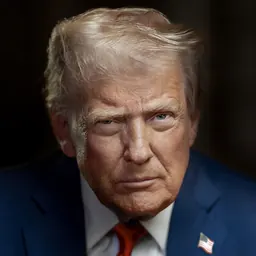

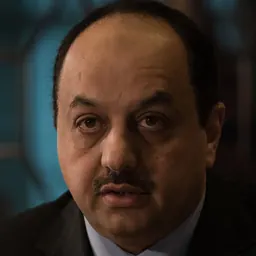



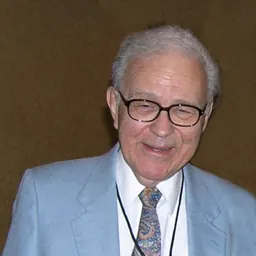
Related people
Same field, nearest in time
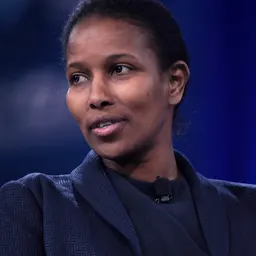


Contemporaries
People whose lives overlapped Tamim bin Hamad Al Thani's

Frequently asked questions
Who is Tamim bin Hamad Al Thani?
Emir of Qatar since 2013
When was Tamim bin Hamad Al Thani born?
Tamim bin Hamad Al Thani was born on 3 June 1980 in Doha.
What is Tamim bin Hamad Al Thani's occupation?
Tamim bin Hamad Al Thani is a politician.
What nationality is Tamim bin Hamad Al Thani?
Tamim bin Hamad Al Thani's recorded nationality: Qatar.
Sources & further reading
· Wikipedia: Tamim bin Hamad Al Thani
· DBpedia: Tamim bin Hamad Al Thani
Cite this page
APA: Biography.guide. (2026). Tamim bin Hamad Al Thani. https://biography.guide/tamim-bin-hamad-al-thani/
MLA: "Tamim bin Hamad Al Thani." Biography.guide, https://biography.guide/tamim-bin-hamad-al-thani/.
Chicago: "Tamim bin Hamad Al Thani." Biography.guide. https://biography.guide/tamim-bin-hamad-al-thani/.
Data last updated: 2026-09-20 · Spot an error? Report a correction.
Page generated 2026-09-27 05:27 UTC