
Tamaha
Dakota scout
About Tamaha
Lived 1776 – 1864 (aged 87–88).
Tamaha ( – 1864), also known as Tamahay, One eye, Standing Moose, or L'Orignal Levé, was one of two Mdewakanton Dakota scouts for the United States in the War of 1812, when most Sioux sided with the British. He was a member of Chief Red Wing's band and was presented with a medal and certificate by Governor William Clark of Missouri Territory for his loyalty to the U.S. The certificate was treasured by Tamaha, who called himself "the 'only' American Sioux,"
Early years Tamaha was born at Prairie à l'Aile (present-day Winona, Minnesota),
There are many colorful stories about his youthful exploits. In Indian Heroes and Great Chieftains (1918), Charles Eastman portrays "Tamahay" as a young man with "heroic proportions, herculean in strength, a superb runner; in fact, he had all the physical qualities of an athlete or a typical Indian. In his scanty dress, he was beautiful as an antique statue in living bronze."
When Tamaha was seventeen years old, he had an accident that resulted in the loss of an eye.
On September 23, 1805, Pike conducted treaty negotiations with a group of Dakota to obtain land to build a military outpost. Pike wrote that seven Sioux "chiefs" attended the council he held that day, including "Le Original Leve," whom he lists as a "war chief." Historians have commented that not all of them were actual chiefs recognized by the Dakota.
Peace medal and loyalty papers
Because of his loyalty to America, Tamaha was presented a Peace Medal and Loyalty papers by William Clark. These papers can be seen at the Minnesota History Center. Tamaha carried these papers with him and would charge people to see them.
Dakota-Ojibwe War
Tamaha is noted by the Shakopee Heritage Society as participating in the Battle of Shakopee on May 27, 1858 near Murphy's Landing in Shakopee, Minnesota. The Battle of Shakopee is noted as being the final engagement of the broader Dakota-Ojibwe War.
Opposition to Dakota War of 1862 Wearing his trademark stovepipe hat, he was a vocal advocate of amicable relations between whites (particularly Americans) and Indians, Before the Dakota War of 1862, Tamaha stood before Little Crow and advised him not go to war against the whites.
Death Tamaha died in 1864 after the Dakota War. According to Charles Eastman he died at Fort Pierre S.D.
Don’t just read it —
keep it.
Full-length biographies made to live with: read them, listen on the way to work, watch them tonight.
- E-book
- Audio
- Video
Instant download · yours to keep · every purchase keeps this site free
Important facts
People in Tamaha's life
Named in this biography and alive at the same time
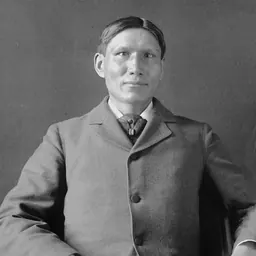
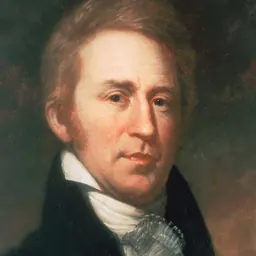
Contemporaries
People whose lives overlapped Tamaha's



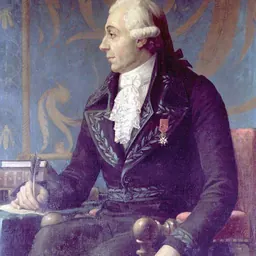

Frequently asked questions
Who was Tamaha?
Dakota scout
When was Tamaha born?
Tamaha was born in 1776.
When did Tamaha die?
Tamaha died in 1864.
Sources & further reading
· DBpedia: Tamaha (Dakota scout)
Cite this page
APA: Biography.guide. (2026). Tamaha. https://biography.guide/tamaha-1776/
MLA: "Tamaha." Biography.guide, https://biography.guide/tamaha-1776/.
Chicago: "Tamaha." Biography.guide. https://biography.guide/tamaha-1776/.
Data last updated: 2026-09-25 · Spot an error? Report a correction.
Page generated 2026-09-27 05:13 UTC