
About Takaki Kanehiro
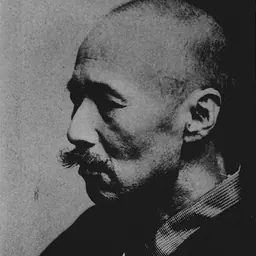
Lived 1849 – 1920 (aged 70). Takaki Kanehiro was a Japanese physician and politician.
Baron was a Japanese naval physician best known for identifying the first effective preventive measure against beriberi, a disease caused by vitamin B1 (thiamine) deficiency. His pioneering work focused on combating the high incidence of beriberi among sailors in the Imperial Japanese Navy (IJN), who had subsisted on a diet primarily composed of polished white rice.
Early life
Born in Takaoka-cho, Hyūga Province (present-day Miyazaki Prefecture) as the son of a samurai retainer to the Satsuma domain, Takaki Kanehiro studied Chinese medicine as a youth and served as a medic in the Boshin War. He later studied western medical science under British doctor William Willis (in Japan 1861–1881). Takaki entered the IJN as a medical officer in 1872. He was sent to Great Britain for medical studies in 1875, and interned at St Thomas's Hospital Medical School (now part of King's College London) in London. He returned to Japan in 1880.
Work on beriberi
During the Edo period, the consumption of polished white rice, once largely restricted to the upper classes, began to spread among lower-ranking samurai and urban townspeople, often forming the bulk of their diet with few side dishes. This dietary shift contributed to the rising prevalence of beriberi (vitamin B1 deficiency), particularly in major cities such as Kyoto, Nagoya, Edo (modern Tokyo), and Osaka by the late 17th century. In contrast, rural populations and farmers, who relied on less refined brown rice and mixed grains with higher thiamine content, were largely spared from the disease.
In the 1880s, beriberi (considered endemic to Japan) was a serious problem on warships and was affecting naval efficiency. Takaki knew that beriberi was not common among Western navies. He also noticed that Japanese naval officers, whose diet consisted of various types of vegetables and meat, rarely suffered from beriberi. On the other hand, the disease was common among ordinary crewmen, whose diet consisted almost exclusively of white rice (which was supplied for free, whereas other foods had to be purchased). Many crewmen were from poor families, who had to send money back home, they often tried to save money by eating nothing but rice. Takaki's discovery resulted in the popularization of Japanese curry (nicknamed navy curry) in the navy, a dish that was nutritious and easy to cook in mass quantities.
Takaki's success occurred ten years before Christiaan Eijkman, working in Batavia, advanced his theory that beriberi was caused by a nutritional deficiency, with his later identification of vitamin B1 earning Eijkman the 1929 Nobel Prize in Physiology or Medicine.
Although Takaki clearly established that the cause was due to nutritional issues, this conflicted with the prevailing idea among medical scientists that beriberi was an infectious disease. The Imperial Japanese Army, which was dominated by Mori Ōgai and other doctors from Tokyo Imperial University, persisted in their belief that beriberi was an infectious disease, and refused to implement a remedy for decades. In the Russo-Japanese War of 1904–1905, over 200,000 soldiers suffered from beriberi – 27,000 fatally, compared to 47,000 deaths from combat.
In 1905, Takaki was ennobled with the title of danshaku (baron) under the kazoku peerage system for his contribution of eliminating beriberi from the IJN, and was also awarded the Order of the Rising Sun (first class). He was later affectionately nicknamed "Barley Baron".
Takaki founded the Sei-I-Kwai medical society in January 1881. In May, 1881, he founded the Sei-I-Kwai Koshujo (Sei-I-Kwai Medical Training School), now the Jikei University School of Medicine. Takaki's school was the first private medical college in Japan, and was the first in Japan to have students dissect human cadavers. In 1900 he was granted the court rank of Junior Third Rank.
Takaki was posthumously honored by having a peninsula in Antarctica at named "Takaki Promontory" in his honor. It is the only peninsula in Antarctica named after a Japanese person.
Don’t just read it —
keep it.
Full-length biographies made to live with: read them, listen on the way to work, watch them tonight.
- E-book
- Audio
- Video
Instant download · yours to keep · every purchase keeps this site free
Important facts
People in Takaki Kanehiro's life
Named in this biography and alive at the same time


Related people
Same field, nearest in time




Contemporaries
People whose lives overlapped Takaki Kanehiro's





Frequently asked questions
Who was Takaki Kanehiro?
Japanese navy physician (1849-1920)
When was Takaki Kanehiro born?
Takaki Kanehiro was born on 30 October 1849 in Takaoka, Miyazaki.
When did Takaki Kanehiro die?
Takaki Kanehiro died on 13 April 1920 in Tokyo, Roppongi.
What was Takaki Kanehiro's occupation?
Takaki Kanehiro was a physician and politician.
What nationality was Takaki Kanehiro?
Takaki Kanehiro was Japanese.
Sources & further reading
Cite this page
APA: Biography.guide. (2026). Takaki Kanehiro. https://biography.guide/takaki-kanehiro/
MLA: "Takaki Kanehiro." Biography.guide, https://biography.guide/takaki-kanehiro/.
Chicago: "Takaki Kanehiro." Biography.guide. https://biography.guide/takaki-kanehiro/.
Data last updated: 2026-09-20 · Spot an error? Report a correction.
Page generated 2026-09-27 05:28 UTC