
About Taihō Kōki
Lived 1940 – 2013 (aged 72). Taihō Kōki was a Japanese rikishi.
was a Japanese professional sumo wrestler. He became the 48th yokozuna in 1961 at the age of 21, the youngest ever at the time.
Taihō won 32 tournament championships between 1960 and 1971, a record that was unequaled until 2014. His dominance was such that he won six tournaments in a row on two occasions, and he won 45 consecutive matches between 1968 and 1969, which at the time was the best winning streak since Futabayama in the 1930s. He is the only wrestler to win at least one championship every year of his top division career. He was a popular grand champion, especially amongst women and children.
Early career Taihō's birth name was Ivan Boryshko. He was born on the island of Sakhalin (Karafuto Prefecture) to a Japanese mother Kiyo Naya and an ethnic Ukrainian father Markiyan Boryshko and had fled the Bolshevik Revolution.
He entered professional sumo in September 1956, joining Nishonoseki stable at the age of 16. He initially fought under his real name of Naya Kōki. Upon promotion to the second jūryō division in May 1959 he was given the shikona (ring name) of "Taihō", meaning "Great Peng" ("peng" is often translated to "phoenix"). Taihō rapidly rose through the ranks after his debut in the top makuuchi division in January 1960. In his first tournament in the division, he recorded eleven consecutive wins from day one, a record that took 64 years to be equaled by Takerufuji. Scoring twelve victories in total, he was a runner-up in the tournament and was awarded the Fighting Spirit prize. He reached the rank of komusubi in July 1960, and sekiwake in September. Although Kashiwado only won five tournament championships in his career, their individual fight record against one another was more competitive; tied at 16, until Kashiwado lost their last five matches shortly before he retired. Outside of competition they had a genuine friendship, which continued until Kashiwado's death in 1996.
Taihō's tenure at sumo's highest rank was dominant, especially in the early part of his career. Between July 1962 and May 1963, he became the first wrestler to win six consecutive tournament championships. This caused such a furor that video replays were introduced in the very next tournament.
After retirement
Taihō branched off from his old heya and opened Taihō stable in December 1971. In February 1977, at the age of 36, he suffered a stroke, and his subsequent health problems may have played a part in him being passed over for the chairmanship of the Sumo Association. In May 2002, Taihō recruited the Russian wrestler Rohō. He handed over control of his stable to his son-in-law, ex-sekiwake Takatōriki, in February 2003.
Taihō reached the mandatory retirement age of 65 in May 2005 and became the curator of the Sumo Museum at the Ryōgoku Kokugikan. He still maintained close contact with his old stable, inviting yokozuna Hakuhō to train there in May 2008.
Taihō was awarded the Medal with Purple Ribbon by the Japanese government in 2004. In November 2009, he was one of 15 people to receive the Person of Cultural Merit award from the Japanese government, becoming the first sumo wrestler to be so honored.
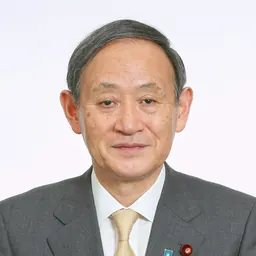
After suffering a stroke at 36 in 1977, Taihō used a wheelchair in the last stage of his life. He died of heart failure in a Tokyo hospital on January 19, 2013, at the age of 72. His death was announced by the Japan Sumo Association. In its obituary, Nikkan Sports named him "the strongest yokozuna in history." In February 2013, he posthumously became the second sumo wrestler to be commended with the People's Honour Award, with Yoshihide Suga calling him a "national hero." After winning the March 2013 championship, Hakuhō urged the crowd to get to their feet and honour Taihō's memory with a moment of silence. He said that Taihō gave him regular advice, and told him that records are meant to be broken. His most frequently used throws were sukuinage (beltless arm throw) and uwatenage (overarm throw). Although critics said he lacked a clear winning-strategy, Taihō himself said, "If you're fixated on a style, you'll be in trouble if it's blocked. I was able to adapt to any situation. That was my approach: a natural style."
Taihō's youngest daughter married the former sekiwake Takatoriki, who took over the running of Taihō stable (renamed Ōtake stable) after Taihō's retirement. When Ōtake was dismissed from sumo after a gambling scandal, he divorced Taihō's daughter. Taihō's grandson Konosuke Naya (born 2000) joined Ōtake stable as a professional sumo wrestler in January 2018, initially fighting under the shikona Naya before switching to Ōhō. He was followed into sumo by his brothers Kosei in November 2019, with the shikona ; and Takamori in March 2020, initially with the shikona Hozan before switching to . Taihō's fourth and eldest grandson, Yukio Naya (born 1994), is a professional wrestler.
Career record The Kyushu tournament was first held in 1957, and the Nagoya tournament in 1958.
Don’t just read it —
keep it.
Full-length biographies made to live with: read them, listen on the way to work, watch them tonight.
- E-book
- Audio
- Video
Instant download · yours to keep · every purchase keeps this site free
Important facts
People in Taihō Kōki's life
Named in this biography and alive at the same time


Related people
Same field, nearest in time



Contemporaries
People whose lives overlapped Taihō Kōki's



Frequently asked questions
Who was Taihō Kōki?
Japanese sumo wrestler and the 48th Yokozuna (1940-2013)
When was Taihō Kōki born?
Taihō Kōki was born on 29 May 1940 in Shisuka.
When did Taihō Kōki die?
Taihō Kōki died on 19 January 2013 in Tokyo.
What was Taihō Kōki's occupation?
Taihō Kōki was a rikishi.
What nationality was Taihō Kōki?
Taihō Kōki was Japanese.
Sources & further reading
Cite this page
APA: Biography.guide. (2026). Taihō Kōki. https://biography.guide/taiho-koki/
MLA: "Taihō Kōki." Biography.guide, https://biography.guide/taiho-koki/.
Chicago: "Taihō Kōki." Biography.guide. https://biography.guide/taiho-koki/.
Data last updated: 2026-09-27 · Spot an error? Report a correction.
Page generated 2026-09-27 05:16 UTC