
Tahera Qutbuddin
Indian Professor of Arabic (born 1964)
About Tahera Qutbuddin
Born 1964. Tahera Qutbuddin is an Indian and American islamicist, scholar of Arabic literature and university teacher.
Tahera Qutbuddin (born 1964, Mumbai) is the Abdulaziz Saud AlBabtain Laudian Professor of Arabic at the University of Oxford. A Guggenheim Fellow and a winner of the Sheikh Zayed Book Award in 2021, she is best known for her works on the teachings of Imam Ali, Arabic oratory, and the usage of Arabic in India, especially in the Dawoodi Bohra Tayyibi tradition.
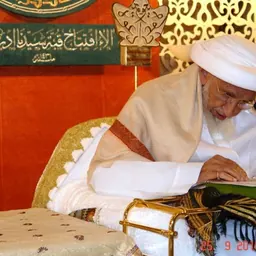
Life Tahera Qutbuddin was born in Mumbai in 1964 in a Dawoodi Bohra family. Syedna Mohammed Burhanuddin, a leader of the Bohra community, was her uncle. She attended Villa Theresa High School and Sophia College for Women, where she completed her secondary education in 1984.
Qutbuddin learned Arabic from her father, Khuzaima Qutbuddin. She received a bachelor's degree (1988) and a tamhidi magister (1990) from Ain Shams University, Cairo, followed by master's (1994) and doctoral degrees from Harvard University (1999), where her advisor was Wolfhart Heinrichs.
Career In 2002, Qutbuddin joined the Department of Near Eastern Languages and Civilizations of the University of Chicago. She was made a Carnegie Scholar in 2008 and a Guggenheim fellow (2020).
Among her early publications was a study of the Arabic language in India, especially among the Dawoodi Bohras, and its influence on the Gujarati language sermons of Syedna Taher Fakhruddin.
Qutbuddin's 2005 monograph Al-Muʾayyad al-Shirāzī and Fāṭimid Daʿwa Poetry. A Case of Commitment in Classical Arabic Literature expanded on her doctoral thesis of 1999. It was deemed especially important for its access to the Tayyibi Ismaili Daʿwa private manuscripts in India. She showed that Al-Muʾayyad al-Shirāzī was a major innovator in developing committed literature, i.e., literature produced by someone convinced of a particular ideology who seeks to persuade society of its truth. She showed that Fatimid poetry before al-Shirāzī was stylistically and thematically similar to that of the Abbasids, whose main exponents were panegyrists, whereas al-Shirāzī's works were entirely in the promotion of the Daʿwa. She also showed how the traditions of the Tayyibi Ismailis moved to Yemen and thereafter to India after the death of al-Shirāzī, where his poetry's influence on the Dawoodi Bohra community endures to present times.
In 2013, Qutbuddin published an edition of her translations of Al-Qāḍī Al-Quḍāʿī's collection of the sayings and sermons of Imam Ali and Al-Jāḥiẓ's selection of proverbs attributed to Ali. It was considered a definitive work as it considered all available editions and manuscripts, unlike previous translations of these important examples of Islamic religious literature. In particular, she was lauded for the quality of the translations, which conveyed well the punchiness of the pithy Arabic expressions and the variations in their meanings.
Qutbuddin's book Arabic Oration – Art and Function (2019) traced Arabic literature from its oral origins to its influence on modern sermons. She created a comparative framework between Arabic and Greek oratory and explored how oratory was the foundation for the shaping of politics and public speaking, as well as thence to literature. She had worked on it for over a decade, although she had had the idea for it during her undergraduate days in Cairo. She explored the cultural milieu around Imam Ali and the aesthetics of his sermons. She established that public preaching in the form of khutbah, popular till today, stemmed from pre-Islamic oratory, with texts available from decades before the founding of the faith. Much of the orally transmitted literature was lost, but several texts in Arabic survive. The oratory depended much on visual imagery, but especially on rhythm and similar grammatical structure in every line, reinforcing the message in the listeners' minds. Qutbuddin also found that women held important positions in early Islamic society but were permitted to speak publicly only in times of acute trouble. An example was the declamation by Imam Ali's daughter Zaynab, who, following the defeat of Ali's descendants at the Battle of Karbala, castigated the victor, Yazid I, for his actions.
In 2021, Qutbuddin was working on a monograph on Imam Ali, the fourth caliph of Islam, titled ʿAli ibn Abi Talib: Life, Teachings, and Eloquence of the Sage of Islam. Ali is considered a master guide for life on earth and heaven by Sunnis and Shiites; his orations are exemplary and beautiful, with ornate, difficult vocabulary. Qutbuddin focussed on the interrelationships between political, religious and literary aspects of his life, aiming to reconstruct his life.
As of July 2023, she has been the AlBabtain Laudian Professor of Arabic in the Faculty of Asian and Middle Eastern Studies at Oxford and a Professorial Fellow of St John’s College.
Selected works Nahj al-Balāghah: The Wisdom and Eloquence of ʿAlī. Tahera Qutbuddin (ed. and trans.). Brill 2014. . [OPEN ACCESS]
Al-Qāḍī l-Quḍāʿī (2016). Tahera Qutbuddin (ed. and trans.). Light in the Heavens: Sayings of the Prophet Muhammad. NYU Press. .
Don’t just read it —
keep it.
Full-length biographies made to live with: read them, listen on the way to work, watch them tonight.
- E-book
- Audio
- Video
Instant download · yours to keep · every purchase keeps this site free
Important facts
People in Tahera Qutbuddin's life
Named in this biography and alive at the same time



Related people
Same field, nearest in time


Contemporaries
People whose lives overlapped Tahera Qutbuddin's



Frequently asked questions
Who is Tahera Qutbuddin?
Indian Professor of Arabic (born 1964)
When was Tahera Qutbuddin born?
Tahera Qutbuddin was born in 1964 in Mumbai.
What is Tahera Qutbuddin's occupation?
Tahera Qutbuddin is an islamicist, scholar of Arabic literature and university teacher.
What nationality is Tahera Qutbuddin?
Tahera Qutbuddin is Indian and American.
Sources & further reading
Cite this page
APA: Biography.guide. (2026). Tahera Qutbuddin. https://biography.guide/tahera-qutbuddin/
MLA: "Tahera Qutbuddin." Biography.guide, https://biography.guide/tahera-qutbuddin/.
Chicago: "Tahera Qutbuddin." Biography.guide. https://biography.guide/tahera-qutbuddin/.
Data last updated: 2026-09-20 · Spot an error? Report a correction.
Page generated 2026-09-27 05:21 UTC