
About Taejong of Joseon
Lived 1367 – 1422 (aged 54). Taejong of Joseon was a Korean chinovnik and ruler.
Taejong (; 21 June 1367 – 8 June 1422), personal name Yi Pangwŏn, was the third monarch of Joseon and the father of Sejong the Great. The fifth son of King Taejo, the founder of the dynasty, he was himself a major contributor toward the establishment of the new regime. He ascended to the throne upon the abdication of his elder brother, King Jeongjong.
Biography Early life and founding of Joseon Born in 1367 as the fifth son of the future King Taejo and his first wife, Lady Han (posthumously Queen Sinŭi), Yi Pangwŏn qualified as an official in 1382. He studied under Confucian scholars such as Wŏn Ch'ŏnsŏk. During his early years, he assisted his father in gathering the support of the commoners and of many influential figures in the government. He also helped in the founding of Joseon by assassinating powerful officials who remained loyal to Goryeo, most prominently Chŏng Mongju.
Strifes of the Princes After contributing heavily to the overthrowing of the previous dynasty and the establishment of Joseon, he expected to be appointed as successor to the throne. However, his father and Chŏng Tojŏn favored King Taejo's eighth son and Yi Pangwŏn's youngest half-brother (second son of Queen Sindeok), Yi Pangsŏk. This conflict arose chiefly because Chŏng Tojŏn, as the principal architect of the ideological, institutional and legal foundations of the new dynasty, saw Joseon as a kingdom led by its ministers by virtue of the king's appointment. In contrast, Yi Pangwŏn sought direct rule through an absolute monarchy. These differences ultimately contributed to an environment of deep political tension. Meanwhile, Taejo was possibly motivated by deep fondness for his second wife.
Yi Pangwŏn, frustrated that he and his elder brothers had been passed over, began moving to eliminate his half-brothers. After his father fell ill, he launched the , in which he had both sons of Taejo's second wife, including the crown prince, murdered. His eldest surviving brother, Yi Panggwa, then became the new crown prince. Shortly after, Taejo abdicated the throne in favor of Yi Panggwa (posthumously King Jeongjong). As Jeongjong did not have any legitimate sons, he intended to pass the throne onto Yi Pangwŏn after his death. However, in early 1400, their brother Yi Panggan attempted to seize the throne in the . The coup was suppressed. Soon afterwards, Jeongjong abdicated the throne in favor of Yi Pangwŏn (posthumously King Taejong).
Reign Consolidation of royal power One of Taejong's first acts as king was to abolish the privilege to maintain private armies which was enjoyed by the aristocracy and the upper echelons of the government. His revoking of the right to keep independent forces effectively severed the upper class' ability to muster large-scale revolts, and drastically increased the number of soldiers employed by the national army.
Taejong's next act was to revise the existing legislation concerning land taxation. With the discovery of previously hidden land, national wealth increased twofold.
In addition, Taejong created a strong central government. In 1400, before taking the throne, he had played a key role in eradicating the , a branch of the old administration that had monopolized the executive power during the waning years of Goryeo, in favor of the Privy Council; during Taejong's reign, the Privy Council was replaced by the State Council. Taejong also issued an edict according to which all decisions passed by the State Council could only come into effect with the approval of the king. This ended the custom of court ministers making decisions through debate and negotiations among themselves, and thus brought the royal authority to new heights.
Shortly thereafter, Taejong installed a new department known as the Sinmun Office, to hear cases in which aggrieved subjects felt that they had been exploited or treated unjustly by officials or aristocrats.
In 1403, Taejong ordered 100,000 pieces of metal type and two complete fonts. Predating Gutenberg and Laurens Janszoon by several decades, he accomplished the metal movable type.
He promoted commerce and education, and also reformed the Sapyeongsunwibu , Joseon's early military and law enforcement agency, and separated the Ŭigŭmbu as Joseon's law enforcement agency but without military functions.
Later life and death In 1418, Taejong abdicated in favor of his third legitimate son, Yi To (posthumously King Sejong, commonly known as Sejong the Great), but continued to rule with an iron fist and decide on important matters.
Along the years, as a means to strengthen royal authority and subdue corruption, he executed or exiled some of the supporters who helped him ascend to the throne; he also executed the four brothers of his wife Queen Wŏngyŏng, as well as Sejong's father-in-law, Sim On, and Sim's younger brother, Sim Chŏng, in order to limit the influence of in-laws and powerful clans.
King Taejong died four years after his abdication, in Suganggung. He was buried alongside Queen Wŏn'gyŏng within Heolleung , today part of the Heonilleung burial ground in Seocho District, Seoul.
Legacy Taejong remains a relatively controversial figure in Korean history, as he eliminated many of his rivals (such as Chŏng Mongju and Chŏng Tojŏn), and yet ruled effectively to improve the populace's lives, strengthen national defense, and lay down a solid foundation for his successor's reign.
Outside of Korea, he is better known for having fallen off his horse in the early years of his reign and requesting historians to not record his fall, which they did anyway.
Family Father: King Taejo (; 4 November 1335 – 27 June 1408) Grandfather: Yi Chach'un , King Hwanjo (; 1315 – 3 May 1360) Grandmother: Queen Ŭihye , of the Yeongheung Ch'oe clan (?–1336) Mother: Queen Sinŭi , of the Cheongju Han clan (; 6 October 1337 – 25 November 1391) Grandfather: Han Kyŏng , Internal Prince Anch'ŏn Grandmother: Grand Princess Consort of Samhan State , of the Saknyeong Sin clan Stepmother: Queen Sindeok , of the Goksan Kang clan (; 20 July 1356 – 23 September 1396) Consort(s) and their respective issue Queen Wŏn'gyŏng , of the Yeoheung Min clan (; 6 August 1365 – 27 August 1420) Princess Chŏngsun (; 1385 – 18 September 1460), first daughter Princess Kyŏngjŏng (; 1387 – 29 June 1455), second daughter Unnamed son (1389) Unnamed son (1390) Unnamed son (1392) Princess Kyŏngan (; 1393 – 8 June 1415), third daughter Yi Che , Grand Prince Yangnyŏng (; 1394 – 8 October 1462), first son Yi Po , Grand Prince Hyoryŏng (; 29 January 1396 – 22 June 1486), second (third) son Yi To , King Sejong (; 15 May 1397 – 8 April 1450), third (fourth) son Princess Chŏngsŏn (; 1404 – 5 March 1424), fourth daughter Yi Chong , Grand Prince Sŏngnyŏng (; 12 August 1405 – 20 March 1418), sixth son Unnamed son (1412) Concubine Myŏng , of the (old) Andong Kim clan (?–1479) Concubine Ŭi , of the Andong Kwŏn clan (; 1384–1468) Princess Chŏnghye (? – 5 November 1424), fifth daughter Concubine Hyo , of the Kim clan (? – 2 April 1454) Yi Pi , Prince Gyeongnyeong (; 23 January 1396 – 15 October 1458), fourth (second) son Concubine Sin , of the Yeongwol Sin clan (; 1377 – 10 March 1435) Yi In , Prince Hamnyŏng (; 28 January 1403 – 5 November 1467), fifth son Yi Chŏng , Prince Onnyŏng (; 1407 – 16 June 1454), seventh son Princess Chŏngsin (; 1404 – 17 October 1452), sixth daughter Princess Chŏngjŏng (; 1410 – 11 April 1456), seventh daughter Princess Sukjŏng , eighth daughter Princess Suknyŏng , 10th daughter Princess Sosin (; 1415 – 27 July 1437), 11th daughter Princess Sosuk (? – 18 December 1456), 13th daughter Princess Sukkyŏng (; 1420–1494), 16th daughter Concubine Sŏn , of the Sunheung An clan (? – 15 July 1468) Yi Chi , Prince Hyeryeong (; 1407 – 1 August 1440), eighth son Princess Kyŏngsin , 12th daughter Princess Sukan (숙안옹주? – 25 June 1464), 14th daughter Yi Ch'i , Prince Ingnyŏng (; 1422 – 21 August 1464), 12th son Concubine So , of the Jangyeon No clan (? – 15 November 1479) Princess Sukhye (숙혜옹주; 1413 – 30 August 1464), ninth daughter Concubine Chŏng , of the Ko clan (? – 24 August 1426) Yi Nong , Prince Kŭnnyŏng (; 1411 – 25 December 1461), ninth son Sugŭi , of the Ch'oe clan Unnamed daughter (1400–1402) Yi T'a , Prince Huiryeong (; 1412 – 7 August 1465), 10th son Sugŭi , of the Yi clan (?–1443) Yi Kan , Prince Huryŏng (; 1419 – 18 November 1450), 11th son Mistress Sukkonggung , of the Cheongdo Kim clan Mistress Ŭijŏnggung , of the Hanyang Cho clan (?–1454) Mistress Hyesungung , of the Goseong Yi clan (? – 8 April 1438) Mistress Sinsungung , of the Seongju Yi clan (; 1390–?) Mistress Tŏksuk , of the Yi clan Mistress Hyesŏn , of the Hong clan Mistress Sunhye , of the Andong Chang clan (? – 9 September 1423) Mistress Sŏgyŏng , of the Kim clan Palace Lady , of the Kim clan Princess Sukkŭn (? – 15 September 1450), 15th daughter Palace Lady , of the Yi clan Princess Suksun (?–1481), 17th daughter Unknown Unnamed son (1400–1401) Unnamed son (1403–1404) Unnamed daughter (1412–1414)
Ancestry
In popular culture Im Hyuk-joo in the 1983 KBS1 TV series Foundation of the Kingdom. Lee Jung-gil in the 1983 MBC TV series The King of Chudong Palace. Yoo Dong-geun in the 1996–1998 KBS1 TV series Tears of the Dragon. Kim Yeong-cheol in the 2008 KBS TV series The Great King, Sejong and the 2016 KBS1 TV series Jang Yeong-sil. Baek Yoon-sik in the 2011 SBS TV series Deep Rooted Tree. Choi Tae-joon in the 2012–2013 SBS TV series The Great Seer. Park Yeong-gyu in the 2012 film I Am the King. Ahn Jae-mo in the 2014 KBS1 TV series Jeong Do-jeon. Ahn Nae-sang in the 2015 JTBC TV series More Than a Maid. Jang Hyuk in the 2015 film Empire of Lust and the 2019 JTBC TV series My Country: The New Age. Nam Da-reum and Yoo Ah-in in the 2015–2016 SBS TV series Six Flying Dragons. Kam Woo-sung in the 2021 SBS TV series Joseon Exorcist. Joo Sang-wook in the 2021–2022 KBS1 TV series The King of Tears, Lee Bang-won. Lee Hyun-wook in the 2025 tvN TV series The Queen Who Crowns.
Don’t just read it —
keep it.
Full-length biographies made to live with: read them, listen on the way to work, watch them tonight.
- E-book
- Audio
- Video
Instant download · yours to keep · every purchase keeps this site free
Important facts
more
Yi Bang Won, Yi Bang-won, Duke JeonganPeople in Taejong of Joseon's life
Named in this biography and alive at the same time
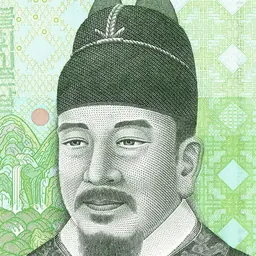

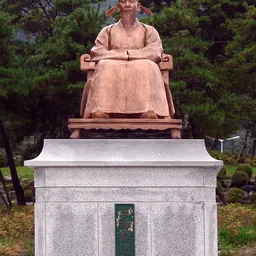



Related people
Same field, nearest in time




Contemporaries
People whose lives overlapped Taejong of Joseon's

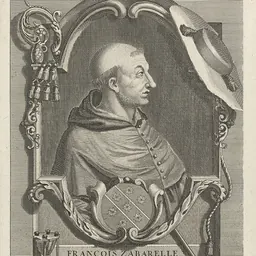
Frequently asked questions
Who was Taejong of Joseon?
3rd King of Joseon Dynasty in Korea
When was Taejong of Joseon born?
Taejong of Joseon was born on 16 May 1367 in Hamhung Royal Villa.
When did Taejong of Joseon die?
Taejong of Joseon died on 10 May 1422 in Changgyeonggung.
What was Taejong of Joseon's occupation?
Taejong of Joseon was a chinovnik and ruler.
What nationality was Taejong of Joseon?
Taejong of Joseon was Korean.
Sources & further reading
· Wikipedia: Taejong of Joseon
Cite this page
APA: Biography.guide. (2026). Taejong of Joseon. https://biography.guide/taejong-of-joseon/
MLA: "Taejong of Joseon." Biography.guide, https://biography.guide/taejong-of-joseon/.
Chicago: "Taejong of Joseon." Biography.guide. https://biography.guide/taejong-of-joseon/.
Data last updated: 2026-09-20 · Spot an error? Report a correction.
Page generated 2026-09-27 05:23 UTC