
About Tadashi Yamamoto
Lived 1936 – 2012 (aged 76). Tadashi Yamamoto was a Japanese businessperson.
Tadashi Yamamoto CBE (March 11, 1936 – April 15, 2012) was one of Japan's leading internationalists and a pioneering proponent of efforts to strengthen nongovernmental ties between Japan and the United States as well as between Japan and other countries. Yamamoto championed the view that civilian diplomacy and person-to-person exchanges conducted by nongovernmental organizations had a critical role to play in international relations. He was the founder and longtime president of the Japan Center for International Exchange (JCIE) a foreign policy think tank established in 1970 which promotes bilateral relations and exchanges between nongovernmental organizations. Yamamoto also helped to found the Shimoda Conference in 1967, a private sector forum for the discussion of bilateral issues between American and Japanese policymakers and policy experts. The Wall Street Journal has called him "an ardent champion of the U.S.-Japan alliance."
Yamamoto served as the President of the Japan Center for International Exchange (JCIE) from 1970 until his death in 2012. As head of the JCIE, Yamamoto simultaneously served as director for a number of forums, including the German-Japan Forum, the UK-Japan 21st Century Group, the Korea-Japan Forum, the Trilateral Commission Pacific Asia Group, and the Friends of the Global Fund, Japan, which works to promote the goals of The Global Fund to Fight AIDS, Tuberculosis and Malaria throughout Asia. The progressive ideals that they advocated and the values of “love and community” which he saw reflected in the Vatican II reforms of the same era became the inspiration for his later work.
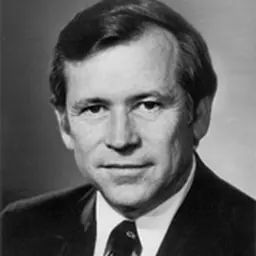
He married his wife, Chiyoko Aikawa, in 1966, and they had four sons together. The conference, which was held regularly until the 1990s, became a leading avenue to promote private sector dialogue between the two countries. In response, Yamamoto launched the first ever US-Japan parliamentary exchange in 1968. These exchanges are credited by early participants, such as Speaker of the US House of Representatives Tom Foley, U.S. Secretary of Defense Donald Rumsfeld, and Senate Majority Leader Howard Baker, for introducing a generation of American leaders to Japan and creating the personal ties that later were important in defusing trade tensions and strengthening bilateral cooperation in a range of areas. This led Foley to remark that he knew “of no more important individual so effective in strengthening our bilateral ties.”
In 1970, after managing Tokusaburo Kosaka's successful campaign for a Diet seat, Yamamoto made the decision that he could best contribute to Japan's international relations by leaving Kosaka's employment and creating an independent, nongovernmental and nonpartisan policy institute. He founded the Japan Center for International Exchange (JCIE) in 1970 and, while growing it into one of the country’s most prominent international affairs institutes, and he remained fiercely insistent that it could only contribute to Japan and the world by maintaining complete autonomy from government influence. Also, after the end of the Cold War, he quietly became one of Japan’s key proponents of the concept of human security, a more comprehensive approach to ensuring the security of individuals and not just national borders. As informal advisor to Prime Minister Keizo Obuchi and other leaders, his influence paved the way for Japan’s adoption of the approach as a main tenet of the country’s foreign policy.
While promoting policy dialogues and political leadership exchanges, Yamamoto also championed efforts to develop Japan's nonprofit sector and to encourage the growth of philanthropy in Asia. As a result, JCIE played an important role in efforts by Keidanren and other business organizations to increase corporate philanthropy in Japan.
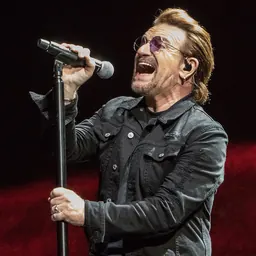
During his later years, Yamamoto worked to strengthen Japan's contributions to global health and the fight against HIV/AIDS and other major communicable diseases in Africa and other parts of the developing world. He established the Friends of the Global Fund, Japan, inside of JCIE, which advocates a greater Japanese support for the Global Fund and deeper government, business, and grassroots engagement in the campaign against disease in poorer countries. By bringing Japanese politicians to Africa to speak with people battling AIDS and arranging for overseas celebrities such as Bono to raise awareness of the need for Japan to do more to help poor countries, the initiative played a key role in encouraging the Japanese government to triple its annual contribution to the Global Fund from 2005 to 2012, making it one of the world’s most generous supporters of the battle against the global AIDS epidemic.
Yamamoto received awards and commendations from the governments of Australia, Germany, Japan and the United Kingdom.
In April 2012, Yamamoto reportedly told the former Secretary-General of the Liberal Democratic Party, Koichi Kato, that, "I want to promote exchanges between Japanese and U.S. politicians, but I cannot because Japanese politics has wasted away. I am embarrassed."
Death Tadashi Yamamoto died from gallbladder cancer at a hospital in Tokyo on April 15, 2012, at the age of 76. His funeral was held at St. Ignatius Catholic Church in Tokyo on April 18. Columbia University professor Gerald Curtis, who knew Yamamoto for more than forty years, noted that he never abandoned his beliefs that exchanges between democracies should be spearheaded by the private sector. The former director of the editorial board at Asahi Shimbun, Yukio Matsuyama, also stated that, "Yamamoto did more for international exchange than anyone else did, both in name and reality, having had nothing to start with ... He was liked by everyone [he came into contact with].
Works authored Emerging Civil Society in the Asia Pacific Community (1995) The Nonprofit Sector in Japan (1998) Corporate-NGO Partnership in Asia Pacific (1999) Deciding the Public Good: Governance and Civil Society in Japan (1999) Governance and Civil Society in a Global Age (2001) Philanthropy and Reconciliation: Rebuilding Postwar US-Japan Relations (2006)
Honours Order of Merit of the Federal Republic of Germany (1990) Commander of the Most Excellent Order of the British Empire (1993) the Order of Australia (2003) the Order of the Rising Sun, Third Class (2011)
Don’t just read it —
keep it.
Full-length biographies made to live with: read them, listen on the way to work, watch them tonight.
- E-book
- Audio
- Video
Instant download · yours to keep · every purchase keeps this site free
Important facts
People in Tadashi Yamamoto's life
Named in this biography and alive at the same time



Related people
Same field, nearest in time


Contemporaries
People whose lives overlapped Tadashi Yamamoto's




Frequently asked questions
Who was Tadashi Yamamoto?
Japanese internationalist (1936–2012)
When was Tadashi Yamamoto born?
Tadashi Yamamoto was born on 11 March 1936 in Tokyo.
When did Tadashi Yamamoto die?
Tadashi Yamamoto died on 15 April 2012 in Tokyo.
What was Tadashi Yamamoto's occupation?
Tadashi Yamamoto was a businessperson.
What nationality was Tadashi Yamamoto?
Tadashi Yamamoto was Japanese.
Sources & further reading
Cite this page
APA: Biography.guide. (2026). Tadashi Yamamoto. https://biography.guide/tadashi-yamamoto-businessperson/
MLA: "Tadashi Yamamoto." Biography.guide, https://biography.guide/tadashi-yamamoto-businessperson/.
Chicago: "Tadashi Yamamoto." Biography.guide. https://biography.guide/tadashi-yamamoto-businessperson/.
Data last updated: 2026-09-20 · Spot an error? Report a correction.
Page generated 2026-09-27 05:08 UTC