
About Tachibana Muneshige
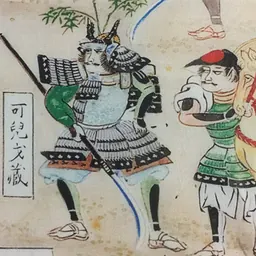
Lived 1567 – 1643 (aged 76). Tachibana Muneshige was a Japanese samurai.
was a Japanese samurai and daimyo in the Azuchi–Momoyama period and the Edo period. He served as the daimyo of the Yanagawa Domain from 1587 to 1600, and again from 1620 to 1638, and as the daimyo of the Tanagura Domain from 1606 to 1620. In addition, he was the head of the Tachibana clan.
Biography Tachibana Muneshige was born as Senkumamaru (千熊丸) on 18 December 1567 in the Bungo Province of Japan. He was the son of a senior retainer named Takahashi Shigetane of the Ōtomo clan and was adopted by Tachibana Dōsetsu of the Tachibana clan. Muneshige later married Dōsetsu's daughter Tachibana Ginchiyo, before he succeeded Dōsetsu as head of the Tachibana clan.
On July 27, 1581, Dōsetsu and Shigetane fought against Tsukushi Hirokado and Akizuki Tanezane in the second Battle of Dazaifu at Kanzeon-ji. It was this event where Muneshige saw his first notable action in battle.
On November 6, Dōsetsu marched to Kama and Honami alongside Muneshige and Shigetane. While on their way to rescue Kutami Akiyasu, Tachibana and Takahashi decided to turn back after receiving information that Akiyasu had safely retreated after fighting Akizuki Tanezane and Monjūjo Munekage in the Battle of Haratsuru. However, Tanezane's forces were still pursuing them. The fierce fighting resulted in over 1,000 casualties, including more than 300 among the Tachibana–Takahashi forces and 760 for the Akizuki clan.
On April 16, 1582, during the Battle of Iwato against a combined force of 2,000 from the Akizuki, Harada, and Munakata clans, Dōsetsu commanded 500 troops as an ambush force together with 1,000 troops in the main force. 300 of Muneshige's troops launched a surprise attack from the flank with guns, while the remaining 200 soldiers were led by Komono Masutoki, who set up a false flag to make it appear that reinforcements from the Ōtomo clan were arriving, ultimately lifting the siege. Muneshige then led 1,000 cavalry, eliminating 300 of the Harada general's troops, who had built a fort at Iwatosho Kubeno, killing 150 of them and pursuing the rest west to Sawara County, where he burned down Harada Chikahide's Sawara Castle.
On March 17, 1583, he killed Yoshiwara Sadayasu in the Battle of Yoshiwaraguchi. Then, on April 23 he captured Munakata Ujisada's castles, Konomiyama Castle and Ryutoku Castle in Suginami, forcing them to surrender.
In 1587, after the Tachibana clan sided with Toyotomi Hideyoshi during his conquest of Kyushu, Muneshige separated from the Ōtomo and became a daimyō in his own right. He was given Yanagawa Castle in Chikugo Province, therefore making the Tachibana an independent clan. Later, Muneshige was involved in suppressing rebels in Amakusa. During this campaign, the famous Tokugawa clan warrior Mizuno Katsunari served under Muneshige.
Muneshige received licenses in the Hekiryu school of archery from Omura Tsuneyoshi in 1590, Nakae Shinpachi in October 1601, and Yoshida Shigetake in 1602.
Invasion of the Korean Peninsula
In 1592, during the first Japanese invasions of Korea, Muneshige served in the 6th Division, commanded by Kobayakawa Takakage, commanding 2,500 men.
During the Siege of Dongnae in April, Muneshige's forces captured Dongnae Fortress. On June 26, at the request of Ukita Hideie, he used fire and ambush tactics to drive the Joseon army north of Hanseong.
In 1593, Muneshige and Takahashi Noriyoshi served in the vanguard during the Battle of Byeokjegwan.
On January 26, around 2:00 a.m., Muneshige sent his officers Morishita Tsuyoshi and Totoki Koreyoshi to lead 30 soldiers on a reconnaissance mission. Then, around 6:00 a.m., Muneshige deployed two columns of 500 soldiers each, with Toki Koremichi and Uchida Noriyoshi as commanders. Muneshige deliberately sent such small units to lure the 2,000 troops in the Ming army led by General Sadaiju. His tactic succeeded, and the Ming army pursued them. As the two columns of Muneshige's soldiers engaged the Ming army in melee, Muneshige instructed his concealed musketeer corps to unleash a volley barrage. As a result, the Ming army suffered heavy losses and fled the battlefield.
Later, Muneshige's main force of 2,000 men advanced north, with Koremichi leading the vanguard and Ono Shigeyuki and Yonetabe Shigehisa commanding 700 men. Around 11 a.m., they arrived in hilly terrain, where they prepared to ambush the enemy. As Takakage Kobayakawa's vanguard—Kageo Awaya and Kagemasa Inoue—held back the Ming and Joseon forces at Goyohara, the attackers seized the moment: each soldier carried three flags, reversing the previous morning's display to deceive the enemy into perceiving a vast army. The advance was then led by Shigeie Tachibana.
During the second Japanese invasion of Korea in 1597, Muneshige was not incorporated into the invading army but was ordered to defend Busan. Later, there was a change in operational plans: Mori Yoshinari was assigned to the defense of Busan, while Muneshige was assigned to the defense of the Japanese castles at Goseong and Angolpo. In the subsequent First Battle of Ulsan Castle, he was in charge of defending Goseong Japanese castle.
Sekigahara war
In 1600, during the Sekigahara campaign, he sided with the Western Army. However, after learning that the Western Army had been annihilated in the Battle of Sekigahara, he returned to Osaka Castle. At first, Muneshige urged Mōri Terumoto to prepare resistance against the Eastern Army in Osaka Castle. However, Terumoto did not want to resist the Eastern Army, and instead submitted to Tokugawa Ieyasu as he marched to Osaka Castle.
Later, Muneshige returned to Chikugo Province and surrendered to Tokugawa. Muneshige was under the assumption that he could switch sides and aid forces loyal to Tokugawa against the Shimazu clan of Satsuma. After the Battle of Sekigahara, he was deprived of the Yanagawa Domain as punishment by Tokugawa Ieyasu.
In 1614, he participated in the Siege of Osaka as a military adviser to the second shogun, Tokugawa Hidetada, serving as his strategist and overseeing the defense of the area. Muneshige correctly predicted the movements of the Toyotomi general Ono Harufusa's troops and guided Hidetada's forces.
After the campaign against Toyotomi Hideyori ended in 1615, he was restored to his former territory in Yanagawa.
In 1637, Muneshige served in the shogunate army during the Shimabara Rebellion (1637–1638), a revolt involving mostly Japanese peasants, many of whom were Catholics. He was then given a small territory in Tanagura. It has also been suggested from stories about Honda Tadakatsu that Muneshige was tall and rode a large horse.
Muneshige in popular culture
See People of the Sengoku period in popular culture.
Honours Junior Third Rank (November 10, 1915; posthumous)
Appendix Footnotes
Don’t just read it —
keep it.
Full-length biographies made to live with: read them, listen on the way to work, watch them tonight.
- E-book
- Audio
- Video
Instant download · yours to keep · every purchase keeps this site free
Important facts
Family & relationships
People in Tachibana Muneshige's life
Named in this biography and alive at the same time


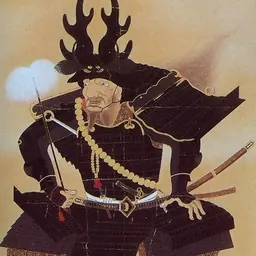


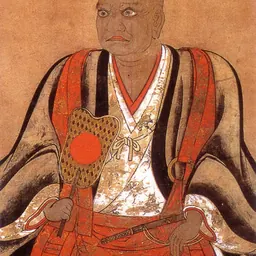
Related people
Same field, nearest in time
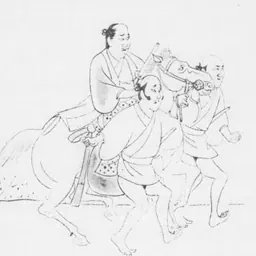
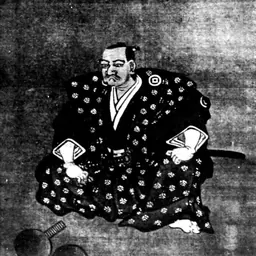
Contemporaries
People whose lives overlapped Tachibana Muneshige's



Frequently asked questions
Who was Tachibana Muneshige?
samurai
When was Tachibana Muneshige born?
Tachibana Muneshige was born on 20 September 1567.
When did Tachibana Muneshige die?
Tachibana Muneshige died on 15 November 1643.
What was Tachibana Muneshige's occupation?
Tachibana Muneshige was a samurai.
What nationality was Tachibana Muneshige?
Tachibana Muneshige was Japanese.
Sources & further reading
· Wikipedia: Tachibana Muneshige
· DBpedia: Tachibana Muneshige
Cite this page
APA: Biography.guide. (2026). Tachibana Muneshige. https://biography.guide/tachibana-muneshige/
MLA: "Tachibana Muneshige." Biography.guide, https://biography.guide/tachibana-muneshige/.
Chicago: "Tachibana Muneshige." Biography.guide. https://biography.guide/tachibana-muneshige/.
Data last updated: 2026-09-20 · Spot an error? Report a correction.
Page generated 2026-09-27 05:29 UTC