
About T. Tileston Wells
Lived 1865 – 1946 (aged 80). T. Tileston Wells was an American non-fiction writer, lawyer and diplomat.
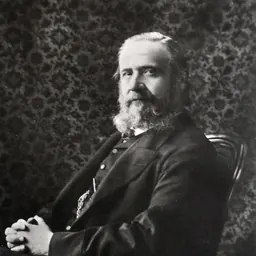
Thomas Tileston Wells (September 12, 1865 – April 23, 1946) was an American attorney and the Romanian Consul General. He also was a leader in French, Serbian, and Romanian relief efforts during World War I. He was highly decorated by European countries, including receiving a Chevalier de la Légion d'Honneur from France.
Early life Wells was the child of Grace (née Tileston) and John Wells, a merchant. Wells was born at his maternal grandmother Tileston's house at 2 East 14th Street in Manhattan, New York. His paternal grandfather was a successful lawyer, Thomas L. Wells. When they returned to America and Wells enrolled in college, they also had a house at 56 West 17th Street in New York City. While at Columbia, he was a member of the Fraternity of Delta Psi (St. Anthony Hall). He also attended Harvard University, graduating with the class of 1888. He then went to Columbia Law School, graduating with a LL.B in 1890. Their offices were at 19 Liberty Street in New York City.
In 1900, Wells was a member of the Lawyers' Sound Money Campaign Club. In 1905, he was elected to serve as a director of the Aetna Indemnity Company; he was reelected for another two-year term in 1907.
Wells specialized in serving as the receiver for bankrupt cases at the United States District Court. In 1907, he was appointed to serve as the receiver for the New York Tunnel Company which was constructing the Brooklyn-Battery Tunnel under the East River from the Battery in Manhattan to Brooklyn. The newspapers reported that the Tunnel Company had 46 suits against it, totaling in excess of $100,000 ($ in today's money).
In 1916, Wells formed Wells & Moran with attorney and railroad president Charles Moran Jr. From 1918 to 1927, they expanded the firm to Wood, Wells, Moran & Derby which added Chalmers Wood and James L. Derby; the latter being a recent Harvard University graduate. Wells provided this service to Romania without pay for nineteen years. As the Consul General, Wells was part of the reception committee. In March of the same year, he again wrote the newspaper to provide context to reports of Romania's trial and execution of some prisoners who he claimed traitors associated with the Soviet Union which was trying to gain a foothold in Romania. In both of these instances, Wells is responding officially, as the Consul General of Romania. He was also fourth in the royal procession at the ball hosted by the Friends of Roumania at the Ritz–Carlton Hotel in New York City, with some 700 guests in attendance.
In 1927, Wells again defended Romania when an article in The New York Times cited a report by the American Committee on the Rights Religious Minorities that stated religious and cultural minorities were being treated poorly in that country. Wells called the report "unfair and exaggerated," indicating that the League of Nations had already reviewed these claims.
In 1928, Wells visited Queen Marie and Iuliu Maniu, Prime Minister of Romania, while on a three-month trip to Europe. In 1938, Wells headed a group of 300 mourners for the Dowager Queen Marie at the Cathedral of St. John the Divine in Manhattan.
World War I
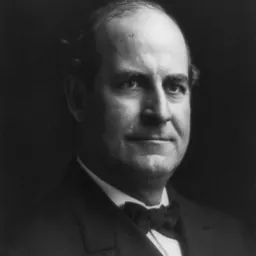
In 1914, the Wells family went on a hiking vacation in the Swiss and Austrian Alps. At the time, his son John was eighteen, and his daughter Georgina was eleven. As they traveled from France to Austria, they were caught at the beginning of World War I, unable to use their return train tickets because the trains were commandeered to move French soldiers. Fortunately, Wells had an introductory letter from William Jennings Bryan who was United States Secretary of State at the time, leading to his release.
The Wells family eventually made it Venice, Italy but a bank crisis meant they were unable to access the funds that the U.S. Congress put in place to help Americans escape Europe. One of their appeals that ran in newspapers across the country said they were "organized in France to give immediate relief to the women, old people and children crying for bread and in need of clothing." It was also noted that the 22-person committee, including Wells, was covering all expenses, including shipping clothing to France—100% of donated money went to "these sufferers."
Wells also chaired the Serbian Relief Committee of America from 1915 to 1918. The committee also held lectures and published materials, both to educate and to raise funds for its cause. Wells said, "Last fall, strategy obliged the Serbian army to fall back into the interior towards its arsenals, leaving Belgrade and the two most fertile districts of the country undefended. The peasants fled to the south and their buildings, granaries, and agricultural implements were destroyed... An official report gives the number of fugitives from the provinces...as 675,000 and 315,000 more from the large towns."
The Serbian Relief Committee's efforts quickly shifted from agriculture to fighting a typhus epidemic. Wells reported, "The conditions in Serbia have been bad, but are rapidly getting worse because the people, having been driven from their farms and villages by the Austrian invasion, have been herded into concentration camps where only the barest of necessities of food have been available to keep them alive, and where sanitary precautions were impossible. The result has been that typhus fever has now broken out which is likely to decimate that brave people unless medical help and nourishing food can be rapidly supplied to them."
Wells was also head of the Roumanian Relief Committee of America. In December 1917, he represented the Roumanian Relief Committee at the annual convention of the American Union of Rumanian Jews and agreed to head a committee from the group so that views could be shared. Some 150,000 copies of the 64-page book, with a waterproof covering, were distributed to soldiers by the National Security League. Chevalier de la Légion d'Honneur (France) Officier d'Académie, Ordre des Palmes académiques (France) Grand Officer, Royal Order of St. Sava (Yugoslavia)
In 1898, Wells joined the board of the Five Points House of Industry in New York City; he served as the charity's president for 21 years, starting in 1914.
Wells was treasurer of the Fédération d'Alliance Française from 1908 to 1925. According to its website, "the mission of Alliance Française is to promote the French language and francophone cultures and to foster exchanges between French speakers and local communities."
Socially, Wells was a member of the American Yacht Club, the Calumet Club, the City Midday Club, Down Town Association of the City of New York, the Mason's Holland Lodge, the St. Anthony Club of New York, the Union Club of New York City, and the Westchester Country Club.
Wells died at his home in Manhattan, New York City at the age of 82. He was buried at Christ Episcopal Church in New Brunswick, New Jersey.
Publications Rumania's Sacrifice: Her Past, Present, and Future. with Gogu Negulesco and Mrs. C De S Wainright. New York: The Century Co., 1918. Family Notes. United States: Private Printing, 1927. The Hugers of South Carolina. New York: M. Sloog, 1931. Les Huger de la Caroline du Sud; La Fayetta à Olmütz .Paris: E. Nourry, 1931. An Adventure in 1914: The True Story of an American Family's Journey on the Brink of WWI. Edited and expanded by Christopher Kelly. Seattle: History Invasion Press, 2016. .
Don’t just read it —
keep it.
Full-length biographies made to live with: read them, listen on the way to work, watch them tonight.
- E-book
- Audio
- Video
Instant download · yours to keep · every purchase keeps this site free
Important facts
People in T. Tileston Wells's life
Named in this biography and alive at the same time





Related people
Same field, nearest in time


Contemporaries
People whose lives overlapped T. Tileston Wells's


Frequently asked questions
Who was T. Tileston Wells?
American lawyer and author
When was T. Tileston Wells born?
T. Tileston Wells was born on 12 September 1865 in Manhattan, New York.
When did T. Tileston Wells die?
T. Tileston Wells died on 23 April 1946 in Manhattan, New York.
What was T. Tileston Wells's occupation?
T. Tileston Wells was a non-fiction writer, lawyer and diplomat.
What nationality was T. Tileston Wells?
T. Tileston Wells was American.
Sources & further reading
· Wikipedia: T. Tileston Wells
Cite this page
APA: Biography.guide. (2026). T. Tileston Wells. https://biography.guide/t-tileston-wells/
MLA: "T. Tileston Wells." Biography.guide, https://biography.guide/t-tileston-wells/.
Chicago: "T. Tileston Wells." Biography.guide. https://biography.guide/t-tileston-wells/.
Data last updated: 2026-09-26 · Spot an error? Report a correction.
Page generated 2026-09-27 05:14 UTC