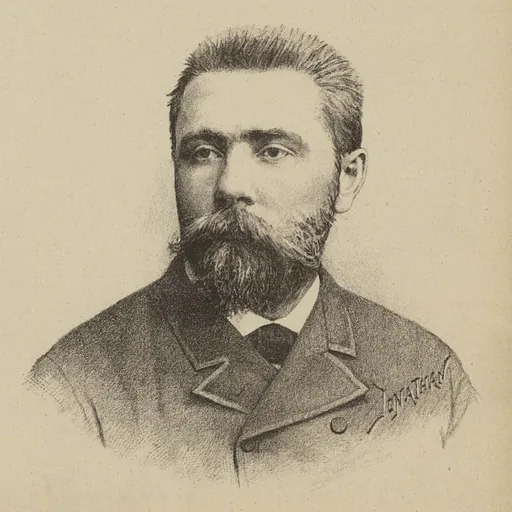
About Sylvain Dupuis
Lived 1856 – 1931 (aged 74). Sylvain Dupuis was a Belgian conductor, composer, musicologist, music educator, oboist and university teacher.
Joseph Michel Sylvain Dupuis (; 9 October 1856 – 28 September 1931) was a Belgian conductor, composer, oboist, and music educator.
Life Born in Liège, Dupuis was trained at the Royal Conservatory of Liège. After graduating in 1878, he was appointed to that school's faculty as a professor of harmony. In 1911 he succeeded Jean-Théodore Radoux as the director of the conservatory. Among his notable pupils were Charles Houdret and Joseph Jongen.
Dupuis worked actively as a composer during the early part of his career, but later became more heavily involved in his work as an opera conductor and music teacher. As a result, the majority of his works date from before 1900. In 1879 he won the Belgian Prix de Rome for his cantata Le Chant de la Création. In the 1880s he composed two operas, Moîna and Coûr d'ognon. His other compositions include several secular cantatas, the symphonic poem Macbeth, a concertino for oboe and orchestra, a number of choral works, and music for solo organ, piano, violin and cello.
In 1890 Dupuis was appointed to the conducting staff at the Théâtre Royal de la Monnaie, and in 1900 he assumed the role of principal conductor at that house. He notably conducted that opera house's first productions of Götterdämmerung (13 January 1891), Die Entführung aus dem Serail (15 February 1902), Tosca (2 April 1904), Alceste (14 December 1904), La damnation de Faust (21 February 1906), Les Troyens (27 December 1906), Salome (26 March 1907), Fortunio (4 January 1908), Ariane et Barbe-bleue (2 January 1909), Madama Butterfly (29 October 1909), Elektra (26 May 1910), Feuersnot (16 March 1911), and Roma (15 January 1913). He also conducted numerous world premieres, including Ernest Chausson's Le roi Arthus (30 November 1903), Albert Dupuis's Martylle (3 March 1905), Albert Roussel's Symphony No. 1 Le poème de la forêt (22 March 1908), Pierre de Bréville's Éros vainqueur (7 March 1910), Cesare Galeotti's Dorisse (18 April 1910), and Vincent d'Indy's Le chant de la cloche (21 November 1912). He also conducted the premiere of the third and final revision of Isaac Albéniz's Pepita Jiménez on 3 January 1905.
Dupuis died in Bruges at age 74. Honours 1919 : Commander of the Order of Leopold.
Don’t just read it —
keep it.
Full-length biographies made to live with: read them, listen on the way to work, watch them tonight.
- E-book
- Audio
- Video
Instant download · yours to keep · every purchase keeps this site free
Important facts
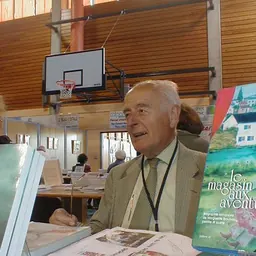
People in Sylvain Dupuis's life
Named in this biography and alive at the same time




Related people
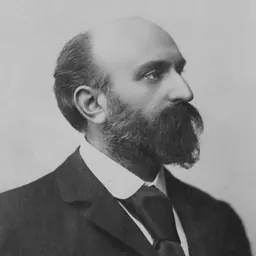
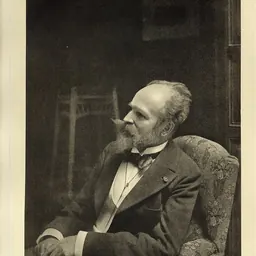
Same field, nearest in time
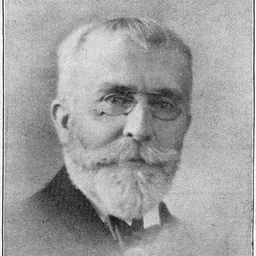

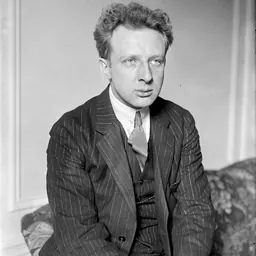

Contemporaries
People whose lives overlapped Sylvain Dupuis's
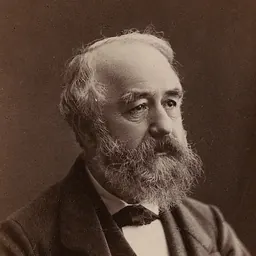



Frequently asked questions
Who was Sylvain Dupuis?
Belgian composer and conductor (1856–1931)
When was Sylvain Dupuis born?
Sylvain Dupuis was born on 9 October 1856 in Liège.
When did Sylvain Dupuis die?
Sylvain Dupuis died on 28 September 1931 in Bruges.
What was Sylvain Dupuis's occupation?
Sylvain Dupuis was a conductor, composer, musicologist, music educator, oboist and university teacher.
What nationality was Sylvain Dupuis?
Sylvain Dupuis was Belgian.
Sources & further reading
Cite this page
APA: Biography.guide. (2026). Sylvain Dupuis. https://biography.guide/sylvain-dupuis/
MLA: "Sylvain Dupuis." Biography.guide, https://biography.guide/sylvain-dupuis/.
Chicago: "Sylvain Dupuis." Biography.guide. https://biography.guide/sylvain-dupuis/.
Data last updated: 2026-09-23 · Spot an error? Report a correction.
Portrait: Wikimedia Commons · author & licence
Page generated 2026-09-27 05:06 UTC