
About Syed Saleem Shahzad
Lived 1970 – 2011 (aged 40). Syed Saleem Shahzad was a Pakistani journalist, known for Al-Qaeda and Inter-Services Intelligence.
Syed Saleem Shahzad (, 3 November 1970 – 30 May 2011) was a Pakistani investigative journalist who wrote widely for leading European and Asian media. He served as the Pakistan Bureau Chief of Asia Times Online (Hong Kong) and Italian news agency Adnkronos (AKI).
He was kidnapped in May 2011 and found dead the next day in a canal in north-east Pakistan, showing signs of torture. Human Rights Watch (HRW) accused the Pakistan intelligence services of being behind his killing, and Obama Administration officials using CIA intelligence later announced that they had "reliable and conclusive" intelligence that this was the case. Pakistan's Inter-Services Intelligence (ISI) denied the accusations and called them "totally unfounded". His opinion pieces appeared in the Qatari-based Islamonline.net and Boston Review.
He regularly interviewed Islamist militants, including al-Qaeda members. He had interviewed several leading militants long before they became internationally known, including Sirajuddin Haqqani and Qari Ziaur Rahman. He also interviewed Ilyas Kashmiri shortly after Ilyas was appointed chief of Al-Qaeda's military committee.
His last book Inside Al-Qaeda and the Taliban: Beyond Bin Laden and 9/11, was published shortly before his death.
Awards and honours
In June 2011, Shahzad was awarded the Ischia International Journalism Award in a unanimous decision by the jury. The annual prize honours excellence in journalism.
Shahzad's name has been added to the Journalists Memorial at the Newseum in Washington, D.C.
Pakistan Press Foundation (PPF) on the occasion of World Press Freedom Day announced the annual PPF-Aslam Ali Press Freedom Award-2012 for the slain journalist Syed Saleem Shahzad. The Alfred Friendly Press Fellowships (AFPF) and the Pakistani Press Foundation (PPF) announced the Daniel Pearl-Saleem Shahzad Fellowship in 2012 that would train up to 15 Pakistani reporters in conflict and investigative reporting as well as safety for journalists working in conflict-affected regions. A fellow from Pakistan was being chosen for this fellowship that honors an American and a Pakistani journalist killed in the line of duty while covering a common war against terror in Pakistan.
In a protest to mark the International Day to End Impunity for Crimes against Journalists, international organisation Reporters Without Borders (RSF) on Monday renamed 12 streets in Paris after journalists who have been murdered, tortured or disappeared. One of the streets has been named after Shahzad as Rue Syed Saleem Shahzad.
Death According to friends and colleagues, the ISI warned the journalist at least three times prior to his death. Shahzad informed Hasan in an email that he was threatened by an ISI official who had said: "I must give you a favor. We have recently arrested a terrorist and recovered a lot of data, diaries and other material during the interrogation. The terrorist had a list with him. If I find your name in the list, I will certainly let you know." In a June 2011 opinion piece for The News International, journalist Ahmed Quraishi stated the "agency's version is very straightforward: they met Shahzad at a registered government office about a story he did and asked him either to confirm his sources or retract the story because it damaged Pakistani interests." Nine days prior to his disappearance, Shahzad met with American journalist Dexter Filkins and told him, "Look, I'm in danger... I've got to get out of Pakistan." Elsewhere that morning, a labourer found his body, still wearing a suit, a tie and shoes, in the Upper Jhelum Canal while the zamindar of an upstream village notified police of an abandoned Toyota Corolla that later proved to be Shahzad's.
On the next day, his family members from Islamabad confirmed that he was dead, with police stating that his body had been found in a canal in Mandi Bahauddin district and his car found at Sarai Alamgir in Pakistan's northern Gujrat District, some south-east of the capital. His car was found about 10 km (six miles) away.
Pakistani Prime Minister Yusuf Raza Gilani ordered an immediate inquiry into the kidnapping and murder, Bowing to unprecedented demonstrations from Pakistani media, PM Gilani signed an order in the early morning hours of 18 June 2011 establishing a judicial commission, led by Justice Main Saqib Nisar, to investigate the circumstances surrounding Shazad's death. The commission was to release its findings within six weeks.
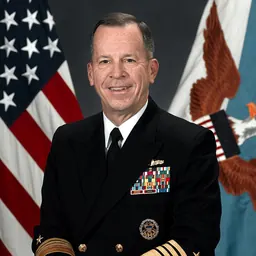
The New York Times reported on 4 July 2011 that CIA and Obama administration officials had "reliable and conclusive" intelligence that implicated senior officials of the ISI in directing the death of Shahzad. Subsequently, Admiral Michael Mullen stated that he believed that Shahzad's killing was "sanctioned by the [Pakistani] government" but added that he did not have a "string of evidence" linking the ISI. The Pakistani state-run news agency, Associated Press of Pakistan, said the soon-to-retire Mullen's charge was "extremely irresponsible." The Associated Press report of the APP comment went on to say: Pakistan was the deadliest country for journalists in 2010, with at least eight killed in the line of duty, according to the New York-based Committee to Protect Journalists. Six died in suicide attacks, the group said in a report late last year. Despite the dangers, the media establishment in Pakistan has expanded rapidly over the past decade, and reporters here operate with freedoms denied in most developing countries. Still, many privately admit to getting occasional pressure from security and intelligence officials.
The ISI strongly denied any involvement in Shahzad's death. Two days after his body was found, the intelligence agency released an official statement that described the death as "unfortunate and tragic" while maintaining that "baseless accusations against the country's sensitive agencies for their alleged involvement in Shahzad's murder are totally unfounded." The report blamed "various belligerents in the war on terror which included the Pakistani state and non-state actors such as the Taliban and Al Qaeda and foreign actors" but stopped short of blaming any single individual or organisation.
HRW alleged that commission's failure to name a suspect demonstrated "the ability of the ISI to remain beyond the reach of Pakistan's criminal justice system." Members of the Media Commission of Pakistan (MCP) and South Asian Free Media Association (SAFMA) also expressed concerns over the commission's findings and suggested parliamentary oversight of the ISI.
Don’t just read it —
keep it.
Full-length biographies made to live with: read them, listen on the way to work, watch them tonight.
- E-book
- Audio
- Video
Instant download · yours to keep · every purchase keeps this site free
Important facts
People in Syed Saleem Shahzad's life
Named in this biography and alive at the same time




Related people
Same field, nearest in time




Contemporaries
People whose lives overlapped Syed Saleem Shahzad's


Frequently asked questions
Who was Syed Saleem Shahzad?
Pakistani journalist (1970-2011)
When was Syed Saleem Shahzad born?
Syed Saleem Shahzad was born on 3 November 1970 in Karachi.
When did Syed Saleem Shahzad die?
Syed Saleem Shahzad died on 31 May 2011 in Mandi Bahauddin.
What was Syed Saleem Shahzad's occupation?
Syed Saleem Shahzad was a journalist.
What was Syed Saleem Shahzad known for?
Syed Saleem Shahzad was known for Al-Qaeda and Inter-Services Intelligence.
What nationality was Syed Saleem Shahzad?
Syed Saleem Shahzad was Pakistani.
Sources & further reading
· Wikipedia: Syed Saleem Shahzad
Cite this page
APA: Biography.guide. (2026). Syed Saleem Shahzad. https://biography.guide/syed-saleem-shahzad/
MLA: "Syed Saleem Shahzad." Biography.guide, https://biography.guide/syed-saleem-shahzad/.
Chicago: "Syed Saleem Shahzad." Biography.guide. https://biography.guide/syed-saleem-shahzad/.
Data last updated: 2026-09-22 · Spot an error? Report a correction.
Page generated 2026-09-27 05:30 UTC