
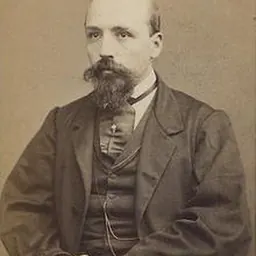
Svetolik Jaksic
Serbian diplomat and journalist
About Svetolik Jaksic
Lived 1868 – 1928 (aged 60).
Svetolik Jakšić (22 March 1868 – 26 March 1928) was a diplomat, journalist and publicist.
Biography He was born in Čačak, Principality of Serbia, to mother Anka born Milijanović from Čačak and father Marko Jakšić, born in a village called Jezera na Durmitor, a lawyer. The family moved to Valjevo in the mid-1870s. He finished elementary school in Čačak, high school in Užice, Belgrade and Valjevo. He graduated from the Velika škola in Belgrade in 1892.
After school, he began working in the diplomatic service, where he progressed from clerk to consul general. In 1892, he began working as a clerk in the Serbian embassy in Berlin, where he remained for the next three years. Thanks to Ivo Pavlović, at that time the charge d'affaires in Berlin managed to enter the highest Berlin society.
He then returned to Belgrade, where he became the deputy head of propaganda at the Ministry of Foreign Affairs and the head of the Consular Department of that ministry. After that, he was the Consul General in Skopje and the Vice Consul in Bitola. At the end, he was the secretary of the embassy in Constantinople, where he remained for a full three years and during that time edited the "Constantinople Herald", at that time the only Serbian newspaper in the Ottoman Empire.
For political reasons, in 1902 he was transferred from Constantinople to the Ministry of the Interior and appointed chief of Pozarevac. Shortly afterwards, he resigned from the civil service and devoted himself to journalism.
Works His first published literary work was the short story Srećna Darinka ("Happy Darinka") in the newspaper "Srpče". As a student, he was a regular contributor to Videl, under the leadership of Milutin Garašanin, where he published a large number of political, literary articles and translations, under the pseudonym "Harry". While working as the secretary of the embassy in Constantinople, he edited the "Constantinople Herald". His travelogues, literary criticisms, works on the history of theater and art, were also published in "Valjevski novine", "Domovina", "Kola", "Dositija", "Dubrovnik", "Zora", "Politika", "Greater Serbia", "Srpski list", "Srpski književni glasnik". He also published translations from Russian. The Serbian Literary Association elected him to the committee for publishing selected translations (1897).
In 1902, after leaving the civil service, he started the daily newspaper "Štampa", which he published and edited until August 1914. This newspaper was subsidized by Austria-Hungary until the Customs War of 1907. The paper was confiscated several times, because it did not spare either the Government or the regime of the last Obrenović. He led sharp and bitter polemics with everyone, and at the same time he wrote literary reviews, which he did before the launch of this paper. He wrote a lot about Mostar's "Zora". Thanks to his abilities as a journalist, critic and polemicist, he has long been ranked among the strongest Serbian journalists, but at the same time he had many enemies.
In 1913, he was the owner and editor-in-chief of the Illustrated War Chronicle. He was a sharp polemicist and political critic of the radical government, led by Nikola Pašić.
Svetolik Jakšić lived in Switzerland from 1916 to 1917. After the Serbian government withdrew to Corfu, he took part in a political action aimed at removing Nikola Pašić and his government. The action was led by Slobodan Jovanović, surrounded by acquaintances and friends, among whom were Deputy Foreign Minister Jovan Jovanović Pižon, Regent's Secretary Dragomir Janković, diplomat Boško Čolak-Antić and others. In mid-1916, he drafted a pamphlet entitled "Letter to the Serbs in Thessaloniki" issued by the Memorandum of the Crowd called "Deputies" , in which he proposed a new extra-parliamentary government. the decision to investigate him and other participants in the action and bring them to court for attempted coups and actions against the state, together with other participants in the action.
He wrote several texts against the Thessaloniki process and a brochure intended for the army in Corfu, agitating against the idea of union with the Croats and advocating only Serbian interests and reconciliation with Austria-Hungary. He is suspected of cooperating with Apis in a conspiratorial action against Regent Aleksandar Karađorđević, that he was an agent of the German service during the war and that he was the writer of the constitution for the future government with Slobodan Jovanović. He was accused of treason and sentenced to ten years in prison, for which he remained living in exile, in Switzerland, Vienna and Berlin. He was amnestied in 1927.
At the end of 1927, he fell ill and went to Berlin for treatment, where, after four months in the Augusta hospital, he died in vain from a heart attack. He was temporarily buried in the Russian cemetery in Berlin.
Don’t just read it —
keep it.
Full-length biographies made to live with: read them, listen on the way to work, watch them tonight.
- E-book
- Audio
- Video
Instant download · yours to keep · every purchase keeps this site free
Important facts
People in Svetolik Jaksic's life
Named in this biography and alive at the same time


Contemporaries
People whose lives overlapped Svetolik Jaksic's



Frequently asked questions
Who was Svetolik Jaksic?
Serbian diplomat and journalist
When was Svetolik Jaksic born?
Svetolik Jaksic was born on 22 March 1868 in Čačak.
When did Svetolik Jaksic die?
Svetolik Jaksic died on 26 March 1928 in Berlin.
Sources & further reading
Cite this page
APA: Biography.guide. (2026). Svetolik Jaksic. https://biography.guide/svetolik-jaksic/
MLA: "Svetolik Jaksic." Biography.guide, https://biography.guide/svetolik-jaksic/.
Chicago: "Svetolik Jaksic." Biography.guide. https://biography.guide/svetolik-jaksic/.
Data last updated: 2026-09-20 · Spot an error? Report a correction.
Page generated 2026-09-27 05:30 UTC