
Susette LaFlesche Tibbles
Native American writer, lecturer, interpreter and artist
About Susette LaFlesche Tibbles
Lived 1854 – 1903 (aged 48–49). Susette LaFlesche Tibbles was an American writer.
Susette La Flesche, later Susette LaFlesche Tibbles and also called Inshata Theumba, meaning "Bright Eyes" (c. 1854–1903), was a well-known Native American writer, lecturer, interpreter, and artist of the Omaha tribe in Nebraska. La Flesche was a progressive who was a spokesperson for Native American rights. She was of Ponca, Iowa, French, and Anglo-American ancestry. In 1983, she was inducted into the Nebraska Hall of Fame. In 1994, she was inducted into the National Women's Hall of Fame.
Early life and education
Susette, also called Inshata Theumba (Bright Eyes), was born in Bellevue, Nebraska in about 1854, the eldest daughter of five children born to Joseph LaFlesche and his wife Mary Gale. Joseph was the son of the French fur trader Joseph La Flesche, a wealthy immigrant from France, and his Ponca wife, Waoowinchtcha, reportedly a relative of the Omaha chief Big Elk. After some years of trading with the Omaha while working with Peter Sarpy, the younger La Flesche was adopted as a son by the chief Big Elk. He named him successor to his position. La Flesche, known as "Iron Eyes" became the last traditional chief of the Omaha. and "favored assimilation". After the Presbyterian mission school on the reservation closed, Susette La Flesche attended Elizabeth Institute for young ladies, a private school in Elizabeth, New Jersey, where she was followed by her younger sisters Marguerite and Susan. Her writing skills were recognized and encouraged during her school years. The New York Tribune published an essay she wrote her senior year.
Susette's siblings also became professionals: Susan LaFlesche Picotte became the first Native American physician and founded the first privately funded hospital on an Indian reservation; and Rosalie La Flesche Farley became a financial manager for the Omaha nation, leasing grazing land that was excess to individual household needs. Marguerite LaFlesche Picotte was a teacher on the Yankton Sioux reservation, having married Charles Picotte. Their half-brother Francis LaFlesche became an ethnologist for the Smithsonian Institution, writing about the Omaha and the Osage, and making original recordings of their traditional songs.
Career As a young woman, Susette La Flesche became more interested in politics and soon graduated and learned how to speak English. She first worked as a teacher on the Omaha reservation. She had always wanted to become a teacher and after graduating from school at the Elizabeth Institute for Young Ladies in New Jersey. After returning home, she began to teach, first in the mission school and later at the government school on the Omaha reservation. She also established a Sunday school with the support of William and Julia Hamilton, who were noted to be the Presbyterian missionaries there since 1855.
Since her paternal grandmother and uncle were Ponca, she and her father traveled to Oklahoma to investigate conditions after the tribe's forced removal from Nebraska to Indian Territory. (The US government had reassigned the Ponca land in Nebraska to the Great Sioux Reservation.)
La Flesche worked with Thomas Tibbles, an editor with the Omaha World Herald, to publicize the poor conditions they found at the southern reservation: the Ponca had been moved too late in the year to plant crops, the government was late with supplies and promised infrastructure and improvements, and malaria was endemic in the area. Nearly one-third of the tribe died within the first two years as a result of the journey and conditions, among them the oldest son of Chief Standing Bear. The chief left the Indian Territory with some followers to bury his son in the traditional homeland of Nebraska. They were arrested and confined to Fort Omaha, by order of the federal government. Tibbles' coverage of the chief's imprisonment was instrumental in gaining Standing Bear pro bono legal services by two prominent defense attorneys, including the counsel for the Union Pacific Railroad.
In Nebraska, she spent time farming on her allotment of land as a tribal member on the Omaha Reservation and also writing. Her husband managed her father's property. They lived there most of the time. Until she died on May 26, 1903, at her home in Nebraska at the age of 49.
Literary works "Nedawi: An Indian Story from Real Life" was published in the children's magazine St. Nicholas in 1881. "Nedawi" is thought to be the first short story written by an American Indian which was not based on legend. "Omaha Legends and Tent Stories", "Wide Awake" (1883), in Karen L. Kilcup, ed. Native American Women's Writing c. 1800–1924: An Anthology With Fannie Reed Griffin, Bright Eyes co-authored the book Oo-mah-ha Ta-wa-tha (1898), and illustrated it. Introduction to the novel Ploughed-Under: The Story of an Indian Chief, as Told by Himself (1881), by William Justin Harsha. She also illustrated the book, which she edited. Introduction to The Ponca Chiefs, by Thomas Tibbles. La Flesche wrote columns for the Omaha World Herald and her husband's Populist paper, The Independent.
Legacy and honors Bust of Pound created by Deborah S. Wagner-Ashton in 1984 for the Nebraska Hall of Fame. 1903, after her death, LaFlesche Tibbles was eulogized in the US Senate. Recognized and remembered as the first woman to speak out for the cause of Native Americans. 1983, in recognition of her role as a spokesperson and writer about her people, LaFlesche Tibbles was inducted into the Nebraska Hall of Fame. 1994, induction into the National Women's Hall of Fame.
Don’t just read it —
keep it.
Full-length biographies made to live with: read them, listen on the way to work, watch them tonight.
- E-book
- Audio
- Video
Instant download · yours to keep · every purchase keeps this site free
Important facts
Family & relationships
People in Susette LaFlesche Tibbles's life
Named in this biography and alive at the same time
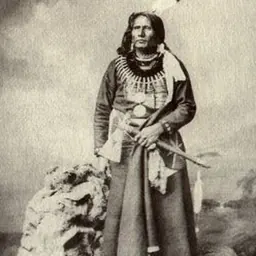

Related people
Same field, nearest in time
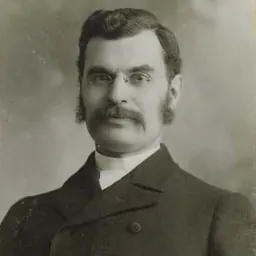


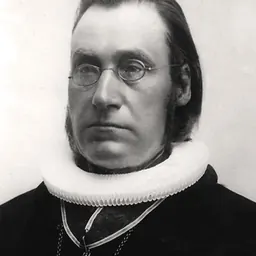

Contemporaries
People whose lives overlapped Susette LaFlesche Tibbles's

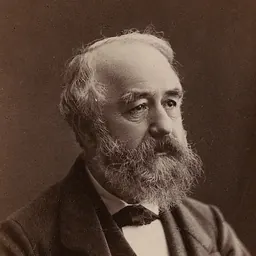




Frequently asked questions
Who was Susette LaFlesche Tibbles?
Native American writer, lecturer, interpreter and artist (1854–1903)
When was Susette LaFlesche Tibbles born?
Susette LaFlesche Tibbles was born in 1854 in Nebraska.
When did Susette LaFlesche Tibbles die?
Susette LaFlesche Tibbles died on 26 May 1903 in Nebraska.
What was Susette LaFlesche Tibbles's occupation?
Susette LaFlesche Tibbles was a writer.
What nationality was Susette LaFlesche Tibbles?
Susette LaFlesche Tibbles was American.
Sources & further reading
· Wikipedia: Susette LaFlesche Tibbles
Cite this page
APA: Biography.guide. (2026). Susette LaFlesche Tibbles. https://biography.guide/susette-laflesche-tibbles/
MLA: "Susette LaFlesche Tibbles." Biography.guide, https://biography.guide/susette-laflesche-tibbles/.
Chicago: "Susette LaFlesche Tibbles." Biography.guide. https://biography.guide/susette-laflesche-tibbles/.
Data last updated: 2026-09-22 · Spot an error? Report a correction.
Page generated 2026-09-27 05:24 UTC