
About Susan Lydon
Lived 1943 – 2005 (aged 61). Susan Lydon was an American journalist.
Susan Gordon Lydon (November 14, 1943 – July 15, 2005) was an American journalist and writer, known for her 1970 feminist essay "The Politics of Orgasm", which brought the female fake orgasm into popular discussion.
She helped start Rolling Stone magazine and covered music journalism for it, and also wrote pieces for Ramparts, Ms. and The New York Times Magazine. She started a newspaper for the Arica School in the 1970s. She was a columnist for the Oakland Tribune newspaper, and she wrote two books about knitting.
In 1993 she published a memoir, Take The Long Way Home: Memoirs of a Survivor, detailing her career, drug-addiction, and recovery. Her memoir came one year after the book Home Fires, written by Don Katz about her birth family, the Gordons.
Early life Lydon was born to an American Jewish family in The Bronx. Her father was electrician Sam Goldenberg, and her mother was Eve Samberg, a singer at resorts in the Catskills Mountains; they married in 1942. Sam left to serve in the U.S. Army in Europe in 1943, and Lydon was born in November while he was away. She was named by her mother for actress Susan Hayward.
After her father returned in 1945, the family welcomed two more daughters, Lorraine (1946) and Sheila (1949). In 1952, they all moved to Island Park on Long Island, to live in the newly built suburbs, and they changed their surname to Gordon. Son Ricky was born in 1956; post-partum woes added to the bouts of depression that had come over Eve in 1955. In 1961 at age 17, Lydon was sneaking out of the house to nightclubs, and smoking marijuana. Despite these peccadillos, she earned a full scholarship and entered Vassar College in September 1961 to study history. At Vassar, she started taking diet pills containing amphetamine, and continued to smoke marijuana. She met Michael Lydon, a student at Yale University. In 1965 she graduated from college and married Michael.
Journalism Michael and Susan Lydon moved to the UK to work in journalism. He wrote about British affairs for the American magazine Newsweek. As a freelancer, she submitted fashion pieces for London Life magazine, the newly adopted name of the Tatler, published weekly during the Swinging Sixties. She also wrote for The Times.
The two left London for San Francisco at the beginning of 1967, just in time to witness and report on Michael Bowen's Human Be-In in Golden Gate Park, where they dropped acid (lysergic acid diethylamide or LSD) and listened to Timothy Leary tell the crowd that people living in cities should reorganize as tribes and villages. Lydon enrolled in graduate studies at San Francisco State University, but she soon dropped out of school. She gave the magazine its slogan "All the news that fits" which she lifted from an April Fools issue of the Columbia Daily Spectator, writing "All the news that fits we print", a parody of The New York Times slogan, "All the News That's Fit to Print".
Lydon's daughter Shuna was born in March 1968, and she left Rolling Stone, writing for a short-lived Hearst periodical titled Eye aimed at the youth market. Helen Gurley Brown took over Eye as editor, and chastised Lydon for writing so much about sex, drugs and politics. Lydon accepted assignments from The New York Times Magazine, and she edited a biography of Huey P. Newton for Ramparts, later recalling the day when gun-toting Bobby Seale guarded the Ramparts office building while Eldridge Cleaver was smuggled out of the country. In late November 1968, Lydon attended the first women's liberation conference at Camp Hastings in Lake Villa, Illinois, at which 200 women's rights activists met. Scheer later said it turned out to be "one of our great articles".
Lydon called upon women to stop creating and perpetuating problems by faking so many orgasms: "With their men, they often fake orgasm to appear 'good in bed' and thus place an intolerable physical burden on themselves and a psychological burden on the men unlucky enough to see through the ruse." UK feminist Alison Garthwaite said that Lydon's paper electrified the Leeds Revolutionary Feminist Group, opening the topic of women's sexuality. She interviewed Helen Reddy for Ms. magazine, Dr. John for the Daily News, Mark Spitz for The New York Times Magazine, as well as Debbie Harry, Joni Mitchell and Paul Simon.
While in Marin, Getz contracted hepatitis, and Lydon soon acquired it, too, serious enough to confine her to bed. Lydon even stole her mother's car.
In 1989, Lydon moved back to the San Francisco Bay Area, following her daughter, Shuna, who was enrolling in photography at California College of the Arts. Lydon settled in East Oakland, and in 1996 began writing for the Oakland Tribune and the associated ANG newspapers. She rose to the position of regional director and editor. In 2001, she started the popular column "Cityscape", highlighting local happenings.
Knitting In her childhood, Lydon did some knitting, but she became more serious in college. Her best work was a series of shawls woven in a feather-and-fan pattern from qiviut, the fine inner hair of the muskox. She traveled the world to interview knitting women of various cultures that had retained the history and custom of knitting. Lydon led knitting workshops at various places including Esalen. At the same time, Lydon started writing a memoir about her own life, published in 1993 as Take The Long Way Home: Memoirs Of A Survivor. Lydon's memoir focused on the more troubling aspects of her life, especially drug abuse, addiction, and incest.
Lydon retreated every summer to a cabin on the Russian River to write, knit and birdwatch with women friends. She regularly spoke to recovering drug addicts about her experience. In 1994, Lydon had a kidney removed to treat renal cancer. In 2002, she took medical leave from her newspaper to fight breast cancer with chemotherapy and radiation. Treatment continued until April 2004, when liver cancer was discovered. In what would be the last weeks of her life, she went to Boca Raton in Florida to enter hospice and be with her sister, brother, mother, and daughter. She died of liver cancer on July 15, 2005, at the age of 61.
Don’t just read it —
keep it.
Full-length biographies made to live with: read them, listen on the way to work, watch them tonight.
- E-book
- Audio
- Video
Instant download · yours to keep · every purchase keeps this site free
Important facts
People in Susan Lydon's life
Named in this biography and alive at the same time


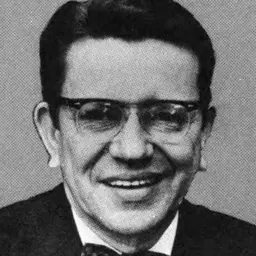




Related people
Same field, nearest in time




Contemporaries
People whose lives overlapped Susan Lydon's
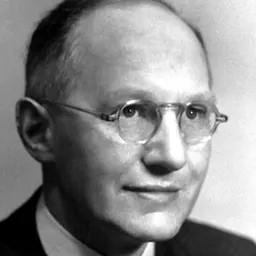
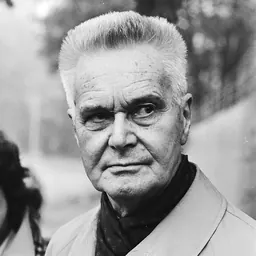

Frequently asked questions
Who was Susan Lydon?
American writer
When was Susan Lydon born?
Susan Lydon was born on 14 November 1943 in New York City.
When did Susan Lydon die?
Susan Lydon died on 15 July 2005 in Boca Raton.
What was Susan Lydon's occupation?
Susan Lydon was a journalist.
What nationality was Susan Lydon?
Susan Lydon was American.
Sources & further reading
Cite this page
APA: Biography.guide. (2026). Susan Lydon. https://biography.guide/susan-lydon/
MLA: "Susan Lydon." Biography.guide, https://biography.guide/susan-lydon/.
Chicago: "Susan Lydon." Biography.guide. https://biography.guide/susan-lydon/.
Data last updated: 2026-09-20 · Spot an error? Report a correction.
Page generated 2026-09-27 05:11 UTC