
About Susan Cotts Watkins
Lived 1938 – 2024 (aged 85–86). Susan Cotts Watkins was a social scientist and sociologist.
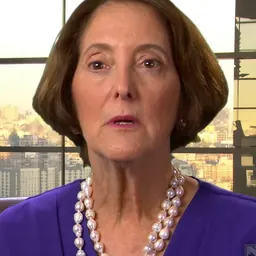
Susan Cotts Watkins (October 26, 1938 – August 26, 2024) was an American demographer. She was a professor at Yale University and the University of Pennsylvania, and later professor emerita at the University of Pennsylvania. Her research focused on the impact of social networks on cultural change in the demography of the U.S., Western Europe, and Africa.
Biography
A native of the United States, Susan C. Watkins graduated with high honors from Swarthmore College in 1956. After child-raising, she returned to academia, receiving a PhD from Princeton University in 1980 for her dissertation on Variation and Persistence in Age Patterns of Marriage in Europe, 1870–1960, for which she received the Porter Ogden Jacobus Fellowship, the highest honor of the Graduate School at Princeton University, 1978–79. Following three years as an assistant professor at Yale, the University of Pennsylvania invited her to join its Department of Sociology and the Population Studies Center. There, she was an assistant professor (1982–1986), an associate professor (1986–1995), and a full professor until she became professor emerita in 2007. During that time, she mentored more than 100 graduate students. In 2009 she was awarded the prestigious John Simon Guggenheim Memorial Foundation Fellowship. She was a member of the Institute of Advanced Study at Princeton, 1984–1985 and was a fellow of the Center for Advanced Studies in the Behavioral Sciences, Palo Alto, CA, 1992–1993.
Watkins' research covered multiple fields, drawing particularly on the fields of demography, sociology, and anthropology. She was on the board of the Population Association of America in 2001–2003. In 2005, she received the Irene Taeuber Award of the Population Association of America, for "exceptionally sound and innovative research." In 1992 the Sociology of Population Section of the American Sociological Association awarded her the Otis Dudley Duncan Award for distinguished scholarship in social demography for her book From Provinces to Nations. She was a visiting scholar at the California Center for Population Research at the University of California-Los Angeles.
Watkins died on August 26, 2024, at the age of 85. as a complement to a longitudinal survey that she was conducting in rural Malawi. At that time, Malawians were suffering and dying from a major AIDS epidemic. After the first round of the survey, she found evidence of social desirability bias. For example, when survey interviewers asked men under age 35 how many sexual partners they had, the typical response was that they had only one sexual partner, their wife. In this context, having only one partner was unusual. In many of the conversations, the men explained that having only one sexual partner was like eating the same meal every day.
The first round of the survey had provided a great deal of data about the composition and structure of the social networks in which rural Malawians talked about AIDS. It had not however, learned much about the content of the social interactions—what people said to each other, rather than to interviewers, about AIDS or their strategies for avoiding infection and death—and even less about the wider everyday interactions that shaped responses to the epidemic. Thus, the researchers improvised by commissioning 10 high school graduates, both men and women, who had worked for the survey to be participant observers during their daily routines. They were to pay attention to what their peers said about the AIDS epidemic in their informal social networks, and to write the conversation word for word in a private space. If they overheard anything concerning AIDS, they were to make mental notes of what people said and did, and then write their recollections word-for-word that evening or soon thereafter. The notebooks were sent to the researchers. In 2007, Watkins invited a colleague, Adam Ashforth, an ethnographer, to collaborate on the Project.
More than 1,000 journals have been written since 1999,
Kenya Diffusion and Ideational Change Project In 1994, Watkins began research on the Kenya Diffusion and Ideational Change Project, a study on the role of social networks on changing attitudes and behavior regarding family size, family planning, and HIV/AIDS in Kenya. The study found that perceived risks, as well as preferred methods of protection against HIV-infection, depend in general on the prevailing perceptions and favored protective methods within personal communication networks. Risk-perceptions of women were found to be shaped by strong relationships and cohesive network structures, while males' risk perception depended more on the number of risk-perceivers in their communication networks.
The Malawi Longitudinal Study of Families and Health In 1998, Watkins began research on The Malawi Longitudinal Study of Families and Health. The study's goal was to investigate the multiple influences that contribute to HIV risks in sexual partnerships; the variety of ways in which people manage risk within and outside of marriage and other sexual relationships; the possible effects of HIV prevention policies and programs; and the mechanisms through which poor rural individuals, families, households, and communities cope with the impacts of high AIDS-related morbidity and mortality. The study found a number of factors that contributed to the spread of HIV/AIDS in Malawi. Among those factors were the high rate of sexual encounters among youth, and a general unwillingness to follow HIV prevention methods. with Ann Swidler. The book detailed the relationships among philanthropists, beneficiaries, and brokers in the fight against AIDS in Africa. Watkins found that virtually all work in the fight against AIDS relied on brokers, who act as intermediaries between Western altruists and local villagers. Watkins and Swidler found that conflicts among these three groups often confounded efforts to fight AIDS. They argued that altruists could accomplish more good by helping Africans achieve their own goals, rather than seeking to transform African lives.
Selected publications Source:
Don’t just read it —
keep it.
Full-length biographies made to live with: read them, listen on the way to work, watch them tonight.
- E-book
- Audio
- Video
Instant download · yours to keep · every purchase keeps this site free
Important facts
more
S. C. Watkins, SC Watkins, Cotts WatkinsPeople in Susan Cotts Watkins's life
Named in this biography and alive at the same time






Related people
Same field, nearest in time





Contemporaries
People whose lives overlapped Susan Cotts Watkins's




Frequently asked questions
Who was Susan Cotts Watkins?
American demographer
When was Susan Cotts Watkins born?
Susan Cotts Watkins was born in 1938.
When did Susan Cotts Watkins die?
Susan Cotts Watkins died on 26 August 2024 in Santa Monica.
What was Susan Cotts Watkins's occupation?
Susan Cotts Watkins was a social scientist and sociologist.
Sources & further reading
· Wikipedia: Susan Cotts Watkins
· DBpedia: Susan Cotts Watkins
Cite this page
APA: Biography.guide. (2026). Susan Cotts Watkins. https://biography.guide/susan-cotts-watkins/
MLA: "Susan Cotts Watkins." Biography.guide, https://biography.guide/susan-cotts-watkins/.
Chicago: "Susan Cotts Watkins." Biography.guide. https://biography.guide/susan-cotts-watkins/.
Data last updated: 2026-09-20 · Spot an error? Report a correction.
Page generated 2026-09-27 05:01 UTC