
About Susan Athey
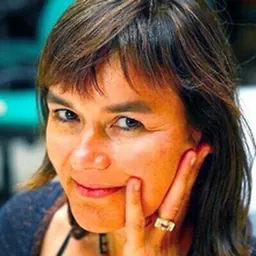
Born 1970. Susan Athey is an American economist, university teacher, mathematician, computer scientist, academic and business administration scholar.
Susan Carleton Athey (born November 29, 1970) is an American economist. She is the Economics of Technology Professor in the School of Humanities and Sciences at the Stanford Graduate School of Business. Prior to joining Stanford, she has been a professor at Harvard University and the Massachusetts Institute of Technology.
Athey is the first female winner of the John Bates Clark Medal. She served as the consulting chief economist for Microsoft for six years and was a consulting researcher to Microsoft Research. She is currently on the boards of Expedia, Lending Club, Rover, Turo, Ripple, and non-profit Innovations for Poverty Action, and is a Scientific Advisor at Haus, a marketing science company. She also serves as the senior fellow at Stanford Institute for Economic Policy Research. She is an associate director for the Stanford Institute for Human-Centered Artificial Intelligence and the director of Golub Capital Social Impact Lab.
Career Academic career Athey's first position was as an assistant professor at the Massachusetts Institute of Technology, where she taught for six years, before returning to Stanford's Department of Economics as professor, where she held the Holbrook Working Chair for another five years. Then, she served as a professor of economics at Harvard University until 2012, before finally returning to the Stanford Graduate School of Business, her alma mater and current employer.
Applied auction research Auctions were the reason Athey went into economics. She has contributed on all dimensions to research on auctions. Athey's theoretical work on collusion in repeated games has been applied to auctions. She has performed significant empirical work in econometrics of auctions. In fact, her existence theorem for sets with private information has done an innovative job on the econometrics of auctions.
She also oversaw work that has had significant effects on business and public policy. Athey and Jonathan Levin examined the U.S. Forest Service's oral ascending auctions for the rights to cut timber in the national forests. Typically, a given tract contains several different species of timber-yielding trees. The Forest Service publishes an estimate of the proportions of the various species based on an inspection. Potential bidders then can conduct their inspections. Bids are multidimensional: amounts to be paid per unit for each species. The winner is determined by aggregating each bidder's offer using the Forest Service's estimated proportions. The actual amount the winner pays, however, is computed by applying the bid vector to the exact amounts that are ultimately harvested (the winner has two years to complete the harvest). These rules create an incentive for a bidder whose estimate of the proportions differs from that of the Forest Service to skew its bidding, which raises the bid for species that the bidder believes are less common than does the Forest Service. Conversely, it lowers the bid for the species that the bidder believes are more common than does the Forest Service. For example, suppose there are two species and the Forest Service estimates that they are in equal proportions, but a bidder believes they are in dimensions 3:2. Then bids of ($100, $100) and ($50, $150) yield the same amount under the Forest Service proportions and so are equally likely to win, but the bidder's expected payments under the first and under the second differ.
One of Athey's best-known works that deals with auctions is called "Comparing Open and Sealed Bid Auctions: Theory and Evidence from Timber Auctions." In this paper, Athey works with Johnathan Levin and Enrique Seira. She and her peers were interested in testing to see if the participation effects on auction were important. There are two types of auctions, open and sealed-bid auctions. Open auctions are where bidders are constantly outbidding one another until the last bidder gives up and the auction ends, and sealed-bid auctions are when individuals write down their bids and submit them, whoever has the highest bid wins. The data that they used came from the United States Forest Service auctions. Their results indicated that participation type matters. It even matters more than what is actually taking place during the auctioning process.
Digital marketplace research Athey's contributions to technology and the digital marketplace are focused on their social impact. Pioneering the field alongside Google's Hal Varian, Athey was one of the first coined "tech economists." She cites this to be one of her proudest lifetime accomplishments.
Athey is able to hone her skills from different fields to create an amalgamation of machine learning and market design which is leveraged to make sense of and improve the social impact of technology. In some of her more recent research, Athey applies these techniques to the COVID-19 pandemic. By analyzing the effectiveness of social media advertising in influencing the beliefs surrounding COVID-19 vaccine efficacy, Athey was able to conclude that the average cost of influencing a person in favor of the vaccine was $3.41. This, coupled with an estimated vaccine cost of $5.68, provided empirical evidence for the cost-effectiveness of using social media campaigns to influence the vaccination rate.
Her passion for using machine learning to advance the alleviation of societal issues led her to become the faculty director of the Stanford Business School's Initiative for Shared Prosperity and Innovation (ISPI). This project utilizes technology to address social problems like poverty, inequality, and, as aforementioned, COVID-19. The Initiative's mechanism for doing this is to apply machine learning methods to technology companies with the eventual result of improving methods for measuring impact. As technology companies rapidly and incrementally improve using data collection methods, it is increasingly important that they do this more efficiently by being more accurate in their impact measurements. When companies implement these machine learning tactics, they become more efficient; this is particularly important because they are legitimized to potential investors, which helps secure funding. This is particularly important in the case of social impact projects, which oftentimes rely on volatile forms of investment like philanthropic or governmental funding. She also aided British Columbia in the design of their pricing system used for publicly owned timber.
Professional service
Athey has served as an associate editor of several leading journals, including the American Economic Review, Review of Economic Studies, and the RAND Journal of Economics, as well as the National Science Foundation economics panel, and she also served as an associate editor for Econometrica, Theoretical Economics, and the Quarterly Journal of Economics. She is a past co-editor of the Journal of Economics and Management Strategy and American Economic Journal: Microeconomics. She was the chair of the program committee for the 2006 North American Winter Meetings, and has served on numerous committees for the Econometric Society, the American Economic Association, and the Committee for the Status of Women in the Economics Profession. She is a member of President Obama's Committee for the National Medal of Science.
Furthermore, besides professional services in academic committees, Athey, as a "tech economist," also used to serve as consultant chief economist for Microsoft Corporation for a few years and now serves on the board of Expedia, Lending Club, Rover Turo, and Ripple. She also serves as a long-term advisor to the British Columbia Ministry of Forests, helping architect and implement their auction-based pricing system. Athey is the founding director of the Golub Capital Social Impact Lab at Stanford Graduate School of Business, and serves as the associate director of the Stanford Institute for Human-Centered Artificial Intelligence.
Awards and honors Academic Duke University Alice Baldwin Memorial Scholarship, 1990–1991 Mary Love Collins Scholarship, Chi Omega Foundation, 1991–1992 Jaedicke Scholar, Stanford Graduate School of Business, 1992–1993 National Science Foundation Graduate Fellowship, 1991–1994 State Farm Dissertation Award in Business, 1994 State Farm Dissertation Award (1995) Elaine Bennett Research Prize (2000) (This award is given every other year to a young woman economist who has made outstanding contributions to any field.) Fellow of the Econometric Society (2004) John Bates Clark Medal (2007) Fellow of the American Academy of Arts and Sciences (2008) Stanford University Lieberman Fellowship Elected to the National Academy of Sciences (2012) Honorary Degree, Duke University (2009) Fisher-Shultz Lecture, Econometric Society (2011) Jean-Jacques Laffont Prize (2016) John von Neumann Award (2019) CME Group – MSRI Prize (2019) Honorary Doctorate, London Business School (2022)
Non-academic Kilby Award Foundation's Young Innovator Award, 1998 Diversity MBA's Top 100 under 50 Diverse Executives Fast Company's 100 Most Creative People in Business World Economic Forum Young Global Leader, selected 2008 World Innovation Summit on Entrepreneurship and Innovation's World's Most Innovative People Award, 2012 Microsoft Research Distinguished Collaborator Award, 2016
Publications
(Accepted subject to final revisions)
Don’t just read it —
keep it.
Full-length biographies made to live with: read them, listen on the way to work, watch them tonight.
- E-book
- Audio
- Video
Instant download · yours to keep · every purchase keeps this site free
Important facts
People in Susan Athey's life
Named in this biography and alive at the same time





Related people
Same field, nearest in time




Contemporaries
People whose lives overlapped Susan Athey's






Frequently asked questions
Who is Susan Athey?
American economist
When was Susan Athey born?
Susan Athey was born on 29 November 1970 in Boston.
What is Susan Athey's occupation?
Susan Athey is an economist, university teacher, mathematician, computer scientist, academic and business administration scholar.
What nationality is Susan Athey?
Susan Athey is American.
Sources & further reading
Cite this page
APA: Biography.guide. (2026). Susan Athey. https://biography.guide/susan-athey/
MLA: "Susan Athey." Biography.guide, https://biography.guide/susan-athey/.
Chicago: "Susan Athey." Biography.guide. https://biography.guide/susan-athey/.
Data last updated: 2026-09-20 · Spot an error? Report a correction.
Page generated 2026-09-27 05:23 UTC