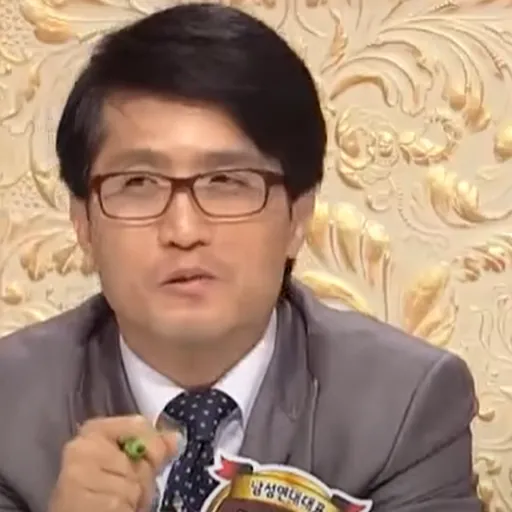
Sung Jae-gi
South Korean masculism activist
About Sung Jae-gi
Lived 1967 – 2013 (aged 45). Sung Jae-gi was a South Korean human rights defender, entrepreneur and autobiographer.
Sung Jae-gi (; ; September 11, 1967 – July 26, 2013) was a South Korean men's rights activist. Sung was the leader of various masculinist and anti-feminist organizations, including the Association of Anti-Feminism and Male Liberation, Association for the Abolition of the Ministry of Women, and Man of Korea. Sung also ran a shelter for homeless men, male victims of violent crime, teenage runaways, and gay and transgender men.
Near the end of his life Sung was reportedly up to ₩100 million in debt. On July 25, 2013, he posted on the Man of Korea website his intention to die by suicide. The next day, Sung jumped from the Mapo Bridge in Seoul. His body was found four days later.
Career He spent his early twenties as an insurance salesman, briefly managing his own business. In 2006, he operated a night club in Daegu.
During the early 2000s, Sung joined the South Korean men's rights movement and campaigned for a variety of causes. Sung argued that "The Ministry of Women in Korea is the largest in the world. It has 11 affiliated organizations, and 485 women's civic groups receive government support. However, there's only one men's organization, the Man of Korea." In 2006, he founded the Association of Anti-Feminism for the Liberation of Men , and in 2007 he founded the Association for the Abolition of the Ministry of Women . In 2013, both groups had several thousand members.
Sung founded masculinist organization Man of Korea to address his concerns that men are socially vulnerable and need a platform to voice their opinions. In October 2001 the system was found unconstitutional and repealed, with Sung advocating its reconstruction.
On October 3, 2012, he controversially posted on his Twitter account: "You [Korean women] should be ashamed of yourselves. Why are you making such a fuss about menstruating when the nation's birthrate is the lowest in the world?"
Sung ran a shelter and job placement agency for homeless or unemployed men, including young male runaways, gay, and transgender men.
During the early 2010s, he was an activist for the abolition of women-only facilities.
Suicide Preparation In early July 2013, Sung's wife briefly left him. On July 25, he declared himself a victim of reverse discrimination and announced his intention to die by suicide. Sung jumped from the Mapo Bridge into the Han River, leaving a note saying that he would risk his life to raise ₩100 million (about $94,000) in donations to pay debts owed by Man of Korea.
He posted on the organization's website, "Dear citizens, I plan to jump off a bridge over the Han River. I hope you give us a last chance. Please lend us 100 million won which will be used for paying back debt and seed money of our organization". Sung's announcement was met with indifference. "Ridiculous. He is begging for money and he's holding himself as a hostage", read a post on the Man of Korea homepage. Another read, "Threat fund-raiser? That's creative. Just jump off the bridge like you promised".
Jump On July 26, 2013, Sung took a taxi from Yeongdeungpo to Mapo District with Han Seung-oh, Lee Ji-hun and five other people. Although he was accompanied by two lifeguards, it had rained heavily that day and the day before. At 3:00 pm, Sung jumped from the Mapo Bridge.
Rescue efforts began at about 3:20 pm, and a broad search of the Han River was conducted. About 50 firefighters from the Yeongdeungpo Fire Station, one helicopter and three rescue boats continued the search Saturday and Sunday; six ambulances stood by.
Sung's body was found near the south end of the Seogang Bridge, connecting Yeouido to northern Seoul, on July 29. He was barefoot, and his white shirt and dark-gray pants were what he was wearing when he jumped. There was a reported month-long increase in copycat suicides in August 2013.
Don’t just read it —
keep it.
Full-length biographies made to live with: read them, listen on the way to work, watch them tonight.
- E-book
- Audio
- Video
Instant download · yours to keep · every purchase keeps this site free
Important facts
People in Sung Jae-gi's life
Named in this biography and alive at the same time


Related people
Same field, nearest in time




Contemporaries
People whose lives overlapped Sung Jae-gi's




Frequently asked questions
Who was Sung Jae-gi?
South Korean masculism activist (1967-2013)
When was Sung Jae-gi born?
Sung Jae-gi was born on 11 September 1967 in Daegu.
When did Sung Jae-gi die?
Sung Jae-gi died on 26 July 2013 in Seoul.
What was Sung Jae-gi's occupation?
Sung Jae-gi was a human rights defender, entrepreneur and autobiographer.
What nationality was Sung Jae-gi?
Sung Jae-gi was South Korean.
Sources & further reading
Cite this page
APA: Biography.guide. (2026). Sung Jae-gi. https://biography.guide/sung-jae-gi/
MLA: "Sung Jae-gi." Biography.guide, https://biography.guide/sung-jae-gi/.
Chicago: "Sung Jae-gi." Biography.guide. https://biography.guide/sung-jae-gi/.
Data last updated: 2026-09-22 · Spot an error? Report a correction.
Portrait: Wikimedia Commons · author & licence
Page generated 2026-09-27 05:03 UTC