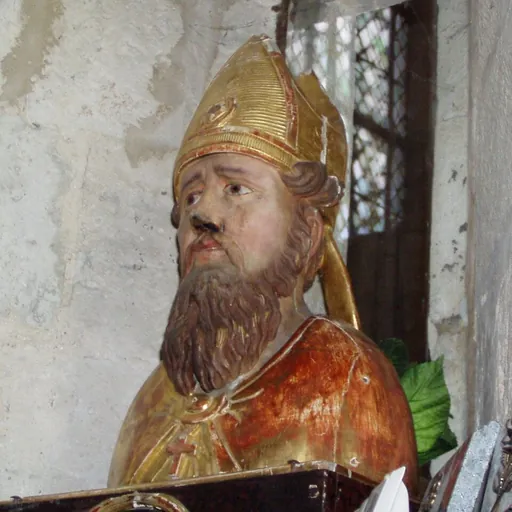
About Sulpicius the Pious
Lived 576 – 646 (aged 69–70). Sulpicius the Pious was a catholic bishop.
Sulpicius II. the Pious (; died 17 January 646) was a 7th-century bishop of Bourges and saint.
Life According to his Vita, Sulpicius was born at Vatan (Diocese of Bourges), of noble parents, before the end of the sixth century. From his youth he devoted himself to good works and to the study of Scripture, and donated his large patrimony to the Church and the poor.
Austregisilus, Bishop of Bourges, ordained him cleric of his church, then deacon, and finally made him director of his episcopal school. Clotaire II (King of the Franks from 613 to 629), who had heard of his merits, summoned him and made him almoner and chaplain of his armies.
In 627 Sulpicius attended the Council of Clichy and held several others with the bishops of his province. St. Desiderius of Cahors, treasurer to King Clothar II and later Bishop of Cahors, was his personal friend; three letters survive which he addressed to him. Sulpicius' miracles show him receiving "Theudogisilus", a noble from the palatium of the king with entertainments and a "great heaped fire" (in a fireplace in the centre of the great hall, the smoke issuing through a vent in the roof). Sulpicius allegedly extinguished this fire, when it threatened to get out of control, with the sign of the cross. The vita asserts with approval that "he, the holy man gave leave for no-one, neither heretic, gentile or Jew, to live in the city of Bourges without the grace of baptism" - with many consequent conversions from the Jews of Bourges.
The Vita tells that Dagobert I sent his representative the merciless general Lollo (Lollonius) to reside at Bourges and to bring the city more closely under the king's command. Sulpicius intervened with King Dagobert on behalf of his flock, of whom a too heavy tax was exacted.
Legacy In his honour the church of Saint-Sulpice was built in Paris, from which the Society of Saint-Sulpice derives its name.
The vita of Sulpicius also contains a vita of his saintly contemporary, Eustadiola.
Feast days
17 January – main commemoration (death anniversary), 18 January – main commemoration (Mozarabic Rite), 19 January – main commemoration (death anniversary), 27 August – translation of his relics from Bourges to Vatan (1757),
Don’t just read it —
keep it.
Full-length biographies made to live with: read them, listen on the way to work, watch them tonight.
- E-book
- Audio
- Video
Instant download · yours to keep · every purchase keeps this site free
Important facts
Related people
Same field, nearest in time


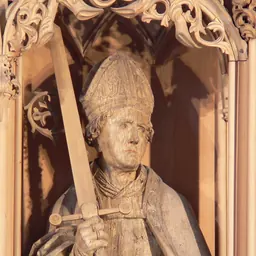
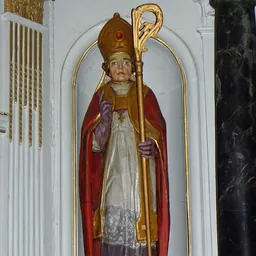

Contemporaries
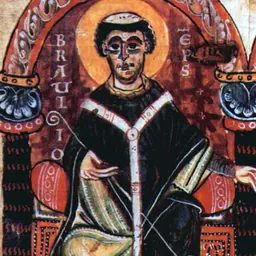
People whose lives overlapped Sulpicius the Pious's




Frequently asked questions
Who was Sulpicius the Pious?
French bishop and saint
When was Sulpicius the Pious born?
Sulpicius the Pious was born in 576 in Vatan.
When did Sulpicius the Pious die?
Sulpicius the Pious died on 17 January 646 in Bourges.
What was Sulpicius the Pious's occupation?
Sulpicius the Pious was a catholic bishop.
What nationality was Sulpicius the Pious?
Sulpicius the Pious's recorded nationality: Francia.
Sources & further reading
· Wikipedia: Sulpicius the Pious
· DBpedia: Sulpicius the Pious
Cite this page
APA: Biography.guide. (2026). Sulpicius the Pious. https://biography.guide/sulpicius-the-pious/
MLA: "Sulpicius the Pious." Biography.guide, https://biography.guide/sulpicius-the-pious/.
Chicago: "Sulpicius the Pious." Biography.guide. https://biography.guide/sulpicius-the-pious/.
Data last updated: 2026-09-23 · Spot an error? Report a correction.
Portrait: Wikimedia Commons · author & licence
Page generated 2026-09-27 05:06 UTC