
Styllou Christofi
Cypriot murderer
About Styllou Christofi
Lived 1900 – 1954.
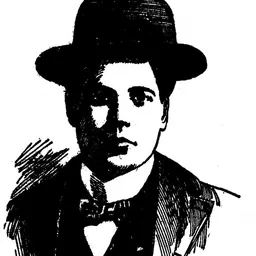
Styllou Pantopiou Christofi (; 1900 – 15 December 1954) was a Greek Cypriot woman hanged in Britain for murdering her daughter-in-law. She was the penultimate woman to be executed in Britain, followed in 1955 by Ruth Ellis.
Background Styllou Christofi was born in Cyprus, then a British protectorate, to a Cypriot family. She grew up in a small, isolated village and received no formal education. According to British historian and crime author Philip Jones, the insularity of Cypriot villages such as the one Christofi was from meant that personal disagreements and arguments among residents were seen as local matters, and could lead to "levels of behaviour or resolutions that the wider world might consider improper or unreasonable, but which to the village itself were seen as entirely acceptable". Christofi married and gave birth to a son, Stavros. Her husband was one of the poorest men in the village, and the family's income came from a tiny olive grove they owned. According to varying accounts, she was either found not guilty, or the court found that she had been provoked to such an extent that a criminal penalty was inappropriate.
In 1953, Christofi came to London to reunite with Stavros, whom she had not seen for 12 years. She had trouble adapting to her new lifestyle, and began extensively arguing with her daughter-in-law. In particular, Christofi resented the fact that her grandchildren were being raised as typical English children with no regard for their Cypriot heritage. She would frequently criticise Hella's parenting and fly into tantrums. In July 1954, Stavros and Hella agreed that Christofi needed to leave. Hella planned to take the children on a visit to Germany, during which Stavros would try to persuade his mother to return to Cyprus. Christofi, who probably became aware of the plan, soon resolved to murder Hella so she could raise the children her own way.
Murder On the evening of 29 July 1954, after Stavros had left for work and the children had been put to bed, Christofi went to the kitchen, where Hella was going about her chores, and knocked her unconscious with a blow to the back of the head with an ash pan from the boiler.
The fire soon got out of control, and Christofi, who spoke little English, ran into the street to raise the alarm. She eventually found help from a couple in a car parked outside a railway station, to whom she explained "Please come. Fire burning. Children sleeping". While in the condemned cell, she requested that a Greek Christian Orthodox cross be put on the wall of the execution chamber, which was granted. It remained there until the room was dismantled in 1967.
Christofi was hanged at Holloway Prison by Albert Pierrepoint and assistant Harry Allen on the morning of 15 December 1954. Pathologist Francis Camps examined the body.
Burial
The body of Christofi was buried in an unmarked grave within the walls of Holloway Prison, as was customary. In 1971, the prison underwent an extensive programme of rebuilding, during which the bodies of all the executed women were exhumed. With the exception of Ruth Ellis, the remains of the four other women executed at Holloway (i.e., Styllou Christofi, Edith Thompson, Amelia Sach and Annie Walters) were subsequently reburied in a single grave (plot 117) at Brookwood Cemetery in Surrey. The remains of Thompson were exhumed in 2018 and laid to rest in the grave of her mother and father in the City of London Cemetery.
The new grave (in plot 117) remained unmarked for over twenty years. It was acquired in the 1980s by René Weis and Audrey Russell, who had interviewed Avis Graydon (Edith Thompson's surviving sister) at length in the 1970s. On 13 November 1993, a grey granite memorial was placed on plot 117 and dedicated to the memory of the four women buried there. The grave and plot were formally consecrated by the Reverend Barry Arscott of St. Barnabas, Manor Park, the church in which Edith Thompson was married in January 1916. Edith Thompson's details appear prominently on the face of the tombstone, together with her epitaph: "Sleep on Beloved. Her death was a legal formality". The names of the other three women are inscribed around the edges of the tombstone.
In popular culture
Christofi was featured in episode 3, season 11, of Deadly Women.
The case was re-examined in 2019 in episode 2 of series 2 of BBC One's Murder, Mystery and My Family. In it barristers Jeremy Dein and Sasha Wass re-investigated the case on behalf of her grandson, Pantopios (Toby) Christofis a.k.a. Tobias Christopher, hoping to prove her innocence. Although question marks were raised over Christofi's execution and mental health, insufficient evidence was uncovered to suggest her conviction should be overturned.
Don’t just read it —
keep it.
Full-length biographies made to live with: read them, listen on the way to work, watch them tonight.
- E-book
- Audio
- Video
Instant download · yours to keep · every purchase keeps this site free
Important facts
People in Styllou Christofi's life
Named in this biography and alive at the same time





Contemporaries
People whose lives overlapped Styllou Christofi's



Frequently asked questions
Who was Styllou Christofi?
Cypriot murderer
When was Styllou Christofi born?
Styllou Christofi was born in 1900 in Cyprus.
When did Styllou Christofi die?
Styllou Christofi died on 15 December 1954 in London.
Sources & further reading
· Wikipedia: Styllou Christofi
Cite this page
APA: Biography.guide. (2026). Styllou Christofi. https://biography.guide/styllou-christofi/
MLA: "Styllou Christofi." Biography.guide, https://biography.guide/styllou-christofi/.
Chicago: "Styllou Christofi." Biography.guide. https://biography.guide/styllou-christofi/.
Data last updated: 2026-09-20 · Spot an error? Report a correction.
Page generated 2026-09-27 05:16 UTC