
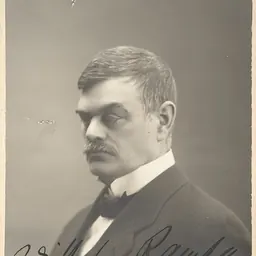
Stoyan Pribichevich
Serbian-American journalist and foreign correspondent
About Stoyan Pribichevich
Lived 1905 – 1982 (aged 76–77).
Stoyan Pribichevich also spelled Stojan Pribićević (Serbian Cyrillic: Стојан Прибићевић; 1905–1976 ) was a Serbian American journalist and foreign correspondent of Fortune, Time, Life and a representative of the American press behind German lines in the war-ravaged Kingdom of Yugoslavia in 1944. He was the son of Svetozar Pribićević, the renowned Serbian journalist and Yugoslav Minister of Interior.
Biography
Pribichevich was born into an ethnically Serb family in Kostajnica in 1905, in the final decade of Austria-Hungary. His father came from the distinguished Pribićević family of four renowned brothers writers Adam, Milan, Vasilije (Bishop Valerijan ), and Stoyan's father, who was a journalist and Yugoslav Minister of Interior Svetozar Pribićević until he was forced to go to exile in France for "not cooperating" with the Government of King Alexander I of Yugoslavia.
Education
Stoyan Pribichevich graduated in political science and jurisprudence from the University of Belgrade School of Law. Upon graduation, he opened a law practice and began writing critically against The Establishment and soon followed his father's footsteps, coming into loggerheads with the Government of King Alexander I of Yugoslavia and choosing a self-imposed exile in France to be with his father. He left for Paris where his father Svetozar lived before moving to Prague where he died in 1936. As a newcomer in New York Ciy, Pribichevich met a Cleveland manufacturer at a party who offered him a job at his Cleveland mold shop. Pribichevich accepted the manufacturer's offer. In "American Factory", which appeared in Harper's Magazine in September 1938, he found his calling as a journalist for many prominent U.S. publications.
World War II When Dame Rebecca West's travel book Black Lamb and Grey Falcon: A Journey Through Yugoslavia was published in 1941 in two volumes by Macmillan (U.K.) and Viking Press (U.S.A.), and everyone who read the work who was familiar with the country wondered who was the fictional character named "Constantine the Poet"?
Pribichevich was among the most vociferous critics of the Yugoslav government of the 1930s, very much like his father Svetozar in his day who was forced into exile. Stoyan Pribichevich felt that the West had become a pawn for the government press bureau in Belgrade. He wrote: "The basic mistake Miss West made was to accept as her sole cicerone (talkative guide) through Yugoslavia, Stanislav Vinevar, alias "Constantine', a man who earned his living as a censor in Stoyadinovich's Press Bureau..." where he landed 10 miles behind the fighting front and was taken directly to Tito's mountain hideout by Randolph Churchill, Winston Churchill's son. Pribichevich, of Time, John Talbot of Reuters, and photographers G. E. Fowler of the U.S. Navy and M. J. Slade of the British Army were the second Allied correspondents to arrive in Partisan territory. Correspondent Sargeant Walter Bernstein of the American Army publication, Yank, had already personally interviewed Tito first and was given his permission to write it, but Yank would not be allowed to publish until the pool reporters (Pribichevich, Talbot, Fowler and Slade) had returned and published their account first. A month earlier (April) war correspondent Joe Morton sent Tito a series of questions about the situation in the region, which Allied reporters had been barred from travelling to since the previous fall. Stalin-backed Tito responded, and Morton wrote a lengthy news article around those answers and submitted it to Allied censors in Algiers on 30 April 1944. But censors refused to clear the story, sparking a controversy when AP took its protests about the matter public
The situation escalated when Allied officials chose two reporters by lot in Cairo, Stoyan Pribichevich of Time and Life and John Chetwynd-Talbot of Reuters, and facilitated in-person interviews with Tito at his mountain hideout on 10 May. While Pribichevich and Talbot stories ran in news magazines days later. Stories by William Bernstein and Joe Morton's remained on hold until they were finally released for publication at a later date. had become close friends during the late 1930s, until Adamic's tragic death in 1951.
Pribichevich's numerous left-wing political affiliations and related activities, such as being an apologist for communist Yugoslavia, went unnoticed in 1945 during the first Red Scare. It came to haunt him in the 1950s and 1960s in the second phase of the Red Scare (McCarthysm), when he was blacklisted after being quoted in American and British periodicals. Throughout the turbulent decade, however, Pribichevich managed to continue to write under various aliases for a while until the communist paranoia dissipated.
In 1967, Stoyan Pribichevich collected all his father's (Svetozar Pribićević) personal and professional correspondence and other materials, and gave it all to the archives of the Czech Academy of Sciences, the National Museum and the Office of the President of the Republic, where they were microfilmed the same year at his request. Copies of the microfilms also became holdings of the Archival Collections of Columbia University Libraries.
Works by Stoyan Pribichevich World Without End: The Saga of Southeastern Europe, New York: Reynal and Hitchcock, First edition: 1 January 1939; Living Space: The Story of South-Eastern Europe, Published in London: Heinemann, 1940; Macedonia: Its People and History, Universal Park, Pennsylvania State University Press, 1982, 1990.
Also: numerous other books and articles in various political publications, academic journals. and several translations, namely: "Yugoslavia's Way. The Program of the League of the Communists of Yugoslavia", Stoyan Pribichevich translator, New York: All Nations Press, 1958, 263 pp.
Personal Stoyan Pribichevich was married to the former Dorothy Dennis. They had a daughter Christina (Zorich); and a son, Stanko.
Don’t just read it —
keep it.
Full-length biographies made to live with: read them, listen on the way to work, watch them tonight.
- E-book
- Audio
- Video
Instant download · yours to keep · every purchase keeps this site free
Important facts
People in Stoyan Pribichevich's life
Named in this biography and alive at the same time




Contemporaries
People whose lives overlapped Stoyan Pribichevich's





Frequently asked questions
Who was Stoyan Pribichevich?
serbian-American journalist and foreign correspondent (1905-1976)
When was Stoyan Pribichevich born?
Stoyan Pribichevich was born in 1905.
When did Stoyan Pribichevich die?
Stoyan Pribichevich died in 1982.
Sources & further reading
· Wikipedia: Stoyan Pribichevich
· DBpedia: Stoyan Pribichevich
Cite this page
APA: Biography.guide. (2026). Stoyan Pribichevich. https://biography.guide/stoyan-pribichevich/
MLA: "Stoyan Pribichevich." Biography.guide, https://biography.guide/stoyan-pribichevich/.
Chicago: "Stoyan Pribichevich." Biography.guide. https://biography.guide/stoyan-pribichevich/.
Data last updated: 2026-09-20 · Spot an error? Report a correction.
Page generated 2026-09-27 05:00 UTC