
About Stieg Larsson
Lived 1954 – 2004 (aged 50). Stieg Larsson was a Swedish journalist, writer, editor and screenwriter.
Karl Stig-Erland "Stieg" Larsson (, ; 15 August 1954 – 9 November 2004) was a Swedish writer, journalist, and far-left activist. He is best known for writing the first trilogy in the Millennium series of crime novels, which was published posthumously, starting in 2005, after he died of a sudden heart attack. The trilogy was adapted as three motion pictures in Sweden, and one in the United States (for the first book only). Larsson had conceived of ten books in the series; the publisher commissioned David Lagercrantz to write the next trilogy, and Karin Smirnoff to write the third trilogy in the series, which has eight novels . For much of his life, Larsson lived and worked in Stockholm. His journalistic work covered socialist politics and he acted as an independent researcher of right-wing extremism.
He was the second-best-selling fiction author in the world for 2008, owing to the success of the English translation of The Girl with the Dragon Tattoo, behind Afghan-American novelist Khaled Hosseini. The third and final novel in the Millennium trilogy, The Girl Who Kicked the Hornets' Nest, became the bestselling book in the United States in 2010, according to Publishers Weekly. By March 2015, his series had sold 80 million copies worldwide.
Early life, family and education Stieg Larsson was born in Skelleftehamn, Västerbottens län, Sweden, the son of Erland Larsson (1935-2026) and his wife Vivianne, née Boström (1937–1991). His father and maternal grandfather worked in the Rönnskärsverken smelting plant in Skelleftehamn. Suffering from arsenic poisoning, his father resigned from his job, and the family subsequently moved to Stockholm. However, because of their cramped living conditions, they chose to let one-year-old Larsson remain behind. Until the age of nine, Larsson lived with his grandparents in a small wooden house in the countryside, near the village of Bjursele in Norsjö Municipality, Västerbotten County. He attended the village school and used cross-country skis to get to and from school during the long, snowy winters in northern Sweden, experiences that he remembered fondly.
In the book "There Are Things I Want You to Know" About Stieg Larsson and Me, Eva Gabrielsson describes this as Larsson's motivation for setting part of his first novel The Girl with the Dragon Tattoo in northern Sweden, which Gabrielsson calls "godforsaken places at the back of beyond."
Larsson was not as fond of the urban environment in the city Umeå, where he resided with his parents after his grandfather, Severin Boström, died of a heart attack at age 50.
Larsson earned a secondary diploma in social sciences in 1972. He applied to the Joint Colleges of Journalism in Stockholm, but he failed the entrance examination. In 1974, Larsson was drafted into the Swedish Army under the conscription law. He spent 16 months in compulsory military service, training as a mortarman in an infantry unit in Kalmar County.
Name change Larsson's first name was originally Stig, which is the standard spelling. In his early 20s, he changed it to avoid confusion with his friend Stig Larsson, who went on to become a well-known author well before Stieg did. The pronunciation is the same regardless of spelling.
Early writing On his 12th birthday, Larsson's parents gave him a typewriter as a birthday gift.
Activism and journalism While working as a photographer, Larsson became engaged in far-left political activism. He became a member of Kommunistiska Arbetareförbundet (Communist Workers' League), edited the Swedish Trotskyist journal Fjärde internationalen, journal of the Swedish section of the Fourth International. He wrote regularly for the weekly Internationalen.
Larsson spent parts of 1977 in Eritrea, training a squad of female Eritrean People's Liberation Front guerrillas in the use of mortars. He was forced to abandon that work after he contracted a kidney disease. Upon his return to Sweden, he worked as a graphic designer at the largest Swedish news agency, Tidningarnas Telegrambyrå, between 1977 and 1999. He also became the editor of the foundation's magazine, Expo, in 1995.
When he was not at his day job, he worked on independent research into right-wing extremism in Sweden. In 1991, his research resulted in his first book, Extremhögern (The Extreme Right). Larsson quickly became instrumental in documenting and exposing Swedish extreme right and racist organisations. He was an influential debater and lecturer on the subject, reportedly living for years under death threats from his political enemies. The political party Sweden Democrats (Sverigedemokraterna) was a major subject of his research. Gabrielsson has stated in her book "There Are Things I Want You to Know" About Stieg Larsson and Me (2011) that she feels capable of finishing the book.
In 2013, Swedish publisher Norstedts contracted David Lagercrantz, a Swedish author and journalist, to continue the Millennium series. Lagercrantz did not have access to the material in Gabrielsson's possession, which remains unpublished. The new book was published in August 2015 in connection with the 10th anniversary of the series, under the Swedish title (literally "That which doesn't kill us"); the English title is The Girl in the Spider's Web.
The fifth book in the Millennium series was released in September 2017. The Swedish title is (literally "The man who hunted his shadow") and the English title is The Girl Who Takes an Eye for an Eye.
The sixth book in the Millennium series was released in August 2019. The Swedish title is (literally "She who must die") and the English title is The Girl Who Lived Twice.
The seventh book in the Millennium series was released in November 2022. The Swedish title is Havsörnens skrik (literally "The cry of the sea eagle") and the English title is The Girl in the Eagle's Talons , written by Karin Smirnoff.
Film adaptations The Swedish film production company Yellow Bird has produced film versions of the Millennium series, co-produced with the Danish film production company Nordisk Film. The three films were all released in 2009 in Scandinavia.
Sony Pictures released a film adaptation of the first book in the Millennium series. Directed by David Fincher, The Girl with the Dragon Tattoo was released in 2011. Despite the film being a critical and commercial success, plans for sequels were ultimately scrapped.
Influences Through his written works, as well as in interviews, Larsson acknowledged that a significant number of his literary influences were American and British crime/detective fiction authors. His heroine has some similarities with Carol O'Connell's "Mallory", who first appeared in Mallory's Oracle (1994). In his work Larsson made a habit of inserting the names of some of his favourites within the text, sometimes by making his characters read the works of Larsson's favorite authors. Topping the list were Sara Paretsky, Agatha Christie, Val McDermid, Dorothy L. Sayers, Elizabeth George, and Enid Blyton.
One of the strongest influences originates from his own country: Pippi Longstocking, by Sweden's much-loved children's author Astrid Lindgren. Larsson explained that one of his main recurring characters in the Millennium series, Lisbeth Salander, is actually fashioned on a grown-up Pippi Longstocking as he chose to sketch her. Additional connections to Lindgren's literary work are in the Larsson novels; for example, the other main character, Mikael Blomkvist, is frequently referred to mockingly by his detractors as "Kalle Blomkvist", the name of a fictional teenaged detective created by Lindgren. The name Salander was actually inspired by the strong female character in the Kalle Blomkvist trilogy by Astrid Lindgren, Kalle's girlfriend Eva-Lotte Lisander.
Larsson has said when he was 15 years old, he witnessed three of his friends gang-raping a young girl, which led to his lifelong abhorrence of violence and abuse against women. His longtime partner, Eva Gabrielsson, writes that this incident "marked him for life" in a chapter of her book that describes Larsson as a feminist. According to Gabrielsson, the Millennium trilogy allowed Larsson to express a worldview he was never able to elucidate as a journalist. She described, in great detail, how the fundamental narratives of his three books were essentially fictionalised portraits of the Sweden few people knew, a place where latent white supremacy found expression in all aspects of contemporary life, and anti-extremists lived in persistent fear of attack. "Everything of this nature described in the Millennium trilogy has happened at one time or another to a Swedish citizen, journalist, politician, public prosecutor, unionist, or policeman," she writes. "Nothing was made up."
Similarities also exist between Larsson's Lisbeth Salander and Peter O'Donnell's Modesty Blaise. Both are women from disastrous childhoods, who somehow survive to become adults with notable skills, including fighting, and who accomplish good by operating somewhat outside the law. One of Larsson's villains, Ronald Niedermann (blond hulk), has much in common with the invulnerable, sociopathic giant named Simon Delicata in the fourth Modesty Blaise book A Taste for Death.
Awards and recognition 2005 – Glass Key award, Män som hatar kvinnor 2006 – Best Swedish Crime Novel Award, Flickan som lekte med elden 2008 – Glass Key award, Luftslottet som sprängdes 2008 – ITV3 Crime Thriller Award for International Author of the Year, UK, for The Girl with the Dragon Tattoo 2008 – Exclusive Books Boeke Prize, South Africa, for The Girl with the Dragon Tattoo 2009 – Galaxy British Book Awards, Books Direct Crime Thriller of the Year, UK, for The Girl with the Dragon Tattoo 2009 – Anthony Award, Best First Novel, for The Girl with the Dragon Tattoo 2009 – General Council of the Judiciary, Spain, for his contribution to the fight against domestic violence 2010 – USA Today'''s Author of the Year.
Stieg Larsson was the first author to sell more than one million e-books on Amazon.com.
Personal life His mother Vivianne also died early, in 1991, from complications of breast cancer and an aneurysm.
Eva Gabrielsson was his long-time partner, from 1974 until his death in 2004. He is interred at the Högalid Church cemetery in the district of Södermalm in Stockholm.
In May 2008, it was announced that a 1977 will, found soon after Larsson's death, declared his wish to leave his assets to the Umeå branch of the Communist Workers League (now the Socialist Party). As the will was unwitnessed, it was not valid under Swedish law, with the result that all of Larsson's estate, including future royalties from book sales, went to his father and brother, Joakim (1957-2024). His long-term partner Eva Gabrielsson, who found the will, had no legal right to the inheritance, sparking controversy between his father and brother and her. Reportedly, the couple never married because under Swedish law those entering marriage were required to make their addresses publicly available, which may have been a "security risk" as Larsson feared retaliation from violent extremists.
An article in Vanity Fair discusses Gabrielsson's dispute with Larsson's relatives, which has also been well-covered in the Swedish press. She claims the author had little contact with his father and brother, and requests the rights to control his work so it may be presented in the way he would have wanted.
Stieg Larsson prize Since 2009, Larsson's family and Norstedts have instituted an annual award of 200,000 Swedish Krona (US$20,600 in 2025 terms) in memory of him. The prize is awarded to a person or organisation working in Stieg Larsson's spirit.
The recipient in 2015 was Chinese author Yang Jisheng for his notable work Tombstone which describes the consequences of The Three Years of Great Chinese Famine.
Biographies about Larsson Kurdo Baksi, Larsson's former colleague at Expo, published Min vän Stieg Larsson ("My Friend Stieg Larsson") in January 2010.
Barry Forshaw's English language biography was published in April 2010.
Larsson's romantic partner, Eva Gabrielsson, released her memoir Millennium, Stieg & jag in 2011, published in English the same year as "There Are Things I Want You to Know" About Stieg Larsson and Me.
In 2012, French comics artist Frédéric Rébéna drew a graphic biography of Larsson scripted by Guillaume Lebeau and entitled Stieg Larsson, avant Millenium, which was published by Denoël Graphic.
In 2018, a study by Jan Stocklassa of Larsson's research into Olof Palme's assassination was released in Swedish, and in English the following year, translated by Tara F. Chace, under the title The Man Who Played with Fire: Stieg Larsson's Lost Files and the Hunt for an Assassin.
Published works
Non-fiction books Stieg Larsson, Anna-Lena Lodenius: Extremhögern, Stockholm, 1991; Stieg Larsson, Mikael Ekman: Sverigedemokraterna: den nationella rörelsen, Stockholm, 2001; Stieg Larsson, Cecilia Englund: Debatten om hedersmord: feminism eller rasism, Stockholm, 2004; Richard Slätt, Maria Blomquist, Stieg Larsson, David Lagerlöf m.fl.: Sverigedemokraterna från insidan, 2004.
Novels The Millennium series:Män som hatar kvinnor ("Men Who Hate Women"), 2005. English translation by Reg Keeland under the title The Girl with the Dragon Tattoo, January 2008. US release 16 September 2008.Flickan som lekte med elden ("The Girl Who Played with Fire"), 2006. English translation by Reg Keeland under the title The Girl Who Played with Fire, January 2009. US release 28 July 2009.Luftslottet som sprängdes ("The Air Castle That Was Blown Up"), 2007. English translation by Reg Keeland under the title The Girl Who Kicked the Hornet's Nest, October 2009 (UK release). US release date May 2010.
Periodicals edited Science fiction fanzines:Sfären (with Rune Forsgren), 4 issues, 1972–1973;FIJAGH! (with Rune Forsgren), 9 issues, 1974–1977;Långfredagsnatt, 5 issues, annual 1973–1976, final issue 1983;Memorafiac, 2 issues, circa 1978;Fanac (with Eva Gabrielsson), 7 issues (numbered 97–103; earlier and later by other editors), 1979–1980;The Magic Fan (with Eva Gabrielsson), 2 issues, 1980.
Other:Svartvitt med Expo, 1999–2002;Expo, 2002–2004.
Don’t just read it —
keep it.
Full-length biographies made to live with: read them, listen on the way to work, watch them tonight.
- E-book
- Audio
- Video
Instant download · yours to keep · every purchase keeps this site free
Important facts
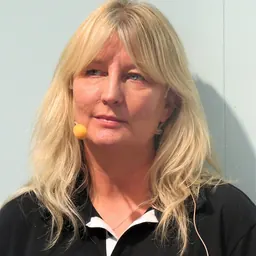
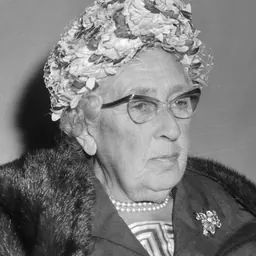
People in Stieg Larsson's life
Named in this biography and alive at the same time






Related people
Same field, nearest in time






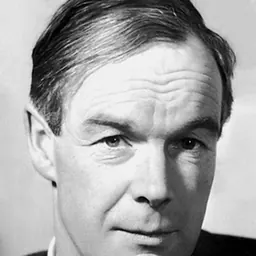
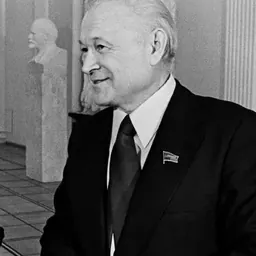
Contemporaries
People whose lives overlapped Stieg Larsson's



Frequently asked questions
Who was Stieg Larsson?
Swedish author (1954–2004)
When was Stieg Larsson born?
Stieg Larsson was born on 15 August 1954 in Skelleftehamn.
When did Stieg Larsson die?
Stieg Larsson died on 9 November 2004 in Stockholm.
What was Stieg Larsson's occupation?
Stieg Larsson was a journalist, writer, editor and screenwriter.
What nationality was Stieg Larsson?
Stieg Larsson was Swedish.
Sources & further reading
Cite this page
APA: Biography.guide. (2026). Stieg Larsson. https://biography.guide/stieg-larsson/
MLA: "Stieg Larsson." Biography.guide, https://biography.guide/stieg-larsson/.
Chicago: "Stieg Larsson." Biography.guide. https://biography.guide/stieg-larsson/.
Data last updated: 2026-09-20 · Spot an error? Report a correction.
Page generated 2026-09-27 05:16 UTC