
About Stevie Smith
Lived 1902 – 1971 (aged 68). Stevie Smith was a British poet, illustrator, novelist, performing artist, writer and librettist.
Florence Margaret Smith (20 September 1902 – 7 March 1971), known as Stevie Smith, was an English poet and novelist. She won the Cholmondeley Award and was awarded the Queen's Gold Medal for Poetry. Stevie, a play by Hugh Whitemore based on her life, was adapted into a film starring Glenda Jackson.
Life Stevie Smith, born Florence Margaret Smith at number 34 De La Pole Avenue in Kingston upon Hull, was the second daughter of Charles Ward Smith (1872–1949) and Ethel Rahel (1876–1919), daughter of a maritime engineer, John Spear. She was called "Peggy" within her family, but acquired the nickname "Stevie" as a young woman when she was riding in the park with a friend who said that she reminded him of the jockey Steve Donoghue.
Her father was a shipping agent, running a business that he had inherited from his father. As the company and his marriage both began to fall apart, he ran away to sea and Smith saw very little of him after that. She related that her preoccupation with death began when she was seven, at a time when she was very distressed at being sent away from her mother. Her mother died when Smith was 16. She spent the remainder of her life with her aunt, and worked as private secretary to Sir Neville Pearson at Newnes Publishing Company in London from 1923 to 1953. She corresponded and socialised widely with other writers and creative artists, including Elisabeth Lutyens, Sally Chilver, Inez Holden, Naomi Mitchison, Isobel English and Anna Kallin.
After she retired from Sir Neville Pearson's service following a nervous breakdown, she gave poetry readings and broadcasts on the BBC that gained her new friends and readers among a younger generation. Sylvia Plath became a fan of her poems and sent Smith a letter in 1962, describing herself as "a desperate Smith-addict". Plath expressed interest in meeting in person, but took her own life soon after she sent the letter.
Smith was described by her friends as being naive and selfish in some ways but formidably intelligent in others, having been raised by her aunt as both a spoiled child and a resolutely autonomous woman. Likewise, her political views vacillated between her aunt's Toryism and her friends' left-wing tendencies. Smith was celibate for most of her life, although she rejected the idea that she was lonely as a result, alleging that she had a number of intimate relationships with friends and family that kept her fulfilled. She never entirely abandoned or accepted the High Church Anglican faith of her childhood, describing herself as a "lapsed atheist", and wrote sensitively about theological puzzles: "There is a God in whom I do not believe/Yet to this God my love stretches." Her 14-page essay of 1958, "The Necessity of Not Believing", concludes: "There is no reason to be sad, as some people are sad when they feel religion slipping off from them. There is no reason to be sad, it is a good thing." The essay was unveiled at a meeting of the Cambridge Humanist Society.
Smith died of a brain tumour on 7 March 1971.
Soon her poems were found in periodicals. Her style was often very dark; her characters were perpetually saying "goodbye" to their friends or welcoming death. At the same time her work has an eerie levity and can be very funny though it is neither light nor whimsical. "Stevie Smith often uses the word 'peculiar' and it is the best word to describe her effects" (Hermione Lee). She was never sentimental, undercutting any pathetic effects with the ruthless honesty of her humour.
As an occasional work, Smith wrote the text of the coffee-table book Cats in Colour (1959), for which she wrote a humorous series of captions to photographs imagining the inner lives of cats.
Smith's poems have been the focus of writers and critics around the world. James Antoniou writes in The Australian that her 'apparent innocence masks such fierce complexities, such ambition and startling originality, that many people baulk at her work', while Michael Dirda affirms in The Washington Post that, 'certainly, an outward charm is part of Smith's aesthetic strategy, though there’s nothing naive or whimsical beneath her surface.' Carol Rumens writes in The Guardian that Smith 'skewered formality, though formally deft, and challenged, with a Victorian school marm's brisk tartness, the lingering shades of late-Victorian social hypocrisy.'
In 2023, newly declassified UK government files revealed that Smith was considered as a candidate to be the new Poet Laureate of the United Kingdom in 1967 following the death of John Masefield. She was rejected after appointments secretary John Hewitt consulted with Dame Helen Gardner, the Merton Professor of English at the University of Oxford (who stated that Smith "wrote 'little girl poetry' about herself mostly") and Geoffrey Handley-Taylor, chair of The Poetry Society (who stated that Smith was "unstable").
Works
Novels Novel on Yellow Paper (Cape, 1936) Over the Frontier (Cape 1938) The Holiday (Chapman and Hall, 1949)
Poetry collections A Good Time Was Had By All (Cape, 1937) Tender Only to One (Cape, 1938) Mother, What Is Man? (Cape, 1942) Alone in the Woods (Cape, 1947) Harold's Leap (Cape, 1950) Not Waving but Drowning (Deutsch, 1957) Selected Poems (Longmans, 1962) includes 17 previously unpublished poems The Frog Prince (Longmans, 1966) includes 69 previously unpublished poems The Best Beast (Longmans, 1969) Two in One (Longmans, 1971) reprint of Selected Poems and The Frog Prince Scorpion and Other Poems (Longmans, 1972) Collected Poems (Allen Lane, 1975) Selected Poems (Penguin, 1978) New Selected Poems of Stevie Smith (New Directions, 1988) Come on Come Back 1972 The Collected Poems and Drawings of Stevie Smith (Faber and Faber, 2015) All the Poems of Stevie Smith (New Directions, 2016)
Other Some Are More Human Than Others: A Sketch-Book (Gaberbocchus Press, 1958) Cats in Colour (Batsford, 1959) Me Again: Uncollected Writings of Stevie Smith (Virago, 1984) "The Necessity of Not Believing" (Gemini No. 5, Spring 1958, Vol. 2, No. 1)
Don’t just read it —
keep it.
Full-length biographies made to live with: read them, listen on the way to work, watch them tonight.
- E-book
- Audio
- Video
Instant download · yours to keep · every purchase keeps this site free
Important facts
People in Stevie Smith's life
Named in this biography and alive at the same time


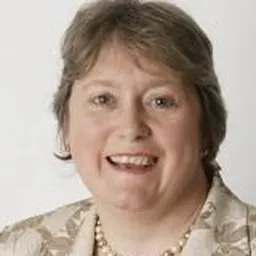



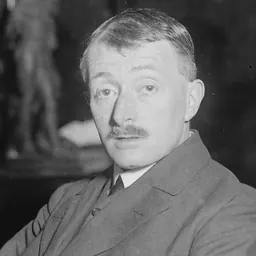
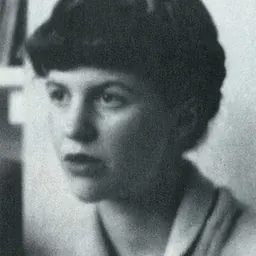
Related people
Same field, nearest in time
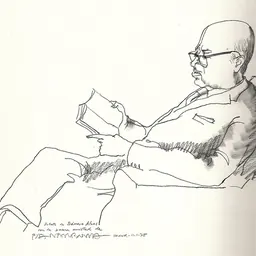
Contemporaries
People whose lives overlapped Stevie Smith's



Frequently asked questions
Who was Stevie Smith?
British poet, novelist, illustrator, performer (1902–1971)
When was Stevie Smith born?
Stevie Smith was born on 20 September 1902 in Kingston upon Hull.
When did Stevie Smith die?
Stevie Smith died on 7 March 1971 in Ashburton.
What was Stevie Smith's occupation?
Stevie Smith was a poet, illustrator, novelist, performing artist, writer and librettist.
What nationality was Stevie Smith?
Stevie Smith was British.
Sources & further reading
Cite this page
APA: Biography.guide. (2026). Stevie Smith. https://biography.guide/stevie-smith/
MLA: "Stevie Smith." Biography.guide, https://biography.guide/stevie-smith/.
Chicago: "Stevie Smith." Biography.guide. https://biography.guide/stevie-smith/.
Data last updated: 2026-09-25 · Spot an error? Report a correction.
Page generated 2026-09-27 05:13 UTC