
About Steven Rose
Lived 1938 – 2025 (aged 87). Steven Rose was a British biologist, neuroscientist, biochemist, university teacher and neurobiologist, known for Genetic determinism.
Academic career
Following a Fellowship at New College, Oxford, and a Medical Research Council research post, he was appointed to the professorship of biology at the newly instituted Open University in 1969. At the time he was Britain's youngest full professor and chair of the department. At the Open University he established the Brain Research Group, within which he and his colleagues investigated the biological processes involved in memory formation and treatments for Alzheimer's disease on which he published some 300 research papers and reviews. He wrote several popular science books and regularly wrote for The Guardian newspaper and the London Review of Books. From 1999 to 2002, he gave public lectures as a professor of Physick (Genetics and Society) with his wife, the feminist sociologist Hilary Rose at Gresham College, London. His work won him numerous medals and prizes including the Biochemical Society medal for communication in science and the prestigious Edinburgh Medal in 2004. His book The Making of Memory won the Rhone-Poulenc Science Book Prize in 1993.
Together with Hilary Rose he was a founder member of the British Society for Social Responsibility in Science in the 1960s, and more recently they have been instrumental in calling for a boycott of Israeli academic institutions for as long as Israel continues its occupation of the Palestinian Territories, on the grounds of Israeli academics' close relationship with the IDF. An open letter initiated by Steven and Hilary Rose, and also signed by 123 other academics was published in The Guardian on 6 April 2002. In 2004 Hilary Rose and he were the founding members of the British Committee for the Universities of Palestine.
Rose was for several years a regular panellist on BBC Radio 4's ethics debating series The Moral Maze. His recent books with Hilary Rose include Alas Poor Darwin: Arguments against Evolutionary Psychology, in 2012, Genes, Cells and Brains: the Promethean promises of the new biology (Verso), described by Guardian reviewer Steven Poole as "fascinating, lucid and angry" with a "lethally impressive hit ratio", and most recently Can Neuroscience Change Our Minds? (Polity, 2016). His audio-autobiography forms part of the British Library's National Life Stories Collection of distinguished scientists. The sociologist Nikolas Rose is his younger brother. Hilary and he had two sons. He remained an atheist.
Rose was a defender of the use of animals in medical research, accepting the description of himself as a "vivisector". The issue of animal rights was debated by him and Jolyon Jenkins in the pages of New Statesman and Society.
In 2012 the British Neuroscience Association gave him a lifetime award for "Outstanding contributions to neuroscience."
Critique of genetic determinism
With Richard Lewontin and Leon Kamin, Rose championed the "radical science movement". The three criticized sociobiology, evolutionary psychology, and adaptationism, most prominently in the book Not in Our Genes (1984), laying out their opposition to Sociobiology (E. O. Wilson, 1975), The Selfish Gene (Richard Dawkins, 1976), and other works promoting an evolutionary explanation for human social behaviour. Not in Our Genes described Dawkins as "the most reductionist of sociobiologists". In retort, Dawkins wrote that the book practices a straw man fallacy by distorting arguments in terms of genetics to "an idiotic travesty (that the properties of a complex whole are simply the sum of those same properties in the parts)", and accused the authors of giving "ideology priority over truth". Rose replied in the second edition of his book Lifelines. Rose wrote further works in this area: in 2000 he jointly edited with the sociologist Hilary Rose, a critique of evolutionary psychology entitled Alas, Poor Darwin: Arguments Against Evolutionary Psychology. In 2006 he wrote a paper dismissing classical heritability estimates as useful scientific measures in respect of human populations especially in the context of IQ.
Rose wrote the introduction of The Richness of Life (2007) by the prominent American paleontologist, evolutionary biologist, and historian of science, Stephen Jay Gould.
J. Richard Udry dismissed Rose's Lifelines criticisms of genetic determinism, stating they were straw men. A. J. Wells asserted that Rose created a false dichotomy between homeodynamic and neo-Darwinian explanations for human behavioural patterns, and like Udry, said that Rose's portrayal of "ultra-Darwinism" was a caricature of the views of evolutionary behaviourists. Nicholas S. Thompson lampooned Rose for suggesting behavioural geneticists were trying to rehabilitate Nazism.
Death Rose died on 9 July 2025, at the age of 87.
Don’t just read it —
keep it.
Full-length biographies made to live with: read them, listen on the way to work, watch them tonight.
- E-book
- Audio
- Video
Instant download · yours to keep · every purchase keeps this site free
Important facts
Family & relationships
People in Steven Rose's life
Named in this biography and alive at the same time

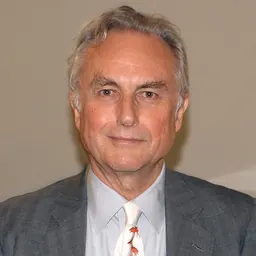




Related people
Same field, nearest in time

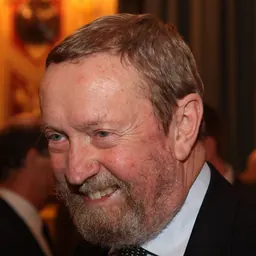
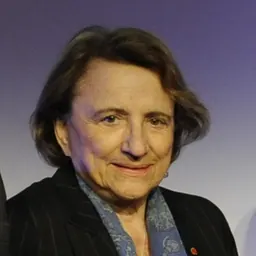

Contemporaries
People whose lives overlapped Steven Rose's


Frequently asked questions
Who was Steven Rose?
British biologist and neurobiologist (1938–2025)
When was Steven Rose born?
Steven Rose was born on 4 July 1938 in London.
When did Steven Rose die?
Steven Rose died on 9 July 2025.
What was Steven Rose's occupation?
Steven Rose was a biologist, neuroscientist, biochemist, university teacher and neurobiologist.
What was Steven Rose known for?
Steven Rose was known for Genetic determinism.
What nationality was Steven Rose?
Steven Rose was British.
Sources & further reading
Cite this page
APA: Biography.guide. (2026). Steven Rose. https://biography.guide/steven-rose/
MLA: "Steven Rose." Biography.guide, https://biography.guide/steven-rose/.
Chicago: "Steven Rose." Biography.guide. https://biography.guide/steven-rose/.
Data last updated: 2026-09-20 · Spot an error? Report a correction.
Page generated 2026-09-27 05:24 UTC