
About Steve Ovett
Born 1955. Steve Ovett is a British middle-distance runner and athletics competitor.
Athletics career Early promise Ovett's first major athletics title came in 1973, when he won the 800 metres at the 1973 European Athletics Junior Championships. The following year, still only aged 18, he won the silver medal at 800 metres in the 1974 European Athletics Championships, setting a new European Junior 800 m record of 1:45.77 in the process. Ovett won AAA titles in the 800 m from 1974 to 1976; he would later add to these AAA titles by winning the 1500 m in 1979 and the mile in 1980.
Ovett gained some Olympic experience in 1976 Summer Olympics in Montreal, Quebec, Canada, when he ran in the final of the 800 m and was placed fifth, behind winner Alberto Juantorena of Cuba. Ovett finished fifth because he ran the first lap too inconsistently.
Breakthrough to world prominence In 1977, Ovett began to regularly defeat the 1500 metres Olympic champion John Walker. In the early season Debenhams Mile, Ovett defeated Walker and set a British record of 3:54.7. Then in the European Cup 1500 m, Ovett produced a last lap of 52.4 seconds to win a fiercely competitive race just ahead of his friend and rival Thomas Wessinghage. At the inaugural IAAF World Cup in Athletics, he commenced a "kick" with 200 m to go, running the final turn in 11.8 s and the last 200 m in 25.1 s. He left John Walker and the rest of the field far behind. He won gold ahead of Wessinghage. As Ovett raced away from the field, Ron Pickering, commenting for the race on BBC Television, said "and there's one man's blazing speed that has torn this field asunder". Ovett's time of 3:34.45 was a British record.
The British public by now showed a keen interest in Ovett, and it was at the European Championships in 1978, that he raced against Sebastian Coe for the first time in their senior careers, beginning a rivalry that was widely covered. He led Coe in the 800 m and appeared to be on his way to gold, before being caught by the East German Olaf Beyer, whose time of 1:44:09 turned out to be his fastest ever 800 m run. Coe finished 3rd. At the time the British press reported that Coe and Ovett had clashed after the race but Coe later revealed: "When Steve came over, he put his hand on my shoulder and said something. The media thought we were having a row, but what Steve actually said was, 'Who the fuck was that?'" Ovett recovered to win the gold medal in the 1500 m, in which Coe did not participate. In that race, Ovett waved to the crowd on the home straight and clearly slowed down in the last metres yet still won by over a second from Ireland's Eamonn Coghlan. running a course more than twice as long as anything he had attempted in public before, against the British marathon champion. Earlier that month, he had established a new mile world record of 3:48.8 and two weeks later equalled Sebastian Coe's world record of 3:32.1 in the 1500 m. The Moscow Olympics marked only the second time that Ovett and Coe had met each other in international competition (the first being the 800 m in the 1978 European Championships), and there was huge media speculation over which would emerge as the greater.
Ovett's participation in the 800 m would serve as a test for the 1500 m. In the 800 m final, Ovett was only in sixth place at the halfway mark, but pushed his way through the crowd to second place. Seventy metres from the line, Ovett took the lead and held off a challenge from Coe to win by four metres.
Ovett's 1982 season was wrecked by injury. When out training on the streets of Brighton in late 1981, he tripped and impaled his thigh on some low railings at St John the Baptist Church on Church Road.
In 1984, after a successful season of winter training in Australia, Ovett's progress was slightly hampered by minor injuries and a bout of bronchitis. He attempted to defend his 800 m title in the 1984 Olympic Games, but after arriving in Los Angeles he began to suffer from respiratory problems.
Personal life During the Moscow Games, the British press homed in on a signal Ovett had made to a television camera in Moscow, after his 800 m win. It later transpired that the signal represented the letters ILY (I love you) and were intended for his girlfriend, Rachel Waller (whom he later married, but from whom he is now divorced).
Ovett's son Freddy also showed promise as a middle-distance runner, winning the U-13 Pan-Pacific 800 m title,
Personal bests From UK Athletics
Don’t just read it —
keep it.
Full-length biographies made to live with: read them, listen on the way to work, watch them tonight.
- E-book
- Audio
- Video
Instant download · yours to keep · every purchase keeps this site free
Important facts
People in Steve Ovett's life
Named in this biography and alive at the same time


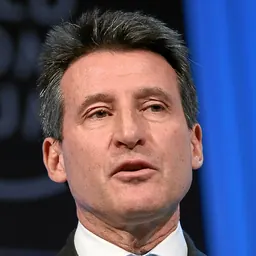
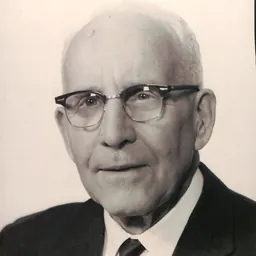
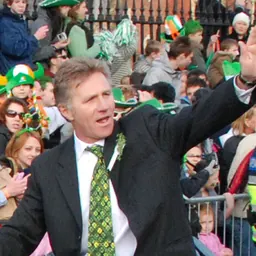


Related people
Same field, nearest in time

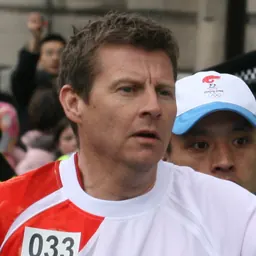

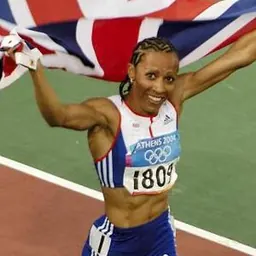
Contemporaries
People whose lives overlapped Steve Ovett's

Frequently asked questions
Who is Steve Ovett?
former middle distance runner
When was Steve Ovett born?
Steve Ovett was born on 9 October 1955 in Brighton.
What is Steve Ovett's occupation?
Steve Ovett is a middle-distance runner and athletics competitor.
What nationality is Steve Ovett?
Steve Ovett is British.
Sources & further reading
Cite this page
APA: Biography.guide. (2026). Steve Ovett. https://biography.guide/steve-ovett/
MLA: "Steve Ovett." Biography.guide, https://biography.guide/steve-ovett/.
Chicago: "Steve Ovett." Biography.guide. https://biography.guide/steve-ovett/.
Data last updated: 2026-09-20 · Spot an error? Report a correction.
Page generated 2026-09-27 05:26 UTC