
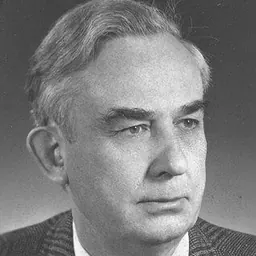
Steve Furber
British computer scientist (born 1953)
About Steve Furber
Born 1953. Steve Furber is a British computer scientist, engineer and university teacher, known for ARM System–on–Chip Architecture, ARM architecture and Acorn Computers.
Education Furber was educated at Manchester Grammar School and represented the UK in the International Mathematical Olympiad in Hungary in 1970 winning a bronze medal. He went on to study the Mathematical Tripos as an undergraduate student of St John's College, Cambridge, receiving a Bachelor of Arts (BA) and Master of Mathematics (MMath – Part III of the Mathematical Tripos) degrees. supervised by John Ffowcs Williams. During his PhD in the late 1970s, Furber worked on a voluntary basis for Hermann Hauser and Chris Curry within the fledging Acorn Computers (originally the Cambridge Processor Unit), on a number of projects; notably a microprocessor based fruit machine controller, and the Proton – the initial prototype version of what was to become the BBC Micro, in support of Acorn's tender for the BBC Computer Literacy Project.
Career and research In 1981, following the completion of his PhD and the award of the BBC contract to Acorn computers, Furber joined Acorn where he was a Hardware Designer and then Design Manager. He was involved in the final design and production of the BBC Micro and later, the Acorn Electron, and the ARM microprocessor. In August 1990 he moved to the University of Manchester to become the International Computers Limited (ICL) Professor of Computer Engineering and established the AMULET microprocessor research group.
Furber's main research interests are in neural networks, networks on chip and microprocessors. novel computation. On 16 September 2004, he gave a speech on Hardware Implementations of Large-scale Neural Networks as part of the initiation activities of the Alan Turing Institute.
Furber's most recent project SpiNNaker, is an attempt to build a new kind of computer that directly mimics the workings of the human brain. Spinnaker is an artificial neural network realised in hardware, a massively parallel processing system eventually designed to incorporate a million ARM processors. The finished Spinnaker will model 1 per cent of the human brain's capability, or around 1 billion neurons. The Spinnaker project Furber's research interests include asynchronous systems, ultra-low-power processors for sensor networks, on-chip interconnect and globally asynchronous locally synchronous (GALS), and neural systems engineering.
His research has been funded by the Engineering and Physical Sciences Research Council (EPSRC), Royal Society and was Specialist Adviser to the House of Lords Science and Technology Select Committee inquiry into microprocessor technology.
Furber was elected a Fellow of the Royal Academy of Engineering (FREng), and in 2010 he gave the Pinkerton Lecture.
Furber was appointed Commander of the Order of the British Empire (CBE) in the 2008 New Year Honours and was elected as one of the three laureates of Millennium Technology Prize in 2010 (with Richard Friend and Michael Grätzel), for development of ARM processor. In 2012, Furber was made a Fellow of the Computer History Museum "for his work, with Sophie Wilson, on the BBC Micro computer and the ARM processor architecture."
In 2004 he was awarded a Royal Society Wolfson Research Merit Award. Furber's nomination for the Royal Society reads:
In 2009, Unsworth Academy (formerly called Castlebrook High School) in Manchester introduced a house system, with Furber being one of the four houses. On 15 October 2010, Furber officially opened the Independent Learning Zone in Unsworth Academy. In 2012, a building at Radbroke Hall was named in his honour by Barclays Bank.
In 2022, he was awarded the Charles Stark Draper Prize by the National Academy of Engineering of the United States of America alongside John L. Hennessy, David A. Patterson and Sophie M. Wilson for contributions to the invention, development, and implementation of reduced instruction set computer (RISC) chips. Furber was played by actor Sam Philips in the BBC Four documentary drama Micro Men, first aired on 8 October 2009.
The Furber Chair in Computer Systems Engineering at the University of Manchester is named in his honour. this is held by André van Schaik.
Personal life
Furber is married to Valerie Elliott with two daughters, 3 grandchildren and plays bass guitar.
Don’t just read it —
keep it.
Full-length biographies made to live with: read them, listen on the way to work, watch them tonight.
- E-book
- Audio
- Video
Instant download · yours to keep · every purchase keeps this site free
Important facts
People in Steve Furber's life
Named in this biography and alive at the same time





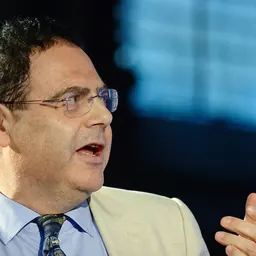
Related people
Same field, nearest in time



Contemporaries
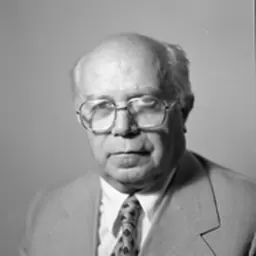
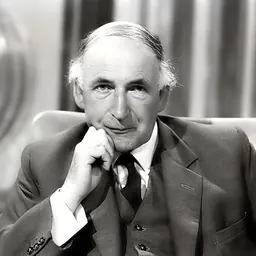
People whose lives overlapped Steve Furber's



Frequently asked questions
Who is Steve Furber?
British computer scientist (born 1953)
When was Steve Furber born?
Steve Furber was born on 21 March 1953 in Manchester.
What is Steve Furber's occupation?
Steve Furber is a computer scientist, engineer and university teacher.
What is Steve Furber known for?
Steve Furber is known for ARM System–on–Chip Architecture, ARM architecture, Acorn Computers, BBC Micro, Human Brain Project and SpiNNaker.
What nationality is Steve Furber?
Steve Furber is British.
Sources & further reading
Cite this page
APA: Biography.guide. (2026). Steve Furber. https://biography.guide/steve-furber/
MLA: "Steve Furber." Biography.guide, https://biography.guide/steve-furber/.
Chicago: "Steve Furber." Biography.guide. https://biography.guide/steve-furber/.
Data last updated: 2026-09-20 · Spot an error? Report a correction.
Page generated 2026-09-27 05:19 UTC