
About Stephen Whitney
Lived 1776 – 1860 (aged 83). Stephen Whitney was an American politician.
Stephen Whitney (September 4, 1776 – February 16, 1860) was an American merchant. He was one of the wealthiest merchants in New York City in the first half of the 19th century. His fortune was considered second only to that of John Jacob Astor. As a prominent citizen of the rapidly growing city, he helped to build some of its institutions, including the Merchants' Exchange Building, the first permanent home of the New York Stock Exchange.
Early life Stephen Whitney was born in humble circumstances in Derby, Connecticut, on September 4, 1776. He was a son of Captain Henry Whitney (1735–1811) and Eunice (née Clark) Whitney (1746–1794), a daughter of William Clark and Hannah Peck Clark. His brother, Archibald Whitney, was married to Nancy Ann Brower.
Career Whitney moved to New York City in his early twenties, taking a job in his brother Henry's business firm Lawrence & Whitney. By 1800, Whitney had accumulated enough capital to go into business as a grocer and an importer of wine and spirits on his own, at first in partnership with a Scotsman named John Currie. When the embargo was lifted, the US price of cotton shot up, and he became a wealthy man. By 1818, he was able to retire from commerce. and the Bank of America. He invested in shipping, including the China trade and the Robert Kermit Red Star Line of packets. One of the Kermit Line vessels was named for him (the ship Stephen Whitney). Other interests were insurance, canals, and the new railroads (he was a director of the New Jersey Rail Road).
In 1827, he joined William Backhouse Astor, son of John Jacob Astor, in building a Merchants' Exchange Building at the corner of Wall and William Streets. The New York Stock and Exchange Board moved their operations from the Tontine Coffee House to the new building, adopting it as their first permanent home. In the 1840s, he was involved in the founding of Green-Wood Cemetery in Brooklyn. In 1852 Whitney was one of the leaders in organizing the City Reform League, which spearheaded a movement to wrest some of the power away from corrupt city aldermen.
Personal life In 1803, when he was 26 years old, he married Harriet Suydam (1782–1860), the sister of his brother's wife. Together, they were the parents of: William Whitney (1816–1862), who married Mary Stuart McVickar (1817–1907) in 1843. The executors of his estate later had a marble chapel built at his burial site. Harriet Suydam Whitney died four months later, in May 1860.
Residence In 1825, Whitney had a townhouse built at Number 7 Bowling Green, at the corner of State Street and Broadway—the current site of the old Custom House that is now home to the Heye Indian Museum. The seven houses in the block, which faced across Bowling Green and straight up Broadway, were among the most fashionable in the city when they were built. However, as the city quickly evolved, wealthy residents began to move "uptown" to Washington Square and Fifth Avenue. Stephen Whitney, who was famous for refusing to bend to fashion, was still living at 7 Bowling Green when he died, even though the neighborhood had become somewhat run down and all of his peers had moved away.
Wealth Whitney was among the first multi-millionaires in the city. Many accounts refer to his fortune as second only to that of John Jacob Astor, who died in 1848 with an estate of $20 million (~$ in ). Whitney's wealth was estimated at his death to be at least $8 million, although some thought it was $10 or even $15 million.
Also through his son William, he was a great-grandfather of Mary Stuart Whitney who married Robert Livingston Stevens, son of Edwin Augustus Stevens. Their son, Robert Livingston Stevens Jr. married Grace Vanderbilt Davis, daughter of Brig. General Cornelius and Grace Vanderbilt.
Don’t just read it —
keep it.
Full-length biographies made to live with: read them, listen on the way to work, watch them tonight.
- E-book
- Audio
- Video
Instant download · yours to keep · every purchase keeps this site free
Important facts
People in Stephen Whitney's life
Named in this biography and alive at the same time

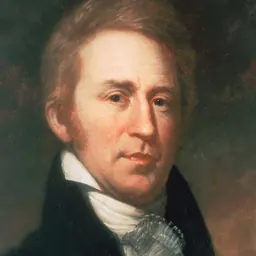
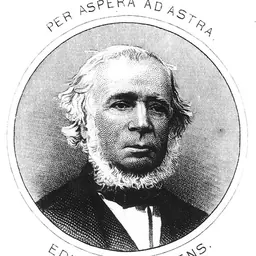
Related people
Same field, nearest in time

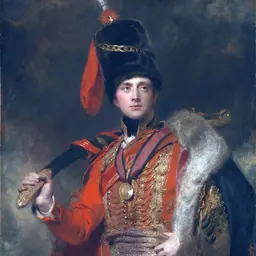

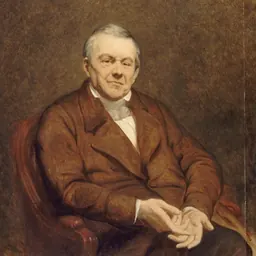

Contemporaries
People whose lives overlapped Stephen Whitney's



Frequently asked questions
Who was Stephen Whitney?
American merchant
When was Stephen Whitney born?
Stephen Whitney was born on 4 September 1776 in New York City.
When did Stephen Whitney die?
Stephen Whitney died on 16 February 1860 in New York.
What was Stephen Whitney's occupation?
Stephen Whitney was a politician.
What nationality was Stephen Whitney?
Stephen Whitney was American.
Sources & further reading
Cite this page
APA: Biography.guide. (2026). Stephen Whitney. https://biography.guide/stephen-whitney/
MLA: "Stephen Whitney." Biography.guide, https://biography.guide/stephen-whitney/.
Chicago: "Stephen Whitney." Biography.guide. https://biography.guide/stephen-whitney/.
Data last updated: 2026-09-22 · Spot an error? Report a correction.
Page generated 2026-09-27 05:31 UTC