
About Stéphane Gagné
Born 1969. Stéphane Gagné is a Canadian criminal and informant.
Stéphane Gagné (born 12 December 1969) is a Canadian former gangster, outlaw biker and contract killer who was a hitman for the Hells Angels Motorcycle Club during the Quebec Biker War. Charged with two counts of first-degree murder, Gagné turned Crown witness against the Hells Angels in 1997 in exchange for one murder charge against him being dismissed. He was sentenced to 25 years' imprisonment. Gagné's testimony resulted in Hells Angels leader Maurice "Mom" Boucher being imprisoned for murder in 2002.
Early life Gagné was born into a working-class French-Canadian family in the Hochelaga-Maisonneuve district of Montreal. His father worked as a professional wrestler, and his mother was a housewife. His uncle was a hitman for the Dubois brothers and was murdered in 1974. Paul Cherry, the crime correspondent of The Montreal Gazette, wrote that Gagné speaks his joual (nonstandard Quebec French) with a strong working-class accent with a distinctive nasal tone. Cherry noted that Gagné usually has a "goofy grin" on his face, which gives the impression that his intelligence is very low.
As a child, Gagné suffered from learning disabilities, especially from attention-deficit disorder, and was much bullied by the other children. Gagné dropped out of school in grade 7 to work as a drug dealer and as a thief. A self-confessed drug addict, Gagné was as a teenager "quasiment gelé" ("almost frozen"), as he phrased it, by usually being high on hashish and PCPs. Besides selling drugs, Gagné stole automobiles and robbed homes and businesses. He amassed a criminal record, being convicted nine times over 12 years for automobile theft, home invasions, drug trafficking, and probation violations. Gagné told the National Parole Board in 2016 that he wanted to become a gangster to bring "beautiful women and money." He was told that the next time the Hells Angels burned down his parents' house, they would be in it. On 19 March 1998, Gagné pledged guilty to one count of first-degree murder for the slaying of Diane Lavinge on 26 June 1997 and one count of attempted murder in regards to the shooting of Robert Corriveau on 8 September 1997. In exchange, the Crown dropped the charge of first-degree murder in connection with the slaying of Pierre Rondeau.
The Crown Attorney in charge of prosecuting Boucher, Jacques Dagenais, felt that Gagné was a terrible witness, an unsavory and unlikable hitman who spoke in a flat, cold nasal tone and turned Crown's evidence only for a lighter sentence. Going into the trial, Dagenais stated that he was facing an uphill battle, as Boucher had never actually said anything about murdering prison guards and instead expressed himself to Gagné via sign language, which made it difficult to prove that he indeed ordered the murders. Dagenais feared the unlikability of Gagné and his long criminal record would make it difficult for the jury to believe his testimony that Boucher had ordered him to commit murders by his hand gestures. Boucher's lawyer, Jacques Larochelle, was a well-respected defence lawyer who was noted for his ability to tear apart the credibility of the Crown's witnesses on the stand via a series of sharp, probing questions. Larochelle regarded Gagné as being the weakest link in the Crown's case against Boucher and planned to discredit him as a witness as the best way to secure the acquittal of his client.
The trial for Boucher on two counts of first-degree murder began in Montreal on 2 November 1998. During the trial, Larochelle brought up Gagné's long history of telling lies and of anti-social behavior, which he used to paint him as a dishonest sociopath who would tell any falsehood if it would serve his interests such as avoiding going to prison for the rest of his life. Larochelle used the pen-merde during the trial as an example of Gagné's anti-social tendencies. Larochelle argued that Gagné had an extreme hatred of prison guards as proven by the pen-merde and had murdered the two prison guards on his own initiative. Larochelle made much of the fact that Gagné had been convicted 11 times between 1990 and 1997 for various offenses and that his criminal record went back to the age of 13. Larochelle also made much of the fact that Gagné had frequently lied to the National Parole Board to gain early releases, which led Gagné to reply: "All criminals are bluffers. If we don't bluff, we're dead." During his cross-examination of Gagné, Larochelle got Gagné to admit under oath that he had "no respect for the truth," a damning statement that Larochelle used in his final address to the jury as evidence that Gagné had committed perjury to avoid a life prison sentence. Larochelle argued that Gagné had fabricated the claim that Boucher had ordered his crimes to avoid a life sentence. In response, Dagenais admitted that Gagné was an unsavory witness but argued that all of the evidence supported his testimony.
The judge overseeing the trial, Justice Jean-Guy Boilard, showed a strong bias for the defence and excluded much of the Crown's evidence such as the police recordings of Boucher's phone calls, which confirmed several points of Gagné's testimony and reduced much of the Crown's case down to Gagné. Boilard accused the police of illegally tapping Boucher's cell phone calls, which led him to exclude the phone calls as evidence despite the fact the police had a warrant. In his instructions to the jury, Boilard came very close to accusing Gagné of perjury and told the jury that it should not convict Boucher on the basis of a witness who had probably committed perjury. Dagenais felt that Boilard's jury instructions were so biased in favour of the defence that he filed for a mistrial. In particular, Dagenais noted that Boilard in his instructions had stated that the Crown's case rested entirely on Gagné's testimony, a statement that was false since the Crown had introduced other evidence and witnesses during the course of the trial, which he felt proved that Boilard was determined to see Boucher acquitted. On 27 November 1998, Boucher was acquitted. In a rare move, the Crown chose to challenge double jeopardy in an appeal, as it was stated that the trial had been marred by the extreme pro-defence bias of Boilard. Many newspapers in Quebec attacked the plea bargain the Crown made with Gagné and charged that a self-confessed hitman had just been given only 25 years in prisonm but Boucher had been acquitted. Gagné testified in 2015 that he felt badly about Boucher's acquittal: "It was he who had lots of people killed and it was me who was in the hole. Justice had not been served. I was disappointed because I owed at least that to the families of the victims." In 2009, Gagné served as the main witness for the Crown at Fontaine's trial for Rondeau's murder. Richmond, who prosecuted Fontaine at his trial in 2008 and 2009, praised Gagné: "He held his ground throughout." In 2006, Gagné suffered from cancer and had to receive chemotherapy. As a prisoner, Gagné worked in the prison kitchen. In February 2023, the National Parole Board granted Gagné permission to live in a half-way house as a prelude to his release from prison. The National Parole Board wrote: "At the hearing, you mentioned understanding the damage you caused to the victims and collateral victims. You say you have a thought for them every morning. You say that you will never forgive yourself for the irreparable actions you have committed, but that you must learn to live with them."
Books
Don’t just read it —
keep it.
Full-length biographies made to live with: read them, listen on the way to work, watch them tonight.
- E-book
- Audio
- Video
Instant download · yours to keep · every purchase keeps this site free
Important facts
People in Stéphane Gagné's life
Named in this biography and alive at the same time

Related people
Same field, nearest in time


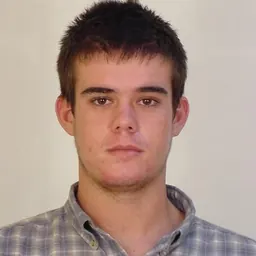

Contemporaries
People whose lives overlapped Stéphane Gagné's




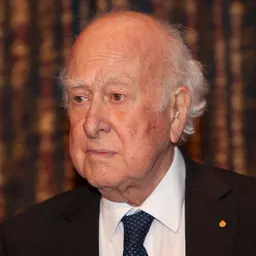
Frequently asked questions
Who is Stéphane Gagné?
Canadian outlaw biker and gangster
When was Stéphane Gagné born?
Stéphane Gagné was born on 11 December 1969 in Montreal.
What is Stéphane Gagné's occupation?
Stéphane Gagné is a criminal and informant.
What nationality is Stéphane Gagné?
Stéphane Gagné is Canadian.
Sources & further reading
Cite this page
APA: Biography.guide. (2026). Stéphane Gagné. https://biography.guide/stephane-gagne-criminal/
MLA: "Stéphane Gagné." Biography.guide, https://biography.guide/stephane-gagne-criminal/.
Chicago: "Stéphane Gagné." Biography.guide. https://biography.guide/stephane-gagne-criminal/.
Data last updated: 2026-09-20 · Spot an error? Report a correction.
Page generated 2026-09-27 05:26 UTC